




Pa. Formulating Self-Driving Vehicle Policy
The state’s Department of Transportation will accept feedback on proposed guidelines until Jan. 12.
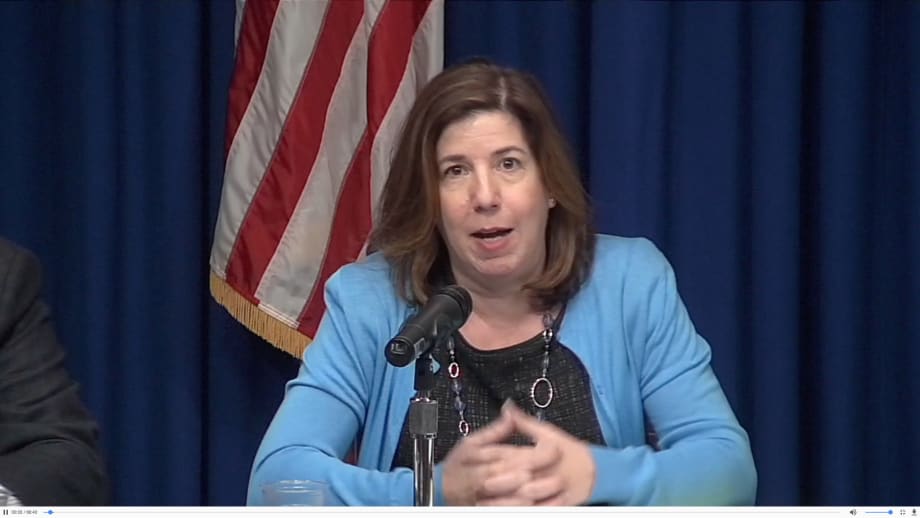
PennDOT Secretary Leslie Richards addresses a Dec. 12 public forum about the state's proposed policy on autonomous vehicle testing. Screen shot courtesy of PennDOT.
PennDOT Secretary Leslie Richards addresses a Dec. 12 public forum about the state's proposed policy on autonomous vehicle testing. Screen shot courtesy of PennDOT.
The Pennsylvania Department of Transportation (PennDOT) will continue accepting public feedback on the state’s proposed guidelines for autonomous vehicle testing until a Jan. 12 deadline, according to the agency.
These proposed guidelines, developed by a special task force, were the subject of an online public meeting on Dec. 12. The task force’s recommendations include requiring that highly automated test vehicles be capable of recording data that can be used to investigate crashes involving the cars and to ensure that PennDOT has access to the data. PennDOT would also be able to collect data on total miles traveled, total hours of operation, and fleet size.
Additionally, the proposed guidelines state that PennDOT must be notified before any test vehicle is used without an operator in fully self-driving mode, and testers must certify that cybersecurity protections are in place for all autonomous vehicles being tested.
Platooning would generally be restricted to two commercial vehicles or three passenger vehicles, according to the proposed guidelines. Testers would have the option to request to use more autonomous vehicles in platooning, but PennDOT could ask for a safety demonstration first before granting authorization.
“Autonomous and connected vehicles will change transportation and could bring benefits of safer travel and greater ease of mobility for all if rules are in place to ensure passenger and pedestrian safety,” said PennDOT Secretary Leslie S. Richards. “This guidance shows Pennsylvania’s understanding of public concerns and our commitment to being a leader in the research and testing of these technologies in ways that are both safe and innovative.”
But some automakers and technology companies are concerned that a patchwork of disparate state regulations could ultimately hinder autonomous vehicle development and testing. Earlier this month, industry lobbying group Global Automakers released a statement expressing such worries.
“The U.S. Department of Transportation’s Federal Automated Vehicle Policy provides clear rules for states, and cautions against enacting new laws or regulations that could slow the technology development and inhibit innovation,” said Damon Porter, director of state government affairs for Global Automakers. “The Pennsylvania Autonomous Vehicle Policy Task Force policy recommendations could establish a precedent for other states to adopt their own, differing requirements for vehicle testing, leading to a patchwork of different state-by-state requirements. A flexible regulatory approach that encourages innovation will help spur the development and deployment of technologies that will save lives, enhance mobility and increase vehicle efficiency.”
To download the task force’s full policy recommendations, click here.
To view video of the Dec. 12 online public meeting, click here.
To submit comments to PennDOT about the proposed autonomous vehicle policy, click here.
Originally posted on Automotive Fleet
More Small Fleet


Developing Budget-Friendly Driver Safety Programs
From driver training and safety meetings to one-on-one coaching and incentive programs, several small fleets share how they have developed a safety culture with their drivers using low- to no-cost resources.
Read More →
Boosting Last-Mile Fleet Uptime, Safety, and Value with AI Vehicle Inspections
AI-powered inspections are transforming last-mile fleets by replacing manual checks with highly accurate automated scans that detect defects in seconds. By giving fleet operations visibility into the daily condition of their vehicles, you can identify trends over the vehicle’s lifecycle that enable improved procurement decisions, route management, driver training and accountability.
Read More →
Five Ways Seat Belts Help Prevent Injuries
There are five ways seat belts protect occupants from injuries, according to the Tennessee Department of Safety and Homeland Security.
Read More →
It’s here: The 2026 Fleet Technology Trends Report
What does AI mean for fleets? Get the answer — and learn other top tech trends.
Read More →
Small Fleets, Big Impact: How Independent Drivers Power Wreaths Across America
Check out how small fleets and independent drivers power Wreaths Across America each December and why their impact matters more than ever.
Read More →
VMS Survey Finds 65% of Small Fleet Managers Run Operations Alone
A new VMS survey shows small fleet managers are stretched thin, with most handling operations solo and eager to adopt digital tools for relief.
Read More →
Tips for Driving Safely on Halloween Night
This video features a reminder from the Connecticut Department of Transportation (DOT) and the Connecticut Police Chiefs Association, urging drivers to prioritize safety this Halloween.
Read More →
AI, Access, and Uptime: VMS’s Next Chapter with David Prusinski
VMS’s new Co-CEO, David Prusinski, shares how an AI-first approach will give small fleets and repair shops the tools to compete like big players.
Read More →
Fleet Managers Share Winter Prep Tips: It's Never Too Early!
Three fleets share best practices to prep vehicles for winter and prevent downtime when the cold sets in.
Read More →