




Non-crash Fire Claims 19% Higher in Recalled Vehicles
The frequency of non-crash fire claims for passenger vehicles subsequently recalled was 19% higher than non-recalled models, according to the Highway Loss Data Institute. After the recall, the difference in non-crash fire claim frequency dropped to 11%.

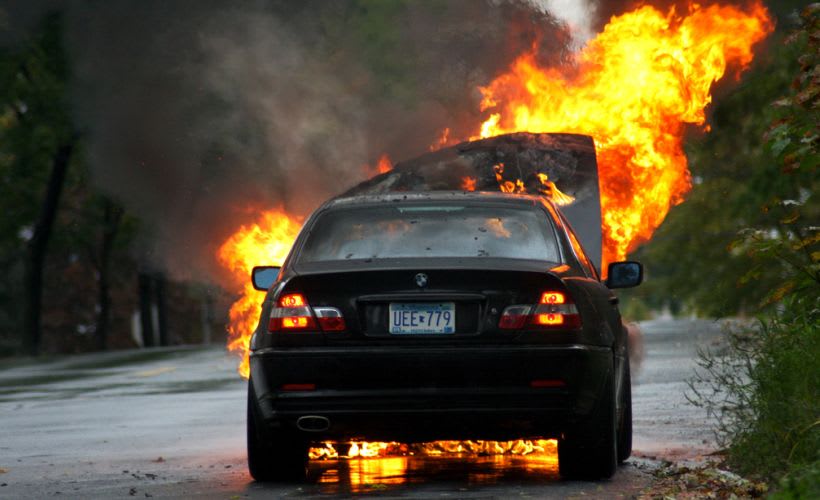
The frequency of non-crash fire claims fell 8% among vehicles after owners addressed outstanding recalls, according to new data from the Highway Loss Data Institute.
Photo via Tony Webster/Flickr.
The frequency of non-crash fire claims for passenger vehicles subsequently recalled was 19% higher than non-recalled models, according to the Highway Loss Data Institute. After the recall, the difference in non-crash fire claim frequency dropped to 11%, the study also found.
The new study highlights the fact that recalls for other problems like improperly installed fuel hoses or faulty alternators can significantly reduce the risk of non-crash fires, but does not eliminate the risk entirely.
For this reason, notes the report, it is critical that owners pay attention to recall notices and get repairs for electrical issues or fuel system problems completed in a timely manner.
Specifically, the institute report found that the incidence of non-crash fire claims for 2007 to 2017 model passenger vehicles recalled for a fire-related defect was 14% higher than the frequency of claims for vehicles without a recall.
Industry-wide there have been approximately 62 non-crash fire-related recalls affecting 6.8 million vehicles from 2017 through early August 2018.
According to the National Highway Traffic Safety Administration (NHTSA), approximately 25% of recalled vehicles never get repaired — leaving ample room for non-crash fires to occur due to a host of unaddressed problems.
In an effort to reduce non-crash fires, the institute and NHTSA have joined forces to identify vehicles that may have fire-related defects and need to be recalled. For example, in 2017 NHTSA requested non-crash fire claims data from the institute on the 2008 to 2009 Smart Fortwo cars after motorists' reports of engine compartment fires while driving or after turning off the ignition.
A subsequent institute analysis of 2008 to 2009 Smart Fortwo models found a sharply higher frequency of claims for non-crash fires for the microcar than other comparable vehicles.
Based on the NHTSA investigation, Mercedes-Benz issued a recall for nearly 43,000 2008 to 2009 Fortwo vehicles because the rear insulation mat in the engine compartment may deform, deteriorate, and loosen over time, allowing the mat to contact hot exhaust system components. This, in turn, could result in a vehicle fire.
Mercedes-Benz discontinued the gasoline-powered Smart Fortwo after the 2018 model year, and announced that the division would focus on the Smart Fortwo Electric Drive, which was introduced as a 2017 model.
Originally posted on Automotive Fleet
More Small Fleet


Developing Budget-Friendly Driver Safety Programs
From driver training and safety meetings to one-on-one coaching and incentive programs, several small fleets share how they have developed a safety culture with their drivers using low- to no-cost resources.
Read More →
Boosting Last-Mile Fleet Uptime, Safety, and Value with AI Vehicle Inspections
AI-powered inspections are transforming last-mile fleets by replacing manual checks with highly accurate automated scans that detect defects in seconds. By giving fleet operations visibility into the daily condition of their vehicles, you can identify trends over the vehicle’s lifecycle that enable improved procurement decisions, route management, driver training and accountability.
Read More →
Five Ways Seat Belts Help Prevent Injuries
There are five ways seat belts protect occupants from injuries, according to the Tennessee Department of Safety and Homeland Security.
Read More →
It’s here: The 2026 Fleet Technology Trends Report
What does AI mean for fleets? Get the answer — and learn other top tech trends.
Read More →
Small Fleets, Big Impact: How Independent Drivers Power Wreaths Across America
Check out how small fleets and independent drivers power Wreaths Across America each December and why their impact matters more than ever.
Read More →
VMS Survey Finds 65% of Small Fleet Managers Run Operations Alone
A new VMS survey shows small fleet managers are stretched thin, with most handling operations solo and eager to adopt digital tools for relief.
Read More →
Tips for Driving Safely on Halloween Night
This video features a reminder from the Connecticut Department of Transportation (DOT) and the Connecticut Police Chiefs Association, urging drivers to prioritize safety this Halloween.
Read More →
AI, Access, and Uptime: VMS’s Next Chapter with David Prusinski
VMS’s new Co-CEO, David Prusinski, shares how an AI-first approach will give small fleets and repair shops the tools to compete like big players.
Read More →
Fleet Managers Share Winter Prep Tips: It's Never Too Early!
Three fleets share best practices to prep vehicles for winter and prevent downtime when the cold sets in.
Read More →