




NHTSA Sharply Criticized By Congress
The safety agency found itself on the defensive during a congressional hearing on a day of mounting criticism over its handling of General Motors' ignition switch recall.
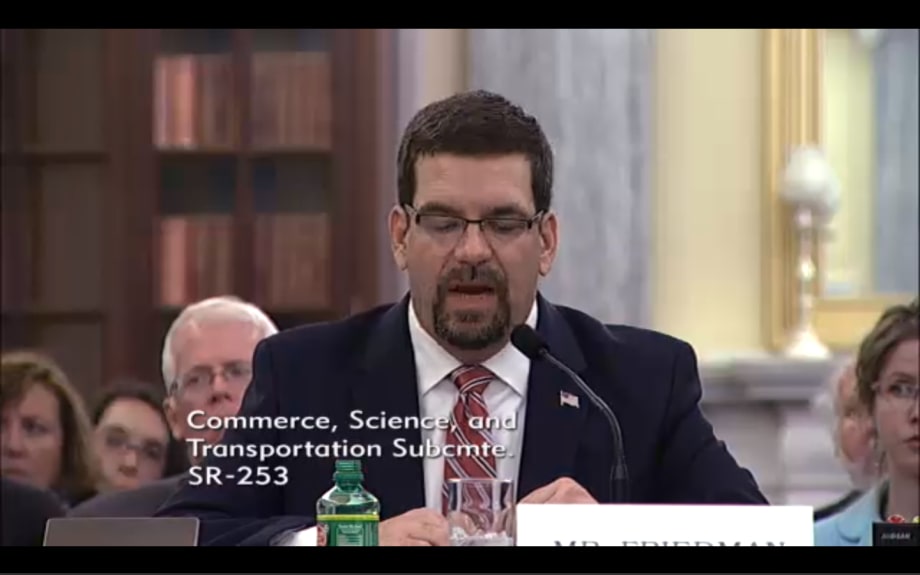
Screenshot via U.S. Senate.
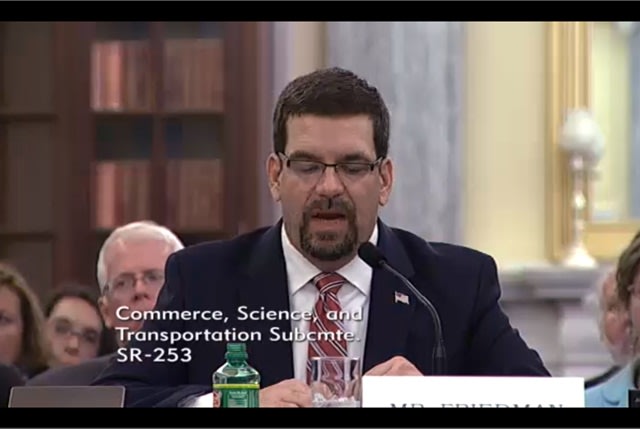
Screenshot via U.S. Senate.
The National Highway Traffic Safety Administration came under fire on Capitol Hill on Tuesday, Sept. 16, attracting charges from both chambers that the agency failed to provide adequate regulatory oversight of General Motors before the ignition switch recall was finally issued this year.
The House Committee on Energy and Commerce released a staff report reviewing NHTSA’s handling of the ignition switch defect, with the report concluding “NHTSA had ample information to identify a potential safety defect as early as 2007.”
The report notes that back in October 2006, a single-vehicle collision involving a Chevrolet Cobalt that veered off-road killed three teenagers and seriously injured another in Wisconsin. A state trooper investigating the accident made the connection between the car’s air bag non-deployment and the ignition switch slipping into the “accessory” position. He drew this conclusion after reviewing a technical service bulletin from GM.
The trooper’s February 2007 report was made available to both GM and NHTSA, but the report “went unnoticed by GM and NHTSA for years,” the committee report said. “This report and how it was handled by GM and NHTSA, respectively, is one example of the numerous failures that prevented each institution from identifying the ignition switch defect and taking timely action.”
Though NHTSA investigators reviewed the state trooper’s report -- as well as another investigation’s findings that also pointed to the ignition switch as a potential cause of air bag failure -- the agency failed to see the similarities with other crashes involving the Chevrolet Cobalt, according to the report.
The ignition switch defect ultimately led to at least 19 fatalities.
The House committee report also concludes that the agency’s failure to follow up on the two reports’ conclusions was “compounded by a lack of understanding of the vehicle systems and functions implemented in response to the agency’s own standards.”
On the same day as this report’s release Sept. 16, NHTSA Deputy Administrator David Friedman appeared before a Senate subcommittee hearing. During the hearing, some members of the subcommittee – particularly chairman Claire McCaskill (D-MO) and Edward Markey (D-Mass.) – became visibly frustrated with Friedman’s responses to some of their questions.
Though Friedman expressed sympathy for the crash victims and their families, he never agreed that NHTSA’s regulatory failures were partially to blame for the collisions tied to the ignition switch defect. Instead, he stressed that GM had withheld the information needed for NHTSA to make the connection between unexpected stalling and air bag non-deployment.
“GM violated the law,” Friedman said. “They violated the law when they failed to act at a time when air bags were not working properly in millions of their products. Instead of fostering a culture of safety, GM encouraged one of denial and delay that cost lives and endangered the public.”
The subcommittee members agreed that most of the blame fell on GM, but they grew impatient with Friedman’s unwillingness to accept -- on the agency's behalf -- some of the responsibility for recall delays.
Markey and McCaskill both argued that the volume of consumer complaints about unexpected stalling in the vehicles ultimately recalled should have prompted more aggressive action from NHTSA years earlier.
McCaskill also criticized the agency’s reluctance to use its power of subpoena when GM declined to answer questions about the causes of some fatal accidents under review at the time.
When Markey pressed Friedman to give an apology to the American public on behalf of NHTSA for the agency’s regulatory missteps, Friedman didn’t provide one.
“I think we’re frustrated with you, Mr. Friedman, at this point,” McCaskill said.
Friedman did, however, say that NHTSA is "working to establish a new normal when it comes to industry responsiveness to recalls."
He added he's recently met with leaders of 12 major auto makers and delivered the message that "there is zero tolerance for failure to quickly notify the agency of a safety defect."
NHTSA is also asking for additional personnel and funding to acquire new tools to analyze data and conduct investigations, Friedman said.
Friedman joined NHTSA in May 2013.
To view a video of the hearing, click here.
To access a copy of the NHTSA report released by the House Committee on Energy and Commerce, click here.
Originally posted on Automotive Fleet
More Small Fleet


Developing Budget-Friendly Driver Safety Programs
From driver training and safety meetings to one-on-one coaching and incentive programs, several small fleets share how they have developed a safety culture with their drivers using low- to no-cost resources.
Read More →
Boosting Last-Mile Fleet Uptime, Safety, and Value with AI Vehicle Inspections
AI-powered inspections are transforming last-mile fleets by replacing manual checks with highly accurate automated scans that detect defects in seconds. By giving fleet operations visibility into the daily condition of their vehicles, you can identify trends over the vehicle’s lifecycle that enable improved procurement decisions, route management, driver training and accountability.
Read More →
Five Ways Seat Belts Help Prevent Injuries
There are five ways seat belts protect occupants from injuries, according to the Tennessee Department of Safety and Homeland Security.
Read More →
It’s here: The 2026 Fleet Technology Trends Report
What does AI mean for fleets? Get the answer — and learn other top tech trends.
Read More →
Small Fleets, Big Impact: How Independent Drivers Power Wreaths Across America
Check out how small fleets and independent drivers power Wreaths Across America each December and why their impact matters more than ever.
Read More →
VMS Survey Finds 65% of Small Fleet Managers Run Operations Alone
A new VMS survey shows small fleet managers are stretched thin, with most handling operations solo and eager to adopt digital tools for relief.
Read More →
Tips for Driving Safely on Halloween Night
This video features a reminder from the Connecticut Department of Transportation (DOT) and the Connecticut Police Chiefs Association, urging drivers to prioritize safety this Halloween.
Read More →
AI, Access, and Uptime: VMS’s Next Chapter with David Prusinski
VMS’s new Co-CEO, David Prusinski, shares how an AI-first approach will give small fleets and repair shops the tools to compete like big players.
Read More →
Fleet Managers Share Winter Prep Tips: It's Never Too Early!
Three fleets share best practices to prep vehicles for winter and prevent downtime when the cold sets in.
Read More →