




New GM SUVs Don't Carry Rollover Warning; Rivals Elect to Continue With Label
General Motors has quit putting federal rollover-warning labels on redesigned, midsize sport-utility vehicles that it just launched, hoping that will make them seem safer and sell faster, according to a March 28 story in USA Today. The move comes after heated internal debate between those who don't want the new SUVs tainted by rollover warnings and those who see the labels as appropriate consumer information, the newspaper reports. GM says its 2002-model SUVs are long enough to escape the warning requirement. "Our new SUVs are no more prone to roll over than our cars," GM truck engineer Ted Robertson said. In a tightly competitive market, GM's decision could help its dealers in showroom comparisons against SUVs just launched by Ford Motor and Toyota, which will display the warning labels even though they don't have to. "SUVs, statistically, do carry more rollover risk than cars," said Ford safety spokeswoman Sara Tatchio. She says GM's decision is surprising, because using the labels "is the right thing to do." The regulation, enforced by the National Highway Traffic Safety Administration (NHTSA), says that warning labels aren't required on SUVs with wheelbases longer than 110 inches or SUVs based on car platforms, or chassis. Wheelbase is the length between the center of the front wheel and the center of the back wheel. The 2002 GM SUVs -- Chevrolet TrailBlazer, GMC Envoy and Oldsmobile Bravada -- have 113-inch wheelbases, 6 inches longer than their predecessors. Ford will continue putting the stickers on the redesigned 2002 Explorer and Mercury Mountaineer now on sale. They have 113.7-inch wheelbases and more-stable suspensions than the '01 models. They are also wider, which is presumed to reduce rollovers. Toyota says it will continue using labels on all its SUVs. That includes the recently introduced Sequoia, Toyota's first full-size SUV designed to break into a very profitable portion of the market, and the Highlander, which is based on the Toyota Camry family sedan. Dodge says it will continue putting the stickers on its Durango SUV, which rides on a 116-inch wheelbase. GM salespeople are being encouraged to point out that their SUVs don't need stickers -- implying that they are safer than SUVs that display the stickers. That could place Ford, Toyota and Dodge dealers in a difficult position as they try to convince skeptical consumers that the warning labels aren't proof their vehicles are less safe than the GM models. NHTSA plans to review the sticker standard. It dates to 1984, when data showed that SUVs with longer wheelbases were less likely to roll. Since then, it has become clear that width and driver behavior are as important, according to USA Today.
More Small Fleet


Developing Budget-Friendly Driver Safety Programs
From driver training and safety meetings to one-on-one coaching and incentive programs, several small fleets share how they have developed a safety culture with their drivers using low- to no-cost resources.
Read More →
Boosting Last-Mile Fleet Uptime, Safety, and Value with AI Vehicle Inspections
AI-powered inspections are transforming last-mile fleets by replacing manual checks with highly accurate automated scans that detect defects in seconds. By giving fleet operations visibility into the daily condition of their vehicles, you can identify trends over the vehicle’s lifecycle that enable improved procurement decisions, route management, driver training and accountability.
Read More →

Five Ways Seat Belts Help Prevent Injuries
There are five ways seat belts protect occupants from injuries, according to the Tennessee Department of Safety and Homeland Security.
Read More →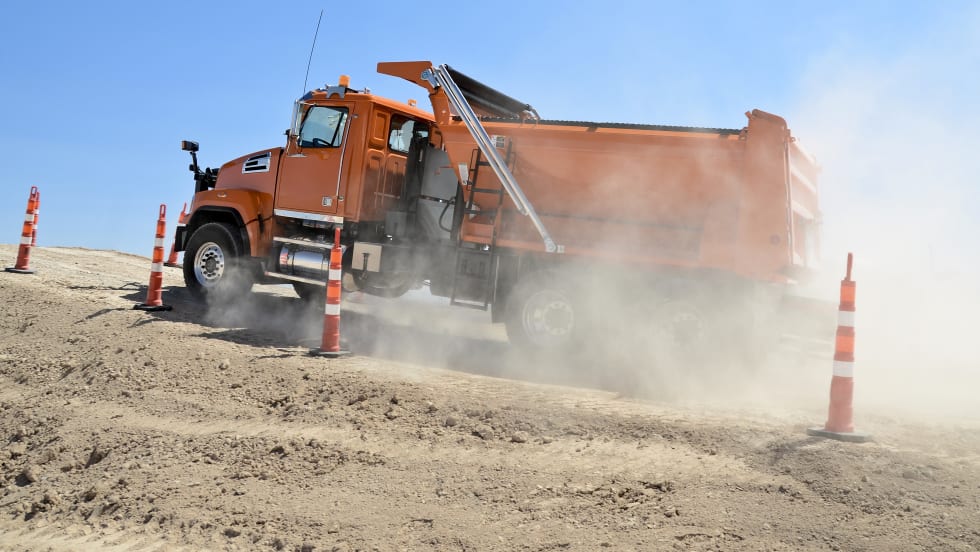
Basic Tracking vs Next Generation Fleet Technology
Fleet software is getting more sophisticated and effective than ever, tying big data models together to transform maintenance, safety, and the value of your existing tech stack. Fleet technology upgrades are undoubtedly an investment, but updated technology can offer a much higher return. Read how upgrading your fleet technology can increase the return on your investment.
Read More →
It’s here: The 2026 Fleet Technology Trends Report
What does AI mean for fleets? Get the answer — and learn other top tech trends.
Read More →
Small Fleets, Big Impact: How Independent Drivers Power Wreaths Across America
Check out how small fleets and independent drivers power Wreaths Across America each December and why their impact matters more than ever.
Read More →
VMS Survey Finds 65% of Small Fleet Managers Run Operations Alone
A new VMS survey shows small fleet managers are stretched thin, with most handling operations solo and eager to adopt digital tools for relief.
Read More →
Tips for Driving Safely on Halloween Night
This video features a reminder from the Connecticut Department of Transportation (DOT) and the Connecticut Police Chiefs Association, urging drivers to prioritize safety this Halloween.
Read More →
AI, Access, and Uptime: VMS’s Next Chapter with David Prusinski
VMS’s new Co-CEO, David Prusinski, shares how an AI-first approach will give small fleets and repair shops the tools to compete like big players.
Read More →