




Mitsubishi Fuso Unveils New Powertrain for Class 3-5 Medium-Duty Work Trucks
The innovative powertrain combines a new, advanced engine with BlueTec emissions reduction system plus DUONIC transmission, the world’s first automated, dual-clutch transmission for commercial trucks.
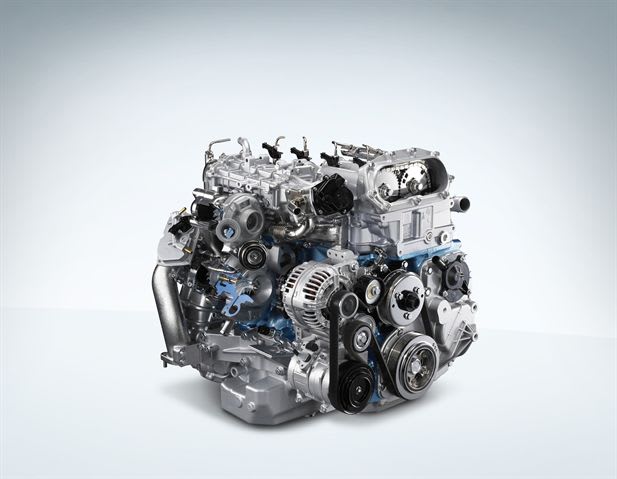
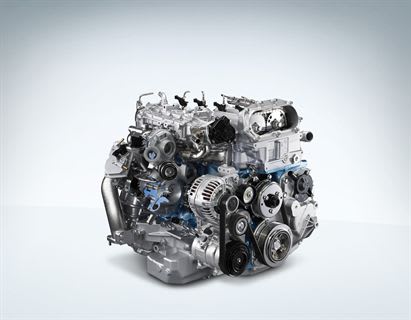
New Mitsubishi Fuso 4P10 high-efficiency, turbocharged diesel engine.
Mitsubishi Fuso Truck of America Inc. (MFTA) unveiled a new, highly powertrain for its next generation of Mitsubishi Fuso Class 3-5 commercial trucks in North America. The integrated powertrain will meet EPA 2010 emissions standards and provide enhanced drivability, and is expected to increase fuel economy well over 10 percent, compared to the previous-generation Mitsubishi Fuso 4M50 engine designed for EPA 2007 emissions standards (based on internal testing).
4P10 engine - lightweight and efficient
The heart of the powertrain is the new 4P10 engine. The lightweight, highly efficient, 3-liter, in-line 4-cylinder diesel powerplant is designed for rugged service and low fuel consumption.
The engine features an intercooled, 2-stage turbocharger, piezo-type fuel injectors, common-rail injection system, dual overhead cams and lightweight block. Careful tuning and higher-revolution operation, combined with the rapid response of the piezo fuel injectors, provide a flat torque curve with excellent response and smooth operation.
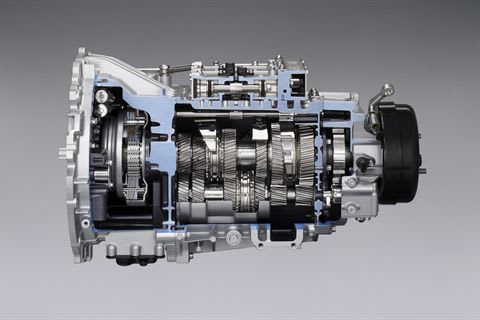
DUONIC dual-clutch (AMT) transmission - the world's first for commercial trucks
The DUONIC dual-clutch transmission is the first ever application, globally, of a dual-clutch transmission in a commercial truck. The new 6-speed transmission works in sync with the new engine to meet the company's drivability, emissions, and fuel efficiency goals.
The driver will drive the vehicle just as a standard automatic, using only a throttle and brake pedal - no clutch manipulation is required and no clutch pedal is installed. The transmission's electronic control system uses a multi-value control system to match transmission shift points to vehicle load, speed, driving conditions and accelerator angle, minimizing torque interruption (power decline) during gear changes. Gears change smoothly, without power loss during shifts.
For urban environments, the DUONIC transmission offers further enhancements. An "ECO mode" allows the driver to adjust shift points to reduce fuel consumption during heavy traffic operation, and a "creep" function has been added to make control of the vehicle easier when subtle adjustments to vehicle speed are needed in heavy stop-and-go traffic and for hill starts. For added convenience, and as with most automatic transmissions, a Park function has also been included, which locks an internal transmission gear to help assure safety and stability when the vehicle is parked.
Finally, the DUONIC transmission uses a wet-clutch design which eliminates the need for regular clutch changes due to wear, thus reducing maintenance costs and contributing to low cost of ownership.
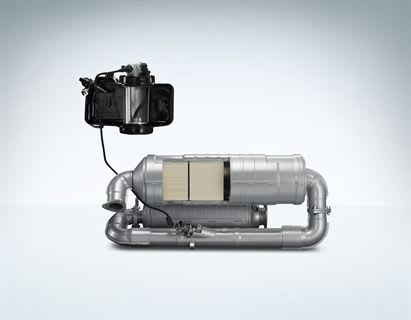
BlueTec- advanced emissions reduction system
BlueTec emissions technology requires no complex changes to the engine's operation. The system consists of components already introduced to meet US EPA 2007 emissions regulations (the diesel particulate filter, or DPF, and diesel oxidation catalyst, or DOC), which have been enhanced with new BlueTec selective catalytic reduction (SCR) treatment. (BlueTec is a registered trademark of Daimler AG.)
More Small Fleet


Developing Budget-Friendly Driver Safety Programs
From driver training and safety meetings to one-on-one coaching and incentive programs, several small fleets share how they have developed a safety culture with their drivers using low- to no-cost resources.
Read More →
Boosting Last-Mile Fleet Uptime, Safety, and Value with AI Vehicle Inspections
AI-powered inspections are transforming last-mile fleets by replacing manual checks with highly accurate automated scans that detect defects in seconds. By giving fleet operations visibility into the daily condition of their vehicles, you can identify trends over the vehicle’s lifecycle that enable improved procurement decisions, route management, driver training and accountability.
Read More →

Five Ways Seat Belts Help Prevent Injuries
There are five ways seat belts protect occupants from injuries, according to the Tennessee Department of Safety and Homeland Security.
Read More →
Basic Tracking vs Next Generation Fleet Technology
Fleet software is getting more sophisticated and effective than ever, tying big data models together to transform maintenance, safety, and the value of your existing tech stack. Fleet technology upgrades are undoubtedly an investment, but updated technology can offer a much higher return. Read how upgrading your fleet technology can increase the return on your investment.
Read More →
It’s here: The 2026 Fleet Technology Trends Report
What does AI mean for fleets? Get the answer — and learn other top tech trends.
Read More →
Small Fleets, Big Impact: How Independent Drivers Power Wreaths Across America
Check out how small fleets and independent drivers power Wreaths Across America each December and why their impact matters more than ever.
Read More →
VMS Survey Finds 65% of Small Fleet Managers Run Operations Alone
A new VMS survey shows small fleet managers are stretched thin, with most handling operations solo and eager to adopt digital tools for relief.
Read More →
Tips for Driving Safely on Halloween Night
This video features a reminder from the Connecticut Department of Transportation (DOT) and the Connecticut Police Chiefs Association, urging drivers to prioritize safety this Halloween.
Read More →
AI, Access, and Uptime: VMS’s Next Chapter with David Prusinski
VMS’s new Co-CEO, David Prusinski, shares how an AI-first approach will give small fleets and repair shops the tools to compete like big players.
Read More →