




Media Fleet Picks ProMaster Van for Versatility
A Detroit-based communications company updated its fleet with two new Ram ProMaster cargo vans. The new vans allowed the company to update its business model to a mobile environment.

TVS Communication Solutions purchased two brand-new Ram ProMaster cargo vans to replace two of the fleet's older vans.
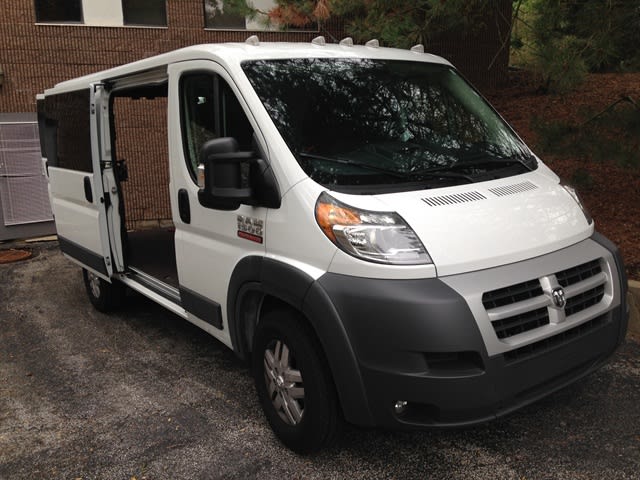
TVS Communication Solutions purchased two brand-new Ram ProMaster cargo vans to replace two of the fleet's older vans.
When choosing the right vehicles for a small business fleet, several factors are involved, including cargo capacity, gas mileage, reliability and maneuverability.
But for Rick Ghersi, owner and CEO of TVS Communication Solutions, a little style doesn’t hurt. Referring to the van as a “cool look,” the all-new Ram ProMaster cargo van caught his attention. So much so that Ghersi purchased two Ram ProMaster vans for his fleet.
When it came time to replace two of his fleet’s older vans, Ghersi did his research and weighed his needs against what was currently available on the market.
“We went out to see what was new,” he said. “The old vans were at a point where they were wearing down.”
Search for Right Vehicle
Detroit-based TVS is a visual communications company that produces video for products and live events. Over 24 years in business, the industry has seen a lot of change, but “People still need content and we generate it,” according to Ghersi.
TVS has a small fleet of five vehicles, including four vans and one Freightliner truck for the big stuff. When it was time to update his fleet, Ghersi had to consider the shift away from in-house work to on-location shoots. More and more, clients wanted TVS to bring their gear to an event — and in some cases produce the whole video on location.
Because of this demand, TVS hauls a lot of bulky items such as multiple camera rigs and production equipment. It isn’t all about payload; it is more about volume and mobility.
“We haul gear on a regular basis to shoot and produce events on the road,” said Ghersi. “We need big empty spaces where we can stack gear and be able to move it in and out.”
Now, the company can utilize two vans that have the space to haul gear and the versatility to become a mini production room when needed, while minimizing use of the larger Freightliner.
Additionally, Ghersi’s fleet travels often and he needs reliable vehicles.
“We put 30,000 or 40,000 miles a year on these vans,” said Ghersi. “We try to go up to 200,000 miles and see if we can have them for five or six years.”
[PAGEBREAK]
A Driver’s Perspective
While cost efficiency and reliability are important to the company’s owner, driving the ProMaster on a daily basis brings a different perspective.
“The most comfortable van I’ve ever driven,” said Jeff Verhoef, the senior engineer and webcast manager for TVS. “I can get the seat in a place where I’m comfortable driving it.”
Comparing the ProMaster to some of the other vans he’s driven for TVS, Verhoef had high praise for the new Ram vans. He found them easy to drive, not lacking in power and with a tight turning radius. The ProMaster vans seem to handle themselves well in tight situations as well as in rainy conditions, according to Verhoef.
“When the back is unloaded, take it easy on the gas because you’ll be surprised at how fast it will take off on you,” said Verhoef.
Informally, Verhoef has seen the ProMasters averaging 18 to 20 mpg compared with 14 to 15 mpg for the old vans.
So far, the ProMaster has proved to be a good fit for TVS and its employees, says Ghersi. “In comparison, our costs are going down,” said Ghersi. “We look for what’s going to last and what we are going to get better mileage on, and still be comfortable — because Michigan weather is unpredictable.”
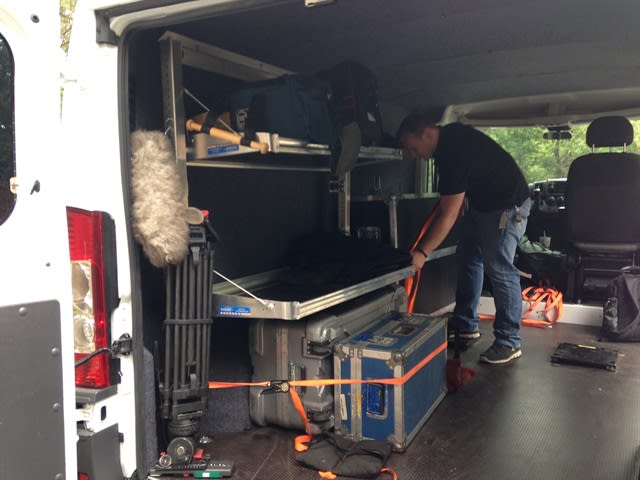
The ProMaster provides enough space for stacking production gear and being able to move it in and out.
More Small Fleet


Developing Budget-Friendly Driver Safety Programs
From driver training and safety meetings to one-on-one coaching and incentive programs, several small fleets share how they have developed a safety culture with their drivers using low- to no-cost resources.
Read More →
Boosting Last-Mile Fleet Uptime, Safety, and Value with AI Vehicle Inspections
AI-powered inspections are transforming last-mile fleets by replacing manual checks with highly accurate automated scans that detect defects in seconds. By giving fleet operations visibility into the daily condition of their vehicles, you can identify trends over the vehicle’s lifecycle that enable improved procurement decisions, route management, driver training and accountability.
Read More →
Five Ways Seat Belts Help Prevent Injuries
There are five ways seat belts protect occupants from injuries, according to the Tennessee Department of Safety and Homeland Security.
Read More →
It’s here: The 2026 Fleet Technology Trends Report
What does AI mean for fleets? Get the answer — and learn other top tech trends.
Read More →
Small Fleets, Big Impact: How Independent Drivers Power Wreaths Across America
Check out how small fleets and independent drivers power Wreaths Across America each December and why their impact matters more than ever.
Read More →
VMS Survey Finds 65% of Small Fleet Managers Run Operations Alone
A new VMS survey shows small fleet managers are stretched thin, with most handling operations solo and eager to adopt digital tools for relief.
Read More →
Tips for Driving Safely on Halloween Night
This video features a reminder from the Connecticut Department of Transportation (DOT) and the Connecticut Police Chiefs Association, urging drivers to prioritize safety this Halloween.
Read More →
AI, Access, and Uptime: VMS’s Next Chapter with David Prusinski
VMS’s new Co-CEO, David Prusinski, shares how an AI-first approach will give small fleets and repair shops the tools to compete like big players.
Read More →
Fleet Managers Share Winter Prep Tips: It's Never Too Early!
Three fleets share best practices to prep vehicles for winter and prevent downtime when the cold sets in.
Read More →