




Mazda, Toyota to Share Fuel Cell, Diesel Tech
The proposed partnership will allow Mazda to use Toyota’s hydrogen fuel cell system and plug-in technology. Mazda would then provide its fuel-efficient Skyactiv gasoline and diesel engine technologies to Toyota.
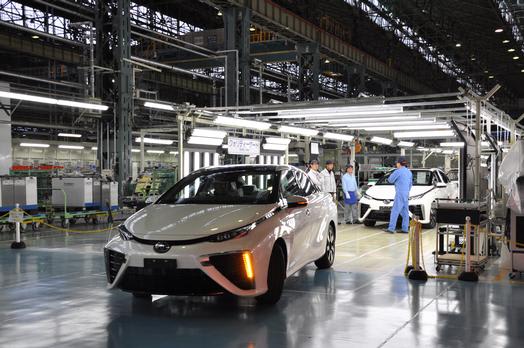
Toyota Mirai production line. Photo courtesy of Toyota.
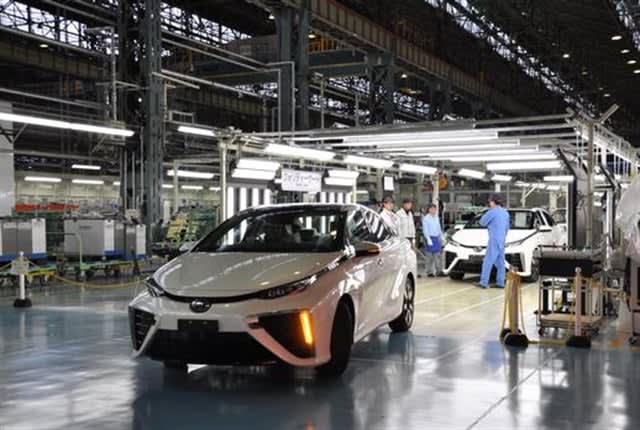
Toyota Mirai production line. Photo courtesy of Toyota.
Toyota and Mazda are entering a "long term partnership" to enhance each other’s products and technologies, according to a press release from Mazda.
The proposed partnership will allow Mazda to use Toyota’s hydrogen fuel cell system and plug-in technology. Mazda would then provide its fuel-efficient Skyactiv gasoline and diesel engine technologies to Toyota, according to the Wall Street Journal.
The partnership also allows Mazda to use some of Toyota’s gasoline-electric hybrid technology, while Mazda is set to produce a smaller car for Toyota in Mexico.
Toyota announced last week that its hydrogen fuel cell sedan Mirai will be available to eight northern and southern California dealers in October.
Toyota plans to produce 700 Mirai sedans in 2015 and an estimated 2,000 units in 2016.
Although Toyota increased the production after receiving 1,5000 initial orders in Japan, the company is still trying to promote fuel cell technology to make it more commonplace.
Toyota has already decided to share some of its patents concerning fuel cell technology for free, hoping this will speed up the development of the infrastructure.
A joint committee will evaluate which technologies will be the main focus for future cars, and also collaborate on new environmental and safety technology.
Originally posted on Automotive Fleet
More Small Fleet


Developing Budget-Friendly Driver Safety Programs
From driver training and safety meetings to one-on-one coaching and incentive programs, several small fleets share how they have developed a safety culture with their drivers using low- to no-cost resources.
Read More →
Boosting Last-Mile Fleet Uptime, Safety, and Value with AI Vehicle Inspections
AI-powered inspections are transforming last-mile fleets by replacing manual checks with highly accurate automated scans that detect defects in seconds. By giving fleet operations visibility into the daily condition of their vehicles, you can identify trends over the vehicle’s lifecycle that enable improved procurement decisions, route management, driver training and accountability.
Read More →
Five Ways Seat Belts Help Prevent Injuries
There are five ways seat belts protect occupants from injuries, according to the Tennessee Department of Safety and Homeland Security.
Read More →
It’s here: The 2026 Fleet Technology Trends Report
What does AI mean for fleets? Get the answer — and learn other top tech trends.
Read More →
Small Fleets, Big Impact: How Independent Drivers Power Wreaths Across America
Check out how small fleets and independent drivers power Wreaths Across America each December and why their impact matters more than ever.
Read More →
VMS Survey Finds 65% of Small Fleet Managers Run Operations Alone
A new VMS survey shows small fleet managers are stretched thin, with most handling operations solo and eager to adopt digital tools for relief.
Read More →
Tips for Driving Safely on Halloween Night
This video features a reminder from the Connecticut Department of Transportation (DOT) and the Connecticut Police Chiefs Association, urging drivers to prioritize safety this Halloween.
Read More →
AI, Access, and Uptime: VMS’s Next Chapter with David Prusinski
VMS’s new Co-CEO, David Prusinski, shares how an AI-first approach will give small fleets and repair shops the tools to compete like big players.
Read More →
Fleet Managers Share Winter Prep Tips: It's Never Too Early!
Three fleets share best practices to prep vehicles for winter and prevent downtime when the cold sets in.
Read More →