




Many Drivers Still Wary of Autonomous Vehicles
A new study from Kelley Blue Book underscores the dilemma for many drivers – they want greater safety but they don’t want to relinquish control.
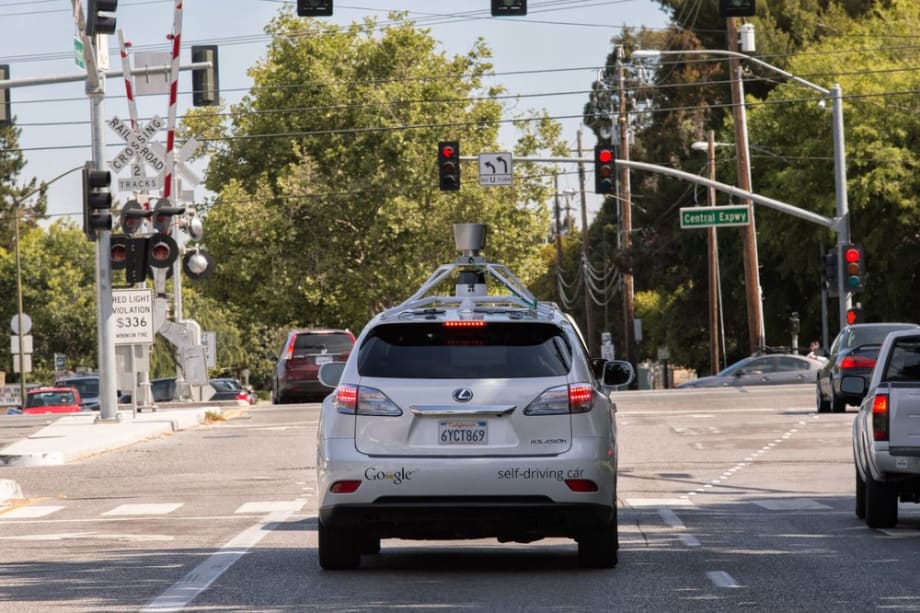
Photo courtesy of Google.
Government regulators and automakers alike are taking steps to hasten development and deployment of self-driving cars. But a new Kelley Blue Book study found that 51% of Americans would still prefer to have full control of their vehicle — even if that’s not as safe for other drivers.
A total of 49% of Americans would prefer to have a safer roadway for all, even if that means they have less control over their own vehicle, according to the study.
Kelley Blue Book commissioned the national study to understand current public perceptions and misconceptions about autonomous vehicles. The survey, conducted by market research firm Vital Findings, found that U.S. drivers are torn between the need for safety and the desire for control.
There are six levels of vehicle autonomy identified by the Society of Automotive Engineers (SAE International) — from Level 0 (human-only control) to Level 5 (no human driver).
(To view a video about the six levels of automated driving, click on the photo or link just below the headline.)
“The industry is talking a lot about self-driving vehicles these days, with multiple automakers and ride share companies throwing their hats in the competition to build and release the first fully autonomous vehicle to consumers,” said Karl Brauer, senior analyst for Kelley Blue Book. “Much is still unknown about fully autonomous vehicles, including how they would react in emergency situations, but the lower-level options are gaining steam, with many Americans interested in purchasing vehicles with Level 2 semi-autonomous features.”
According to the survey, awareness of the higher levels of vehicle autonomy is limited, with six out of 10 people admitting that they know little or nothing about autonomous vehicles. For about 50% of people, the perception of safety and personal comfort with autonomous technology diminishes as the level of autonomy increases.
When survey participants were asked to make a choice between the different levels, Level 4 autonomy hit the “sweet spot” by providing all the benefits of full vehicle autonomy without stripping away the option of driver control.
A total of 80% of people believe that motorists should always have the option to drive themselves, and 64% said they prefer to be in control of their vehicle. In fact, most consumers (62%) don’t think they will live to see a world where all vehicles are fully autonomous, the survey results indicate.
However, not all Americans are hesitant about the technological future of their automobiles. Respondents in the tech-savvy, pre-driving Gen Z (12-15 years old) age range are more receptive and consider themselves the most educated about autonomous vehicles, the survey found. The majority (67%) of these youths believe they will see fully autonomous vehicles in their lifetime. Also, 43% of them believe they know a lot about autonomous vehicles compared to only 1% of Baby Boomers (51-64 years old).
Those in the pre-driving Gen Z group are the most comfortable (73%) and feel the safest (79%) among all age groups with the highest level, Level 5 full vehicle autonomy (without human input). Older Millennials (25-34 years old), who have actual purchasing power today, are not far behind, at 44% and 61%, respectively.
A majority of current luxury vehicle owners also reported more awareness of the higher levels of autonomy, particularly Level 5 (60% compared to 39% for the remainder of the surveyed group). Level 4 autonomy and Level 5 autonomy are almost equally appealing to luxury vehicle owners (26% and 25%, respectively), while non-luxury vehicle owners showed the highest interest in Level 4 (30%).
A majority of Americans (63%) believe that roadways would be safer if autonomous vehicles were standard. But 37% think that roadways are safer with vehicles operated by people. In addition, 60% of drivers would share their vehicle information for more efficient roadways, while 40% prefer to keep their information private, according to study results. If vehicles at all levels of autonomy were available by 2020, 59% of consumers would be likely to purchase a Level 3 or higher autonomous vehicle that’s capable of driving itself for extended periods of time.
Survey results are based on responses from more than 2,200 U.S. residents between the ages of 12-64 years old, weighted to U.S. Census figures by age, gender, ethnicity, and various residential and ownership patterns.
Originally posted on Automotive Fleet
More Small Fleet

Developing Budget-Friendly Driver Safety Programs
From driver training and safety meetings to one-on-one coaching and incentive programs, several small fleets share how they have developed a safety culture with their drivers using low- to no-cost resources.
Read More →
Boosting Last-Mile Fleet Uptime, Safety, and Value with AI Vehicle Inspections
AI-powered inspections are transforming last-mile fleets by replacing manual checks with highly accurate automated scans that detect defects in seconds. By giving fleet operations visibility into the daily condition of their vehicles, you can identify trends over the vehicle’s lifecycle that enable improved procurement decisions, route management, driver training and accountability.
Read More →
Five Ways Seat Belts Help Prevent Injuries
There are five ways seat belts protect occupants from injuries, according to the Tennessee Department of Safety and Homeland Security.
Read More →
It’s here: The 2026 Fleet Technology Trends Report
What does AI mean for fleets? Get the answer — and learn other top tech trends.
Read More →
Small Fleets, Big Impact: How Independent Drivers Power Wreaths Across America
Check out how small fleets and independent drivers power Wreaths Across America each December and why their impact matters more than ever.
Read More →
VMS Survey Finds 65% of Small Fleet Managers Run Operations Alone
A new VMS survey shows small fleet managers are stretched thin, with most handling operations solo and eager to adopt digital tools for relief.
Read More →
Tips for Driving Safely on Halloween Night
This video features a reminder from the Connecticut Department of Transportation (DOT) and the Connecticut Police Chiefs Association, urging drivers to prioritize safety this Halloween.
Read More →
AI, Access, and Uptime: VMS’s Next Chapter with David Prusinski
VMS’s new Co-CEO, David Prusinski, shares how an AI-first approach will give small fleets and repair shops the tools to compete like big players.
Read More →
Fleet Managers Share Winter Prep Tips: It's Never Too Early!
Three fleets share best practices to prep vehicles for winter and prevent downtime when the cold sets in.
Read More →