




Manheim: Used Vehicle Prices Fell In Oct.
After increasing the last four months, wholesale used vehicle prices declined in October. The Manheim Index now stands at 122.3, an increase of only 0.3% from its year-ago level.
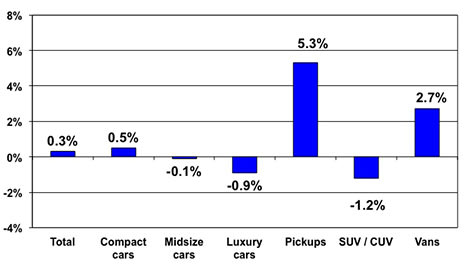
Price changes for selective market classes for Oct. 2013 versus Oct. 2012. Courtesy of Manheim.
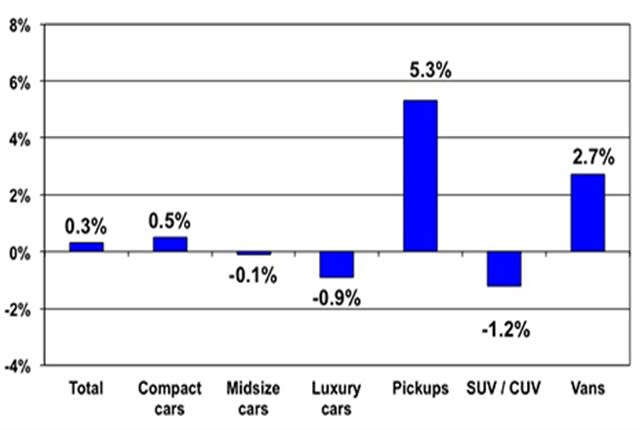
Price changes for selective market classes for Oct. 2013 versus Oct. 2012. Courtesy of Manheim.
Wholesale used vehicle prices (on a mix-, mileage- and seasonally adjusted basis) declined in October after increasing the last four months. According to Manheim Consulting, the Manheim Used Vehicle Value Index reading was 122.3 in October, which represented a 0.3% increase from its year-ago level.
With off-lease volumes set to accelerate next year, franchised dealers should see higher volume again in 2014, says Manheim.
And in the short term, wholesale prices on a year-over-year basis will now begin to bump up against the inflated levels created by Hurricane Sandy in October 2012. With respect to retail demand, we believe that the market will remain favorable for dealers, but that the impressive improvements achieved over the past two years will be hard to repeat, according to Manheim.
The annualized new vehicle selling rate (on a three-month moving average basis) has started to plateau in the 15.5 to 15.7 million ranges. The consensus forecast of slightly more than 16 million sales in 2014 is reasonable; but even if achieved, that would represent a much smaller percentage gain than what we posted in each of the past four years, says Manheim.
But pricing power has not slowed — and that’s even more important. Average transaction prices continue to rise as the result of lower net incentives, higher sticker prices and the consumer’s desire for more heavily contented vehicles, says Manheim.
In October, total used unit retail sales rose 3.6%, resulting in a 3.5% year-to-date increase, according to CNW. Within that total, manufacturer certified pre-owned (CPO) sales rose 20.6% in October. Year-to-date CPO sales are 15.3% ahead of last year's pace.
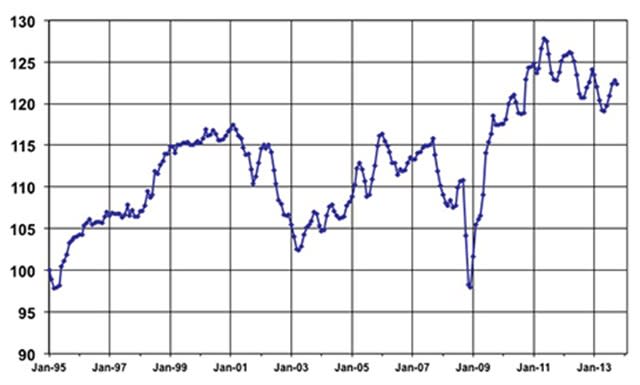
October Used Vehicle Index courtesy of Manheim.
Originally posted on Automotive Fleet
More Small Fleet


Developing Budget-Friendly Driver Safety Programs
From driver training and safety meetings to one-on-one coaching and incentive programs, several small fleets share how they have developed a safety culture with their drivers using low- to no-cost resources.
Read More →
Boosting Last-Mile Fleet Uptime, Safety, and Value with AI Vehicle Inspections
AI-powered inspections are transforming last-mile fleets by replacing manual checks with highly accurate automated scans that detect defects in seconds. By giving fleet operations visibility into the daily condition of their vehicles, you can identify trends over the vehicle’s lifecycle that enable improved procurement decisions, route management, driver training and accountability.
Read More →
Five Ways Seat Belts Help Prevent Injuries
There are five ways seat belts protect occupants from injuries, according to the Tennessee Department of Safety and Homeland Security.
Read More →
It’s here: The 2026 Fleet Technology Trends Report
What does AI mean for fleets? Get the answer — and learn other top tech trends.
Read More →
Small Fleets, Big Impact: How Independent Drivers Power Wreaths Across America
Check out how small fleets and independent drivers power Wreaths Across America each December and why their impact matters more than ever.
Read More →
VMS Survey Finds 65% of Small Fleet Managers Run Operations Alone
A new VMS survey shows small fleet managers are stretched thin, with most handling operations solo and eager to adopt digital tools for relief.
Read More →
Tips for Driving Safely on Halloween Night
This video features a reminder from the Connecticut Department of Transportation (DOT) and the Connecticut Police Chiefs Association, urging drivers to prioritize safety this Halloween.
Read More →
AI, Access, and Uptime: VMS’s Next Chapter with David Prusinski
VMS’s new Co-CEO, David Prusinski, shares how an AI-first approach will give small fleets and repair shops the tools to compete like big players.
Read More →
Fleet Managers Share Winter Prep Tips: It's Never Too Early!
Three fleets share best practices to prep vehicles for winter and prevent downtime when the cold sets in.
Read More →