





See Also: IIHS Aims to Raise the Bar on Pedestrian AEB Systems
If Activated, AEB Could Reduce Crashes by 60%
A new analysis calculates the number of crashes that could be avoided if drivers would use advanced safety features. Unfortunately, there is a tendency to turn them off.
May 24, 2022
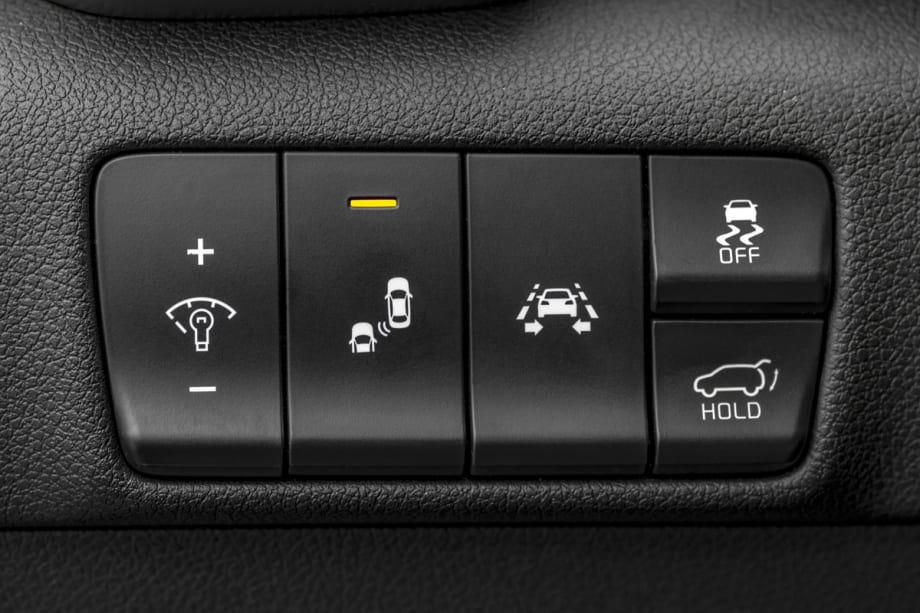
Analysis shows the estimated percentage of certain types of crashes that could have been avoided if drivers left safety features on.
Photo: Erie Insurance/Getty Images
2 min to read
If all cars had automated emergency braking (AEB) and drivers left it on, crashes could be reduced by 750,000, according to a recent analysis by Erie Insurance.
The company teamed up with the Insurance Institute for Highway Safety (IIHS) on the analysis project to raise awareness of the benefits of safety features and to encourage drivers to use them. IIHS reviewed its data on the crash avoidance effects of various features in combination with Erie Insurance survey data on the percentage of drivers who admitted to turning off those features.
The findings are noteworthy. For examples, by leaving on AEB, drivers could have reduced front-to-rear crashes by 60%, resulting in 16,000+ fewer crashes.
If drivers kept on lane departure warning, this feature could have reduced single vehicle, sideswipe, head-on crashes by 14% or nearly 8,000 fewer crashes. Finally, leaving blind spot monitoring on could have reduced lane-change crashes by 15%, resulting in about 1,000 fewer of those types of crashes, according to the analysis.
All too often, drivers turn off or disable safety features because they find them distracting or annoying. In fact, the Erie Insurance survey revealed that of the drivers whose vehicles have these features, 11% turn off forward collision warning and 17% turn off automated emergency braking.
The two features drivers were most likely to say they disabled were ones designed to enhance their comfort and convenience. Some 30% of drivers said they had not used adaptive cruise control, which keeps a vehicle a specific distance from the car in front of it by applying the brakes if it gets too close.
Moreover, nearly a quarter (23%) of respondents said they turned off lane keeping assist, and the most cited reason was that they found the feature annoying. Some 22% said they disabled driver attention monitor because it sends too many false alarms. And 11% turn off pedestrian detection systems because they feel it is not helpful.
Originally posted on Automotive Fleet
More Small Fleet


Developing Budget-Friendly Driver Safety Programs
From driver training and safety meetings to one-on-one coaching and incentive programs, several small fleets share how they have developed a safety culture with their drivers using low- to no-cost resources.
Read More →
Sponsored•March 9, 2026
Boosting Last-Mile Fleet Uptime, Safety, and Value with AI Vehicle Inspections
AI-powered inspections are transforming last-mile fleets by replacing manual checks with highly accurate automated scans that detect defects in seconds. By giving fleet operations visibility into the daily condition of their vehicles, you can identify trends over the vehicle’s lifecycle that enable improved procurement decisions, route management, driver training and accountability.
Read More →
Five Ways Seat Belts Help Prevent Injuries
There are five ways seat belts protect occupants from injuries, according to the Tennessee Department of Safety and Homeland Security.
Read More →
Sponsored•January 14, 2026
It’s here: The 2026 Fleet Technology Trends Report
What does AI mean for fleets? Get the answer — and learn other top tech trends.
Read More →
Small Fleets, Big Impact: How Independent Drivers Power Wreaths Across America
Check out how small fleets and independent drivers power Wreaths Across America each December and why their impact matters more than ever.
Read More →
VMS Survey Finds 65% of Small Fleet Managers Run Operations Alone
A new VMS survey shows small fleet managers are stretched thin, with most handling operations solo and eager to adopt digital tools for relief.
Read More →
Tips for Driving Safely on Halloween Night
This video features a reminder from the Connecticut Department of Transportation (DOT) and the Connecticut Police Chiefs Association, urging drivers to prioritize safety this Halloween.
Read More →
AI, Access, and Uptime: VMS’s Next Chapter with David Prusinski
VMS’s new Co-CEO, David Prusinski, shares how an AI-first approach will give small fleets and repair shops the tools to compete like big players.
Read More →
Fleet Managers Share Winter Prep Tips: It's Never Too Early!
Three fleets share best practices to prep vehicles for winter and prevent downtime when the cold sets in.
Read More →