




Hydrogen Fueling Network: How Many Stations for Critical Mass?
While electric vehicles continue to steal the headlines, California plans to build at least 100 hydrogen fueling stations by 2020.

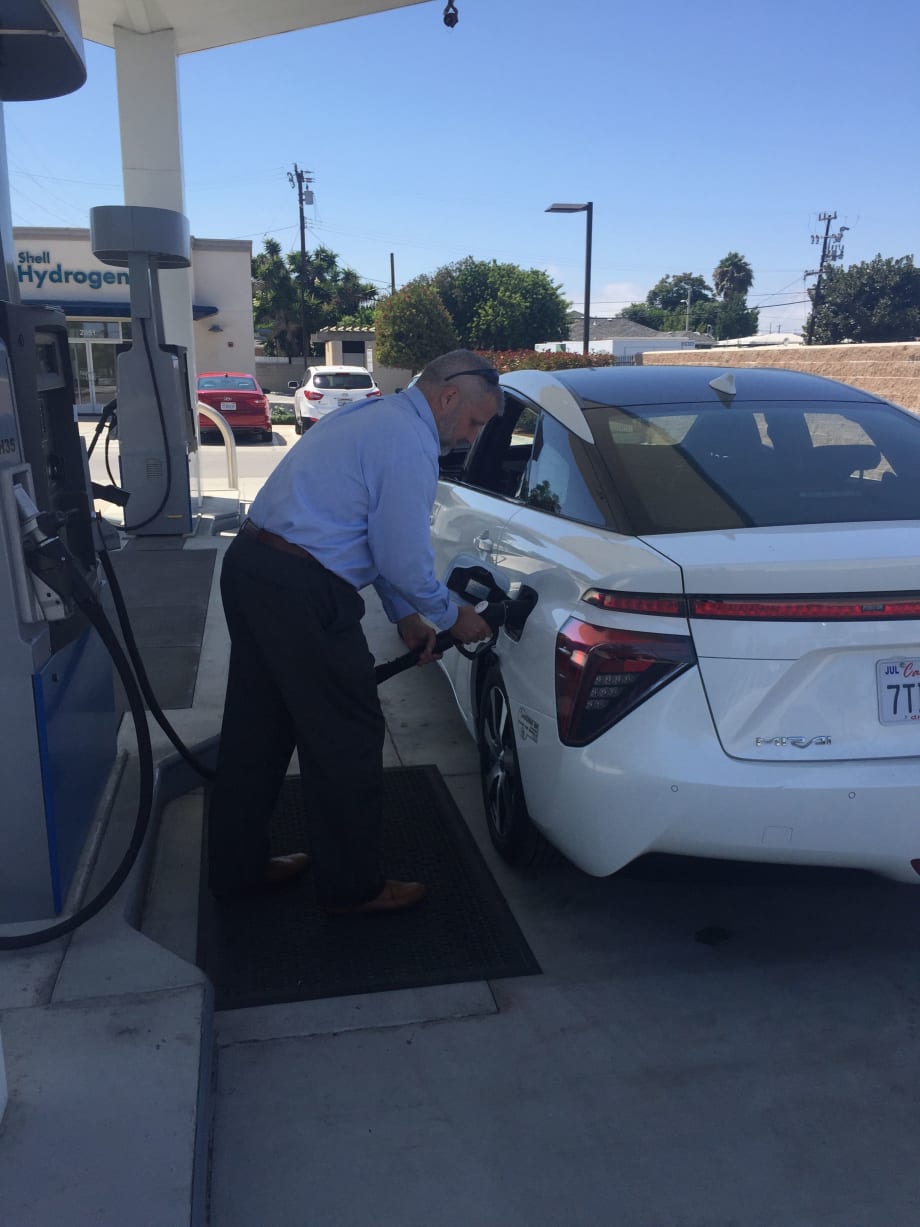
Keith Malone, government relations for the California Fuel Cell Partnership, refuels a Toyota Mirai at Torrance's newly opened public hydrogen station. Photo by Chris Brown
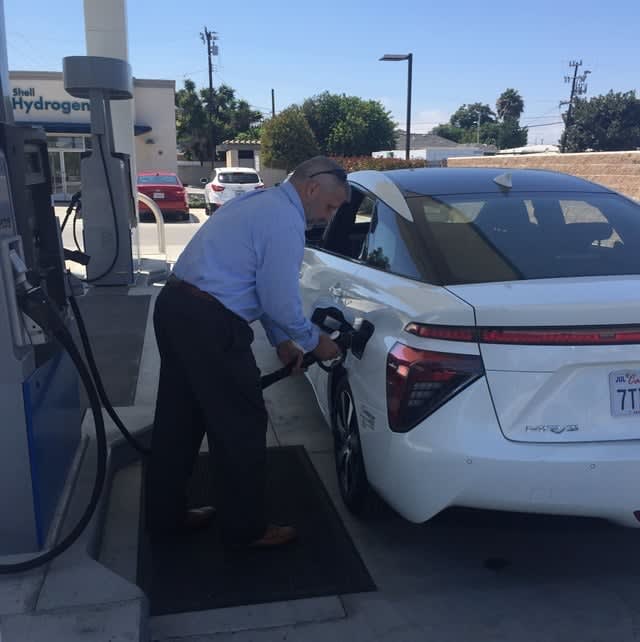
Keith Malone, government relations for the California Fuel Cell Partnership, refuels a Toyota Mirai at Torrance's newly opened public hydrogen station. Photo by Chris Brown
While electric vehicle developments steal the headlines, the hydrogen fueling infrastructure continues to be implemented. California is leading the charge.
Assembly Bill 8 provides a focus on development of California’s hydrogen fueling station network. The AB 8 program dedicates $20 million per year to support California’s commitment to build at least 100 hydrogen fuel stations by 2020, according to the California Air Resources Board (CARB).
Through the AB 8 program, the state of California has co-funded 62 hydrogen fueling station projects so far. According to the California Fuel Cell Partnership, currently 31 stations are open as retail stations and three are open as non-retail stations. A majority of the stations are located in Southern California, but more stations are popping up in Northern and Central California.
Torrance’s hydrogen station recently opened as the 30th retail station. It’s the only hydrogen station in the U.S. to be fed by a hydrogen pipeline, according to Keith Malone, government relations for the California Fuel Cell Partnership. The most recent retail station opened in Fremont.
“If we can get to about 900 hydrogen fuel stations, that would allow Californians to reach a station in about 10 minutes,” says Malone. “Currently, one of the busiest stations is located in Long Beach.”
There are approximately 2,300 hydrogen consumer vehicles on the road today — the majority in California, according to Malone. Hydrogen models include the Toyota Mirai, Honda Clarity, and Hyundai Tucson. Mercedes-Benz plans to start selling its hydrogen-powered GLC F-Cell hybrid in the U.S. in late 2019. The GLC will provide an electric range of 30 miles and a total range of 271 miles.
On the commercial side, Caltrans ordered 20 hydrogen fuel cell vehicles — the biggest order yet, according to Malone. And in the heavy duty market, hydrogen transit buses are early adapters.
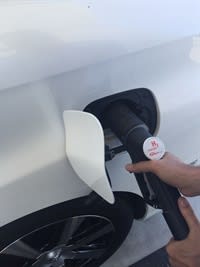
When refueling a hydrogen vehicle, make sure the nozzle locks into place. Photo by Chris Brown.
When it comes to fueling, a hydrogen fuel pump is similar to a gasoline pump. It only takes three to five minutes to refuel — compared to hours to fully charge an electric vehicle. To fuel a hydrogen vehicle, lift the lever and put the fueling nozzle in the vehicle. Make sure that the nozzle locks into place before starting to fuel.
At the Torrance station, two pumps are available: H70 (10,000 psi) for passenger car applications and H35 (5,000 psi) for medium-duty applications; the difference is the amount of pressure. When refueling the Mirai, the price was $16 per kilogram. The Mirai takes 4.7 kilograms to refill its tank.
“Hydrogen vehicles don’t have a sexy factor like Tesla, but the Mirai has a total range of 312 miles on one tank,” says Malone.
More Small Fleet


Developing Budget-Friendly Driver Safety Programs
From driver training and safety meetings to one-on-one coaching and incentive programs, several small fleets share how they have developed a safety culture with their drivers using low- to no-cost resources.
Read More →
Boosting Last-Mile Fleet Uptime, Safety, and Value with AI Vehicle Inspections
AI-powered inspections are transforming last-mile fleets by replacing manual checks with highly accurate automated scans that detect defects in seconds. By giving fleet operations visibility into the daily condition of their vehicles, you can identify trends over the vehicle’s lifecycle that enable improved procurement decisions, route management, driver training and accountability.
Read More →
Five Ways Seat Belts Help Prevent Injuries
There are five ways seat belts protect occupants from injuries, according to the Tennessee Department of Safety and Homeland Security.
Read More →
It’s here: The 2026 Fleet Technology Trends Report
What does AI mean for fleets? Get the answer — and learn other top tech trends.
Read More →
Small Fleets, Big Impact: How Independent Drivers Power Wreaths Across America
Check out how small fleets and independent drivers power Wreaths Across America each December and why their impact matters more than ever.
Read More →
VMS Survey Finds 65% of Small Fleet Managers Run Operations Alone
A new VMS survey shows small fleet managers are stretched thin, with most handling operations solo and eager to adopt digital tools for relief.
Read More →
Tips for Driving Safely on Halloween Night
This video features a reminder from the Connecticut Department of Transportation (DOT) and the Connecticut Police Chiefs Association, urging drivers to prioritize safety this Halloween.
Read More →
AI, Access, and Uptime: VMS’s Next Chapter with David Prusinski
VMS’s new Co-CEO, David Prusinski, shares how an AI-first approach will give small fleets and repair shops the tools to compete like big players.
Read More →
Fleet Managers Share Winter Prep Tips: It's Never Too Early!
Three fleets share best practices to prep vehicles for winter and prevent downtime when the cold sets in.
Read More →