


About the Author
Les Smart is president of Smart Fleet Management, a small and medium fleet consulting company. He can be reached at smart5010@atlasok.com.
 MENU
MENU SEARCH
Here is a list of items to check — and repair if needed — to keep your fleet vehicles up-to-date on maintenance and help keep drivers safe during winter road conditions.
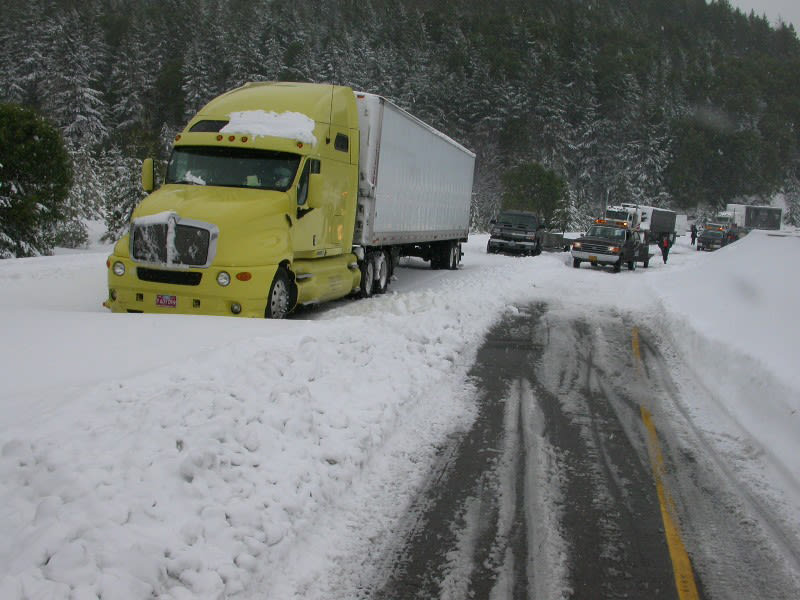
Photo courtesy of the Oregon Department of Transportation.
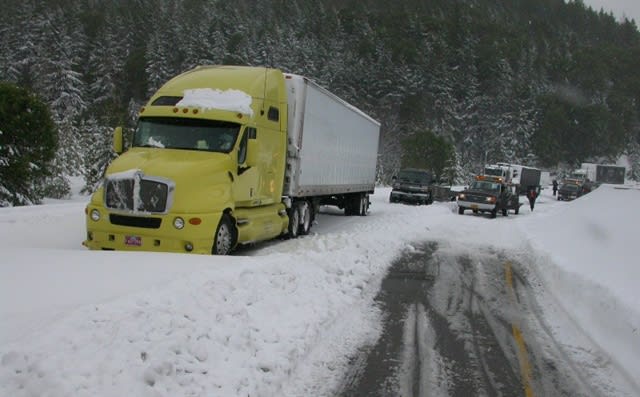
Photo courtesy of the Oregon Department of Transportation.
You might be reading this and think, “Not another list of parts to be given the ‘once over’ on my vans and trucks!”
This list can help prepare your fleet vehicles for winter. Hopefully, it will make you say, “Why didn’t I think of that one?”
This falls under the “should be obvious” category, but make sure to do the following:
- Check for dead or weak cells in the battery. I had a brand-new motorhome fresh from the factory that had a dead cell. Batteries that are weak or fail are not necessarily old and/or used.
- Make sure battery covers are properly secured and in good condition.
- Battery terminals need to be clean and not coated in acidic residue. Battery terminal cleaners are sold in auto parts stores. Disconnect the cable terminal, clean, and then put on a light coat of grease after reinstalling the cable to the battery post.
- Clean any acid residue from the battery box. This will help the battery box to last the life of the vehicle.
Make sure that both wipers work correctly at all switch settings. If not, replace the blades. Visibility can be a real problem with winter precipitation.
Check to see if the heater/defroster is in good working order. Many fans today have plastic parts.
If you hear a questionable noise coming from the fan, have it checked; it may be time for a replacement. Inadequate windshield defrosting or heat could have dire consequences in a winter storm.
You not only need to have the coolant checked to ensure its efficacy to negative 20 degrees, but also check that the surge tank has sufficient coolant in it when cold. The tank should be translucent to make the fluid level easily visible, and it should be marked for both hot and cold fluid levels. Check the radiator for leaks.
Squeeze the hoses to make sure they are not too thin and liable to break. If questionable, have the hoses replaced.
Do a visual check. Turn each belt to make sure it is not dry or cracked. If questionable, have them replaced.
Get your alternator checked. In the wintertime, there is a heavy load on an alternator. Running the headlights, the heater, and other electrical components can drain a weak alternator. It must be in good condition to charge the system adequately.
Make sure the fuel filters are changed. This avoids the potential for the engine to be starved of fuel with the resulting loss of power. It’s not expensive to have these filters replaced.
Don't forget to have air filters checked or replaced. Unless the filter has been recently replaced, it's best to install a new one. Most diesels have an air restriction gauge, which indicates when the filter needs to be replaced. If your vehicle is equipped with this feature, check and act accordingly.
Checking the state of each tire is, surprisingly enough, a task that is often neglected or overlooked. Check the tread level; tires should be replaced when they are down to 4/32 of tread at the bare minimum.
When driving on ice and snow, better tread depth provides better grip to the road surface. Check for cracks, cuts, or other damage to the sidewall. A damaged sidewall can allow water to penetrate to the steel belts, resulting in rust and eventual tire failure.
A vehicle’s lights are essential for both visibility and safety. If the lenses of your headlights are opaque, clean them up with some toothpaste and a buffer. Check for any burnt-out bulbs and replace as needed; those clearance lights help other drivers to see you, especially from the side and rear.
Does your system bleed down over time when parked? If so, have it checked for leaks.
Do the seat belts all work properly? Does your backup alarm work? Are your four-way emergency flashers in good operating conditioning? Check the operation of all these safety features.
These devices should be checked daily during drivers’ walk-around inspections prior to beginning their route — for their safety as well as for the safety of other drivers.
A weekly check of tire pressure is also recommended.


From driver training and safety meetings to one-on-one coaching and incentive programs, several small fleets share how they have developed a safety culture with their drivers using low- to no-cost resources.
Read More →
AI-powered inspections are transforming last-mile fleets by replacing manual checks with highly accurate automated scans that detect defects in seconds. By giving fleet operations visibility into the daily condition of their vehicles, you can identify trends over the vehicle’s lifecycle that enable improved procurement decisions, route management, driver training and accountability.
Read More →
There are five ways seat belts protect occupants from injuries, according to the Tennessee Department of Safety and Homeland Security.
Read More →
What does AI mean for fleets? Get the answer — and learn other top tech trends.
Read More →
Check out how small fleets and independent drivers power Wreaths Across America each December and why their impact matters more than ever.
Read More →
A new VMS survey shows small fleet managers are stretched thin, with most handling operations solo and eager to adopt digital tools for relief.
Read More →
This video features a reminder from the Connecticut Department of Transportation (DOT) and the Connecticut Police Chiefs Association, urging drivers to prioritize safety this Halloween.
Read More →
VMS’s new Co-CEO, David Prusinski, shares how an AI-first approach will give small fleets and repair shops the tools to compete like big players.
Read More →
Three fleets share best practices to prep vehicles for winter and prevent downtime when the cold sets in.
Read More →