




How Telematics Data Overload Multiplies in Fleets With Several OEMs
Fleet managers will find it exponentially more difficult to interpret and utilize telematics data the more variety of vehicle brands they add to their fleet, according to new data and analysis from WEX Inc.

Graph courtesy of WEX.
Graph courtesy of WEX.
Fleet managers will find it exponentially more difficult to interpret and utilize telematics data the more variety of vehicle brands they add to their fleet, according to new data and analysis from WEX Inc.
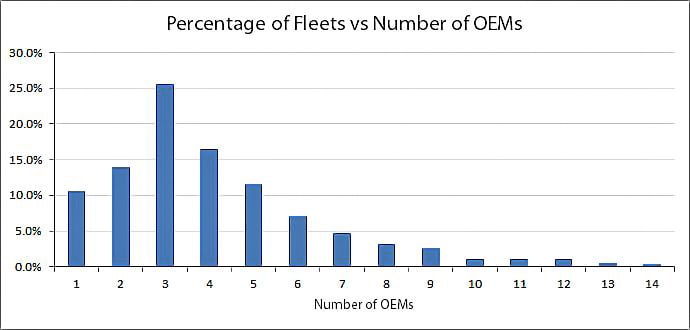
Data overload has become a persistent challenge for public and commercial managers of larger, mixed fleets, while smaller fleets are more likely to stay with a single OEM, said Kurt Thearling, vice president of analytics for WEX Inc. Most fleets in the data sample of 1,000 fleets (about 55%) have two to four different vehicle brands.
Comparing telematics data pulled from models of various vehicle brands such as Ford, General Motors, Fiat-Chrysler, Toyota, or Nissan presents headaches, and can be nearly impossible because fleet managers must log in to different systems, Thearling said.
"If you want to do any comparisons, an OEM focused telematics offering is not going to give you a single view of your overall fleet," Thearling said. "A fleet manager could export data from multiple OEMs into a set of CSV files and use Excel to do data analysis themselves, but there will be challenges. The basic analysis is probably not all that difficult, but once you move beyond the simple stuff it turns into a data science project, and will necessitate some data science expertise."
Thearling added, "In addition, working with telematics data requires domain expertise involving vehicle and device manufacturers. Not all telematics systems operate in the same way, and it gets even more complicated when you need to span OEMs, vehicle makes, and even model years. Variation in the data can complicate how it is combined across OEMs, so experience with both telematics systems as well as data science is important."
Thearling found that among the 1,000 current WEX clients in the sample, more than 25% have three different vehicle brands in their fleet. Roughly 16% have four, and about 14% have two. About 10% have a single vehicle brand. Several fleets, mostly larger truck-based fleets, have more than 10 brands with one fleet counting 14.
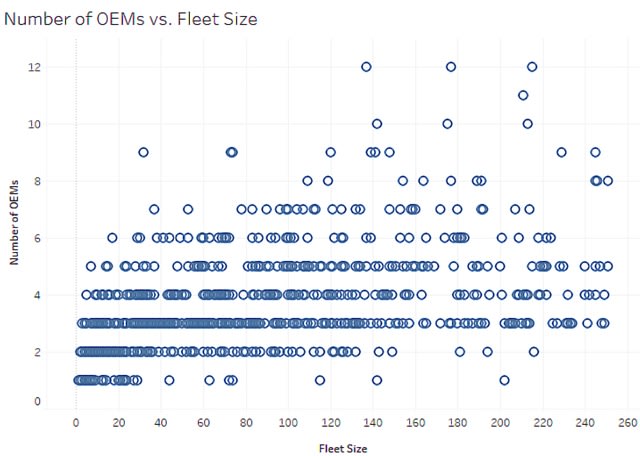
The data visualization below shows how the three-brand fleets dominate, from the smallest to the largest fleets. When you consider fleets larger than approximately 30 vehicles, there are very few fleets with only a single OEM.
Graph courtesy of WEX.
Fleets typically take vehicle- and event-level telematics data and convert it into driver scorecards that rate the risk levels of various drivers. This can then be used to implement additional driver training programs.
"Driver behavior and behavior management often carries opportunity for spend and safety improvements," said Brad Jacobs, director of strategic consulting for Merchants Fleet Management. "Translating telematics event level information effectively into driver behavior scorecards and management processes is key in realizing cost and safety benefits."
Fleet managers can rely on their fleet management companies, WEX, or other service providers to synthesize and interpret telematics data that can touch on fuel management, safety, training, and other aspects of fleet management.
One anonymous fleet manager for a food and beverage company said one of his biggest challenges was trying to assess and compare large quantities of telematics data.
"You might see a scorecard on driving behavior, and that is important," he said. "But how does that relate to fuel spend? They’re both related. Obviously the most important piece of that relationship is the safety of the driver, and scorecards have done a good job with that, but the challenge is they both have to be in the same conversation."
Another challenge of evaluating vehicle-level data comes when considering the age of vehicles. With each model year, vehicles add more and more sensors, which increases the number of data points under consideration, Thearling said. A fleet with two Ford F-150 trucks, for example, may receive varying information if one truck is three to four years older than the other one.
"That older F-150 may not generate as rich a data stream as the new F-150," Thearling said. "You're going to see all the vehicles, but you may not have the same data."
Editor's note: Assistant editor Andy Lundin contributed to this article.
Originally posted on Automotive Fleet
More Technology
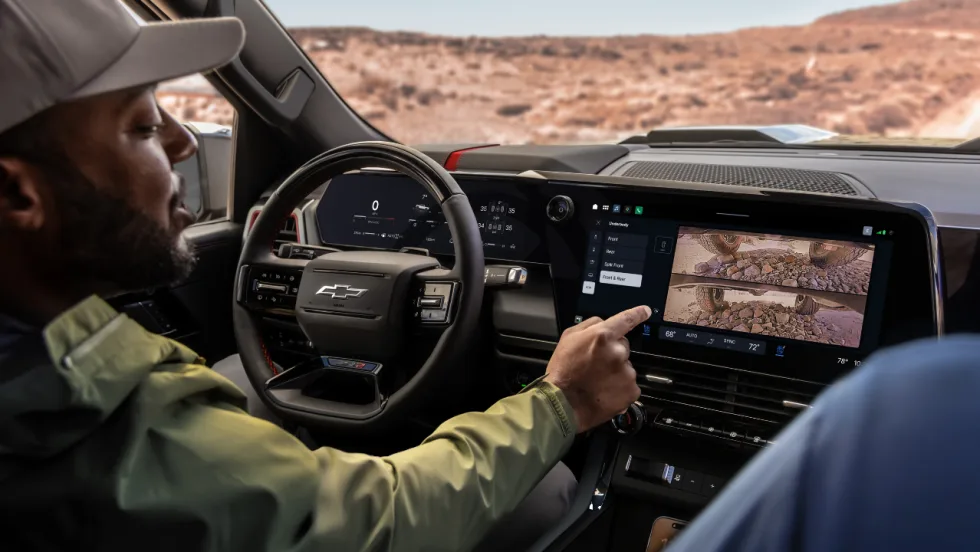
GM Brings New Truck Focused Interface to 2027 Silverado and Sierra
GM's new pickup interface puts trailering data, camera views, vehicle controls, and smartphone integration closer to the driver in the 2027 Silverado and Sierra.
Read More →
Samsara Driver Perks Expands Rewards Beyond the Long Haul Driver
Samsara’s new driver rewards program was built with a broader professional driver in mind, including employees who split their day between driving, job sites, service calls, and other work.
Read More →
AI Service Advisor Aims to Cut Fleet Repair Downtime
Fleetio said its AI Service Advisor can help fleets cut repair downtime by an average of 2.5 hours per repair while reducing manual maintenance work.
Read More →
Verra Mobility Launches AI-Driven Title & Registration Solution
Verra Mobility has launched a new AI-driven Title & Registration platform to help fleets move vehicles from acquisition to the road the same day while reducing compliance risk.
Read More →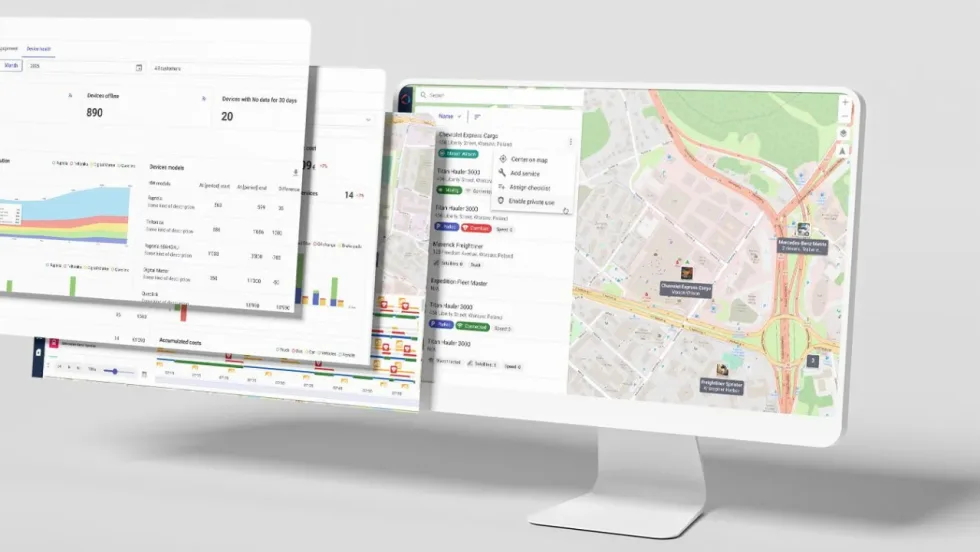
Wialon Unlocks OEM Data to Give Fleet Owners Data Ownership & Operational Clarity
Wialon has introduced hardware-free OEM integration as the EU Data Act accelerates the shift in vehicle data access across the fleet industry in many countries.
Read More →
Teletrac Navman Promotes New CEO from Within
Teletrac Navman’s next CEO, Ricardo Buranello, has served as the company’s chief financial and operating officer. He brings deep financial and operational expertise, a strong strategic orientation, and an intimate knowledge of the business to his new role.
Read More →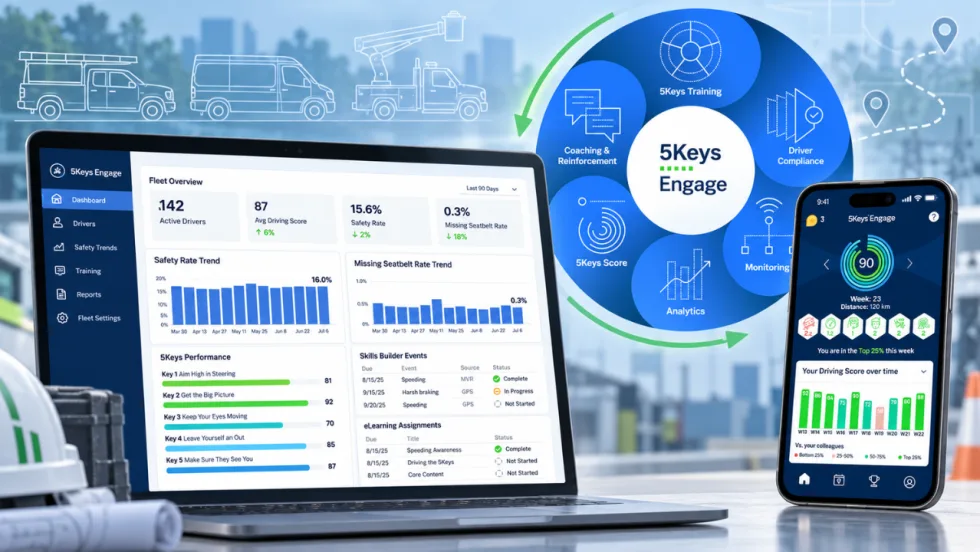
Smith System Wants Work Truck Fleets to Look Beyond the Driver Alert
Smith System’s new Driver Risk Management program is built to help mixed work truck fleets turn telematics alerts and observations into specific behaviors, coaching actions, and measurable follow-up.
Read More →
Ford Pro Software Updates: August 26
Check out the latest Ford Pro software updates, including Google Maps integration, Remote Vehicle Alarm integration, Motor Pool for easier management of shared pool vehicles, and more.
Read More →
Where AI Is Actually Saving Fleet Managers Time
AI is moving past the buzzword stage and into the daily fleet workflow. Fleetio’s Brianna Perry Lang breaks down where fleets are seeing real time savings, from maintenance and data entry to repair decisions, safety, and compliance
Read More →
Are Work Truck Drivers Warming Up to Dash Cams and GPS Tracking?
A new survey finds field-service drivers may be more comfortable with dash cams and GPS tracking than fleet managers think, especially when the technology helps protect them after a crash.
Read More →