





For Your Consideration: Is Video Telematics for You?
How GM's Ultra Cruise Sees the World
GM’s hands-free system uses a blend of cameras, radars, LiDAR, a new computing system, and a driver head-monitoring system to give a 360-degree 3-D representation of the vehicle’s surroundings.
April 17, 2023
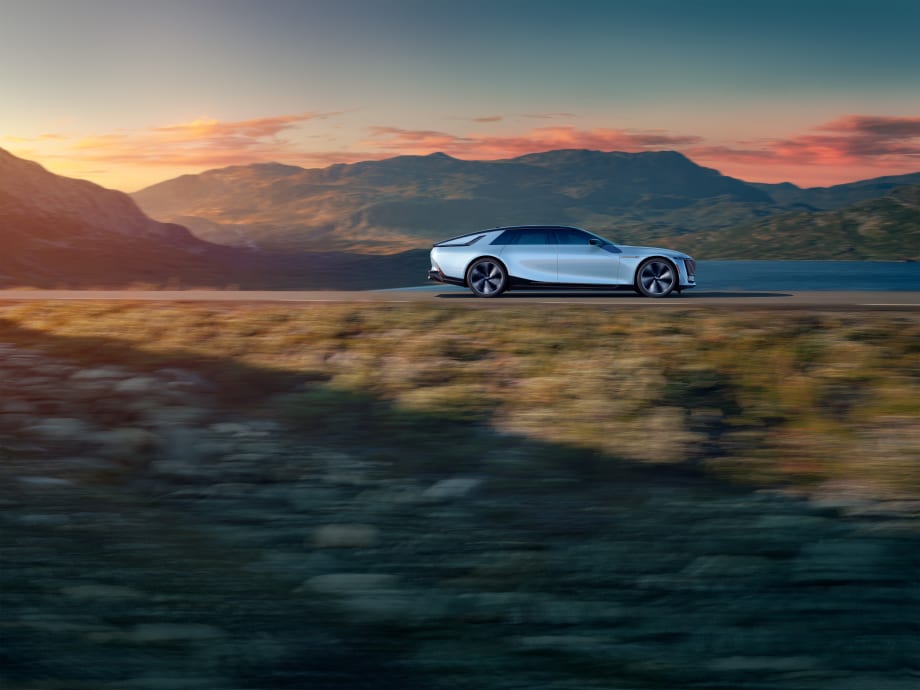
Ultra Cruise-equipped vehicles will have more than 20 sensors.
Photo: General Motors
3 min to read
General Motors announced that Ultra Cruise, the company’s next-generation advanced driver assistance system designed to enable hands-free driving in 95% of all driving scenarios, will have a 360-degree view of the vehicle through a sensor suite when it launches on the Cadillac CELESTIQ.
The destination-to-destination hands-free system will use more than just cameras to “see” the world, according to GM's news release. Ultra Cruise uses cameras, short- and long-range radars, LiDAR behind the windshield, an all-new computing system, and a driver attention system to monitor the driver’s head position and/or eyes in relation to the road to help ensure driver attention. These systems work together through “sensor fusion” to provide Ultra Cruise with a 360-degree, three-dimensional representation of the vehicle’s surroundings.
“GM’s fundamental strategy for all ADAS features, including Ultra Cruise, is safely deploying these technologies,” said Jason Ditman, GM chief engineer, Ultra Cruise. “A deep knowledge of what Ultra Cruise is capable of, along with the detailed picture provided by its sensors, will help us understand when Ultra Cruise can be engaged and when to hand control back to the driver. We believe consistent, clear operation can help build drivers’ confidence in Ultra Cruise.”
GM said it expects that customers will be able to travel hands-free with Ultra Cruise across nearly every paved public road in the U.S. and Canada, including city streets, subdivision streets, and rural roads, in addition to highways.
Vehicles equipped with Ultra Cruise hardware will experience incremental enhancements through over-the-air software updates.
GM added that it is focused on expanding ADAS accessibility with the combination of currently available Super Cruise driver assistance technology and soon, Ultra Cruise, bringing these technologies to more customers on more vehicles, in more regions at more price points.
How Ultra Cruise’s Sensor Suite Works
GM is developing Ultra Cruise software in-house with a team of software engineers from around the world. The company also works with suppliers who are experts in their relative spaces and integrates their sensing technologies with its software.
Driver attention system: This small camera, located on the top of the steering column, uses infrared light to help monitor the driver’s head position and/or eyes in relation to the road to help ensure driver attention.
Compute platform: This is the physical hardware that enables Ultra Cruise. The system will be powered by a scalable compute architecture featuring system-on-chips (SoCs) developed by American semiconductor company Qualcomm Technologies.
Long-range cameras: These seven, eight-megapixel cameras are located on the front, corners, back, and sides of the vehicle, providing expanded fields of view for Ultra Cruise. They help enable the system to detect objects such as traffic signs, traffic lights, other vehicles, and pedestrians.
Short-range radars: Placed on the four corners of the vehicle, these radars are used to help sense a radius of up to 90 meters, like pedestrians crossing the street or vehicles in surrounding lanes.
Long-range radars: The three 4D long-range radars on the front and back of the vehicle allow for Adaptive Cruise Control speeds as well as lane change maneuvers at highway speeds by helping to detect an object’s location, direction and elevation relative to the speed of the vehicle. They also help the system determine safe stopping distances.
LiDAR: The LiDAR, located behind the windshield, helps produce an accurate three-dimensional view of the scene, enabling more precise detection of objects and road features such as vehicles and lane markings, even in inclement weather conditions. Combined with other sensors, it can help create a perception of the environment around the vehicle for Ultra Cruise, increasing the system’s functional domain and performance.
Originally posted on Automotive Fleet
More Small Fleet


Developing Budget-Friendly Driver Safety Programs
From driver training and safety meetings to one-on-one coaching and incentive programs, several small fleets share how they have developed a safety culture with their drivers using low- to no-cost resources.
Read More →
Sponsored•March 9, 2026
Boosting Last-Mile Fleet Uptime, Safety, and Value with AI Vehicle Inspections
AI-powered inspections are transforming last-mile fleets by replacing manual checks with highly accurate automated scans that detect defects in seconds. By giving fleet operations visibility into the daily condition of their vehicles, you can identify trends over the vehicle’s lifecycle that enable improved procurement decisions, route management, driver training and accountability.
Read More →
Five Ways Seat Belts Help Prevent Injuries
There are five ways seat belts protect occupants from injuries, according to the Tennessee Department of Safety and Homeland Security.
Read More →
Sponsored•January 14, 2026
It’s here: The 2026 Fleet Technology Trends Report
What does AI mean for fleets? Get the answer — and learn other top tech trends.
Read More →
Small Fleets, Big Impact: How Independent Drivers Power Wreaths Across America
Check out how small fleets and independent drivers power Wreaths Across America each December and why their impact matters more than ever.
Read More →
VMS Survey Finds 65% of Small Fleet Managers Run Operations Alone
A new VMS survey shows small fleet managers are stretched thin, with most handling operations solo and eager to adopt digital tools for relief.
Read More →
Tips for Driving Safely on Halloween Night
This video features a reminder from the Connecticut Department of Transportation (DOT) and the Connecticut Police Chiefs Association, urging drivers to prioritize safety this Halloween.
Read More →
AI, Access, and Uptime: VMS’s Next Chapter with David Prusinski
VMS’s new Co-CEO, David Prusinski, shares how an AI-first approach will give small fleets and repair shops the tools to compete like big players.
Read More →
Fleet Managers Share Winter Prep Tips: It's Never Too Early!
Three fleets share best practices to prep vehicles for winter and prevent downtime when the cold sets in.
Read More →