




House Subcommittee Weighs Automated Vehicle Bill
Proponents of the legislation hope to hasten deployment of self-driving vehicles by consolidating regulatory authority at the federal level, eliminating a patchwork of state laws.
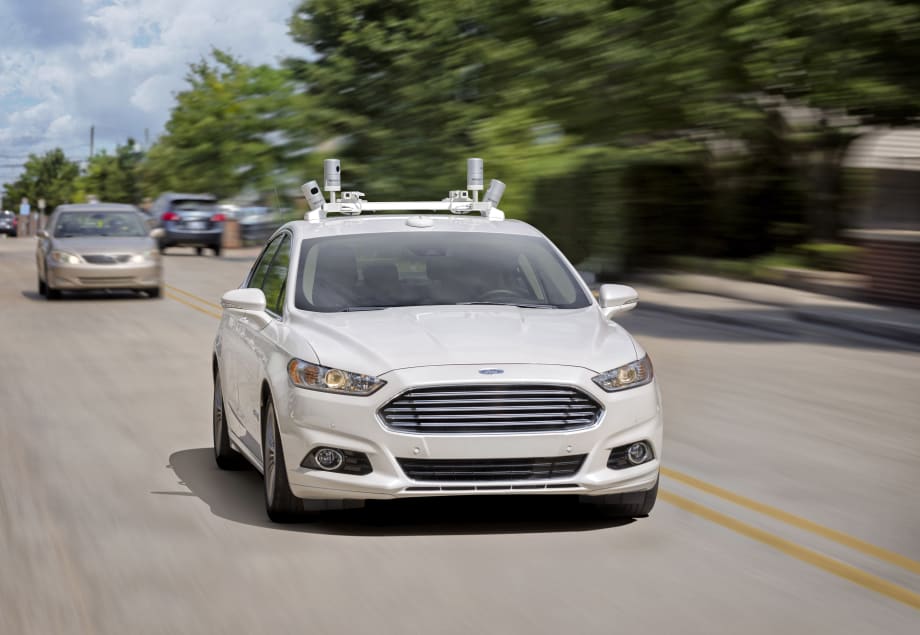
Photo of self-driving Ford Fusion Hybrid courtesy of Ford.
Photo of self-driving Ford Fusion Hybrid courtesy of Ford.
Members of a U.S. House subcommittee on July 19 will consider legislation that would consolidate federal regulatory authority over self-driving vehicles and restrict individual states from enforcing their own set of requirements involving the vehicles’ mechanical, hardware and software systems.
The bill would direct the National Highway Traffic Safety Administration to publish rules and safety priorities for highly automated vehicles and also require manufacturers to submit safety certificates for such vehicles. However, manufacturers wouldn’t need pre-market approval for the introduction of advanced vehicle technologies.
The bill is intended to clarify the federal and state roles for regulating highly automated vehicles, and to stimulate development and deployment of such advanced vehicles. States would still oversee such matters as registration, licensing, liability, insurance and traffic laws related to highly automated cars and trucks. But autonomous vehicle manufacturers would not have to deal with a patchwork of different state laws that have an impact on vehicle design and construction.
The Digital Commerce and Consumer Protection Subcommittee, which functions within the House Energy and Commerce Committee, is scheduled to consider the measure on Wednesday morning. Members can submit amendments up to two hours before the mark-up meeting.
Additionally, the federal legislation would permit NHTSA to grant self-driving vehicles exemption from existing federal motor vehicle safety standards designed for traditional vehicles, as long as the agency deems such an exemption wouldn’t at all compromise safety.
The legislation would require autonomous vehicle manufacturers to submit a written cybersecurity plan that spells out vulnerability detection and response practices and identifies the managers responsible for cybersecurity measures within the company.
Moreover, the bill provides for the creation of an advisory committee within NHTSA to explore such issues as how self-driving vehicles can improve the mobility of disabled and elderly citizens and what countermeasures can be taken to offset job losses arising from future deployment of self-driving vehicles.
To download the bill, click here.
Originally posted on Automotive Fleet
More Small Fleet


Developing Budget-Friendly Driver Safety Programs
From driver training and safety meetings to one-on-one coaching and incentive programs, several small fleets share how they have developed a safety culture with their drivers using low- to no-cost resources.
Read More →
Boosting Last-Mile Fleet Uptime, Safety, and Value with AI Vehicle Inspections
AI-powered inspections are transforming last-mile fleets by replacing manual checks with highly accurate automated scans that detect defects in seconds. By giving fleet operations visibility into the daily condition of their vehicles, you can identify trends over the vehicle’s lifecycle that enable improved procurement decisions, route management, driver training and accountability.
Read More →
Five Ways Seat Belts Help Prevent Injuries
There are five ways seat belts protect occupants from injuries, according to the Tennessee Department of Safety and Homeland Security.
Read More →
It’s here: The 2026 Fleet Technology Trends Report
What does AI mean for fleets? Get the answer — and learn other top tech trends.
Read More →
Small Fleets, Big Impact: How Independent Drivers Power Wreaths Across America
Check out how small fleets and independent drivers power Wreaths Across America each December and why their impact matters more than ever.
Read More →
VMS Survey Finds 65% of Small Fleet Managers Run Operations Alone
A new VMS survey shows small fleet managers are stretched thin, with most handling operations solo and eager to adopt digital tools for relief.
Read More →
Tips for Driving Safely on Halloween Night
This video features a reminder from the Connecticut Department of Transportation (DOT) and the Connecticut Police Chiefs Association, urging drivers to prioritize safety this Halloween.
Read More →
AI, Access, and Uptime: VMS’s Next Chapter with David Prusinski
VMS’s new Co-CEO, David Prusinski, shares how an AI-first approach will give small fleets and repair shops the tools to compete like big players.
Read More →
Fleet Managers Share Winter Prep Tips: It's Never Too Early!
Three fleets share best practices to prep vehicles for winter and prevent downtime when the cold sets in.
Read More →