




Highway Bill Patch Could Derail Over Train Safety Measure
The latest proposed extension of federal highway funding includes a provision to delay a mandate for automatic-braking equipment on trains that could turn passing the measure into a game of political football.

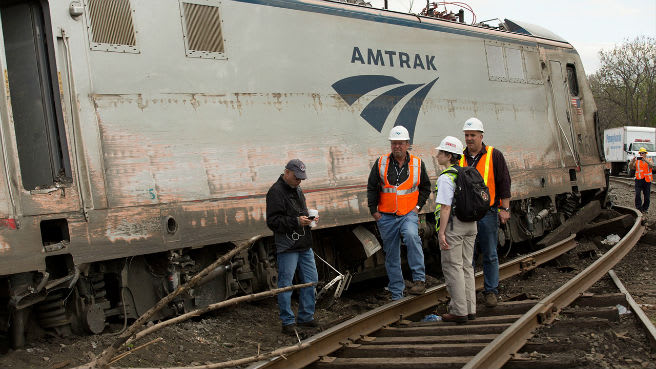
NTSB investigators at scene of Amtrak derailment in Philadelphia on May 12 that killed eight passengers and injured another 200. Photo: NTSB
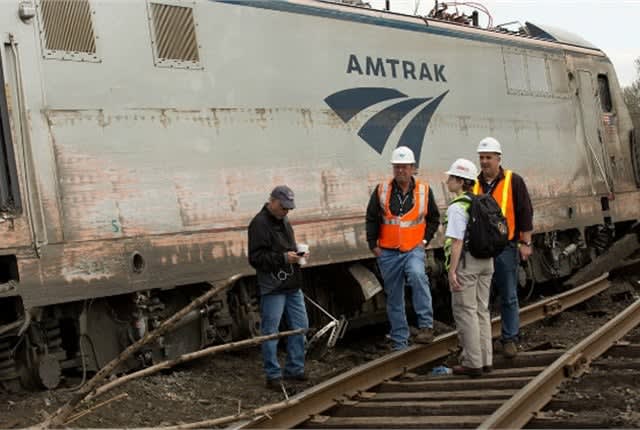
NTSB investigators at scene of Amtrak derailment in Philadelphia on May 12 that killed eight passengers and injured another 200. Photo: NTSB
The latest extension of federal highway funding will last all of 22 days. Just introduced in the House, the Surface Transportation Extension Act of 2015 (H.R. 3819) would fund and extend the authorization for federal highway and transit programs through November 20.
The good news is this latest funding patch can be voted on by Congress with no need for additional funds to be approved, as the Highway Trust Fund will remain solvent through the period it seeks to cover.
The bad news is this patch includes a provision to delay a mandate calling for automatic-braking equipment on trains that could turn passing the measure into a game of political football.
H.R. 3819 was introduced by Transportation and Infrastructure Committee Chairman Rep. Bill Shuster (R-PA), T&I Ranking Member Peter DeFazio (D-OR) and Ways and Means Committee Chairman Paul Ryan (R-WI).
“This extension will allow the highway bill process to continue moving forward without shutting down transportation programs and projects across the country,” Shuster said in an Oct. 26 statement.
“Last week, the Transportation Committee unanimously approved the bipartisan, multi-year Surface Transportation Reauthorization and Reform Act of 2015,” Shuster noted. “We look forward to voting on that bill in the House soon and then going to conference with the Senate on their highway bill. I am confident that we can resolve the differences between the House and Senate measures and producing a final product that’s good for our nation’s infrastructure.”
But there's more. “This legislation also includes a necessary, bipartisan extension of the deadline for implementation of Positive Train Control technology,” Shuster stated. “We need to extend the Positive Train Control deadline as soon as possible to prevent significant disruptions of both passenger and freight rail service across the country.”
Intense lobbying by the railroad industry is credited with getting the T&I Committee to approve extending the deadline to install PTC automatic braking on roughly 70,000 miles of track from the end of this year until 2018.
That effort succeeded despite the push by safety advocates for PTC to be implemented on time that picked up speed back on May 12, when the crash of an Amtrak train that derailed in Philadelphia killed eight passengers and injured another 200.
Shuster contended in his statement that “freight railroads have indicated they will suspend shipments of certain chemicals, such as chlorine used to purify drinking water and anhydrous ammonia used in fertilizer, well before the end of the year” if the PTC deadline is not extended.
He added that “some freight railroads may suspend all shipments of commodities. Passenger rail service will also be impacted: commuter railroads will have to suspend operations, and Amtrak service outside of the corridor between Washington and New York will stop.”
The problem is not everyone in Congress has bought the railroads’ argument. As reported by Politico transportation reporter Heather Caygle, “congressional infighting over PTC has threatened to derail the plan” especially because a key player, Sen. Barbara Boxer (D-CA), is committed to blocking any highway bill that kicks the PTC can as far down the tracks as this latest patch would.
Boxer is the Ranking Member of the Senate Environment & Public Works Committee, which must approve any highway bill passed by the House before sending it to the full Senate for consideration.
PTC uses electronic technology to prevent train-to-train collisions, over-speed derailments, incursions into work zones and the movement of a train through a main line switch that is improperly set. The Rail Safety Improvement Act of 2008 (RSIA) mandates that PTC be implemented across a significant portion of the nation's tracks by December 31, 2015.
Per the Federal Railroad Administration, PTC will be required on “essentially Class I railroad main lines (i.e., over which 5 million or more gross tons are transported annually) that handle any poisonous-inhalation-hazardous (PIH) materials; and, any railroad main lines over which regularly scheduled intercity passenger or commuter rail services are provided.”
Originally posted on Automotive Fleet
More Operations
Family Ties Inside the Fleet Families Building Careers Across Generations
Three fleet families share what it really takes to work together, learn across generations, and keep business from following them home.
Read More →
Shades of Fleet Call for Voices: Fleet's Hidden Heroes
Fleet’s hidden heroes are often the ones keeping everything moving behind the scenes. September’s Shades of Fleet is looking for dispatchers, coordinators, parts specialists, and other support pros to share their stories.
Read More →
Truck Centers, Inc. Celebrates National Truck Driver Appreciation Week with $1,000 Fuel Card Giveaways
During National Truck Driver Appreciation Week, Truck Centers, Inc. is offering customers a chance to fuel up for free. Customers at all Truck Centers locations can enter to win one of four $1,000 fuel cards from Sept. 14 - 18.
Read More →
Fleet Guides, AI Time-Savers, Truck Tariffs & Fuel Strategy Lead the News
This week’s Truck Chat Cheat Sheet covers new fleet vehicle guides, practical AI use cases, U.S.-Canada truck production, mixed-energy strategy, and more.
Read More →
What Fleet Employers Are Missing When Hiring Veterans
What if some of the strongest candidates for fleet are already out there, but their experience is written in a language our industry does not always recognize?
Read More →
Automotive Fleet Opens 2026 Personal Use Survey for Commercial Fleet Managers
Less than two weeks left! Commercial and corporate fleet managers are invited to share how their organizations handle company vehicle personal-use policies, charges, and driver eligibility.
Read More →
What Resilient Fleets Do Differently When Conditions Change
Fleet resilience is about more than reacting to disruption. Lauren Fletcher talks with AP Fleet’s Alex Coveney about flexibility, planning, scaling, and what helps fleets adapt when business conditions shift.
Read More →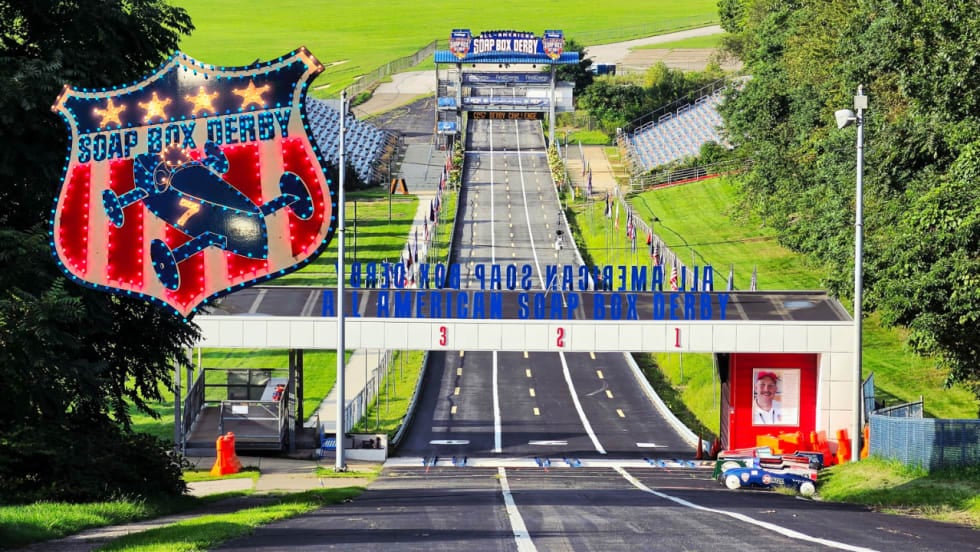
If We Want the Next Generation in Automotive, We Have to Give Them a Reason to Care
The automotive industry talks constantly about its workforce shortage. But before we can recruit the next generation, we may need to do a better job giving kids a reason to care about automotive in the first place.
Read More →
Ram ProMaster City Under $40K, Truck Tariffs, and AI Maintenance Lead the News
A sub-$40K commercial van, tariff questions, AI-powered maintenance, and a new EV production strategy headline this week’s Truck Chat Cheat Sheet.
Read More →
Bob Adamsky Shares the Fleet Lessons You Usually Learn the Hard Way
After more than 30 years in fleet, Arrow International’s Bob Adamsky has learned that the job is about far more than vehicles. He shares the lessons he wishes every fleet manager could learn a little earlier.
Read More →