




Goodyear Debuts Self-Inflating Technology for Commercial Tires
AKRON, OHIO – Researchers at The Goodyear Tire & Rubber Company have been working on a new Air Maintenance Technology application that can aid in fuel savings and CO2 reductions while potentially improving performance and eliminating need for external inflation pressure intervention.
AKRON, OHIO – Over the past year, researchers at The Goodyear Tire & Rubber Company have been working on a new Air Maintenance Technology application that can aid in fuel savings and CO2 reductions while potentially improving performance and eliminating need for external inflation pressure intervention.
The commercial application of Goodyear’s Air Maintenance Technology will make its debut at the 2012 Internationale Automobil-Ausstellung (IAA) Commercial Vehicle Show in Hanover, Germany, which is currently taking place (Sept. 20-27, 2012).
Tire-related costs are the single largest maintenance item for commercial vehicle fleet operators with more than 50 percent of all truck and trailer breakdowns involving a tire in some way[1]. Goodyear’s Air Maintenance Technology mechanism allows tires to maintain constant, optimum pressure without the use of external pumps, electronics and driver intervention.
Proper tire inflation can result in improved fuel economy, prolonged tread life and optimized tire performance. Customers should receive the following key benefits from Air Maintenance Technology-enabled tires:
Improved Fuel Economy
Optimum tire pressure is key in the commercial market. It is estimated that for every 10 psi lost in tire inflation, there is a one percent[2] loss in miles per gallon.
While one percent may seem insignificant, it could cost a truck owner over $627.00 in fuel, based on a vehicle that has a fuel consumption of 6.6 miles per gallon, runs 100,000 miles a year with a diesel fuel price of $4.10/gallon[3].
Prolonged Tread Life
AMT is expected to play a major role in optimizing tread life in the commercial tire market. Tires which are under inflated by ten percent decrease tread life by 9-16 percent[4]. By utilizing Goodyear’s Air Maintenance Technology, commercial vehicle fleet operators will be able to realize the full mileage potential of their tires, thus saving money by prolonging the use of their tires.
Optimized Performance
Properly inflated tires are also necessary to keep a vehicle’s handling performance at optimal levels. Under-inflation means less evenly distributed pressure on the road. It also reduces the tread area that is in direct contact with the road and can impact the integrity of the tire casing, which is key to the retreading process.
Commercial trucks pose a different challenge for AMT than that of consumer vehicles as their tires are larger, have higherinflation pressures, drive longer distances and carry much heavier loads. Commercial tires operate at a higher air pressure, typically 105 psi for commercial tires vs. 32 psi for consumer tires. This is a much more challenging performance requirement for the pump system. The life of a commercial truck tire is often extended by retreading. The commercial truck AMT system is being designed to perform after the retreading process.
“We believe the Air Maintenance Technology application for commercial vehicle tires will not only enhance the performance of the tire, but will also provide cost savings to fleet owners and operators through the extension of tire tread life and increased fuel economy” stated Goodyear’s Chief Technical Officer, Jean-Claude Kihn. “The progress we continue to make with this technology is very encouraging. We look forward to further testing of this concept.”
“Goodyear’s Air Maintenance Technology has the potential to be a game-changer for the commercial trucking industry,” said Phillip Kane, vice president, Goodyear Commercial Tire Systems. “By addressing issues that are critically important to trucking operations, Air Maintenance Technology can help keep their trucks up and running while optimizing their productivity.”
Engineers at Goodyear’s Innovation Center in Akron, Ohio, USA are credited with the development of the commercial application of this concept and the supporting technology. Prototype tires have been produced in Goodyear’s Topeka manufacturing plant in Kansas, USA, and rigorous validation testing has confirmed that the AMT pumping mechanism works. An extensive fleet trial is planned to gather real-world information from customers in 2013.
A $1.5 million grant from The United States Department of Energy’s Office (DOE) of Vehicle Technology is helping speed up research, development and demonstration of the AMT system for commercial vehicle tires. A grant from the Luxembourg government for research and development will continue to help fund Goodyear’s efforts in researching and developing the AMT system for consumer tires.
[1] American Trucking Association, (2008). Tire Pressure Monitoring and Inflation. Heavy Duty Trucking Magazine.
More Maintenance & Uptime
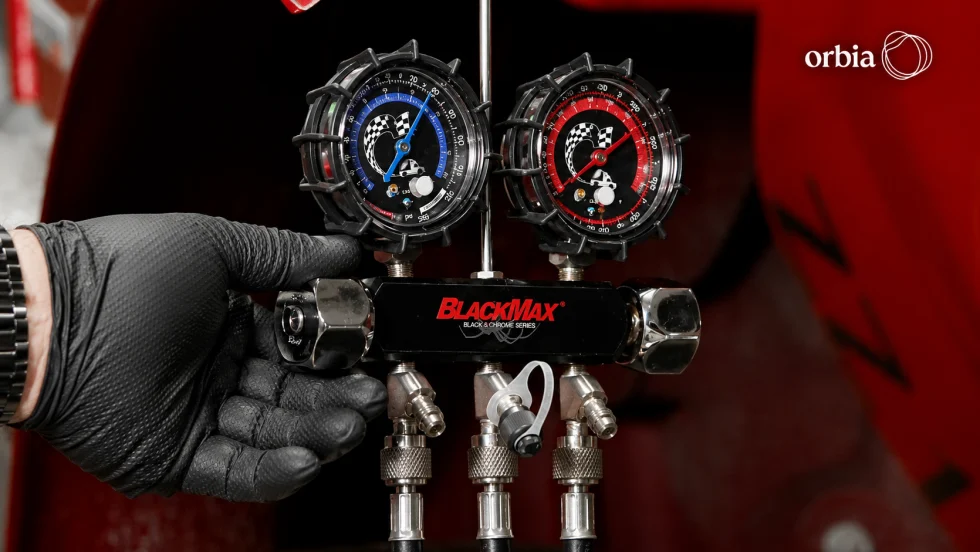
The Lost Art of Refrigerant Recovery
As new A/C refrigerants enter the market, fleet shops may already have many of the tools they need to service them. Here’s why revisiting basic refrigerant service skills could save equipment costs and get trucks back on the road faster.
Read More →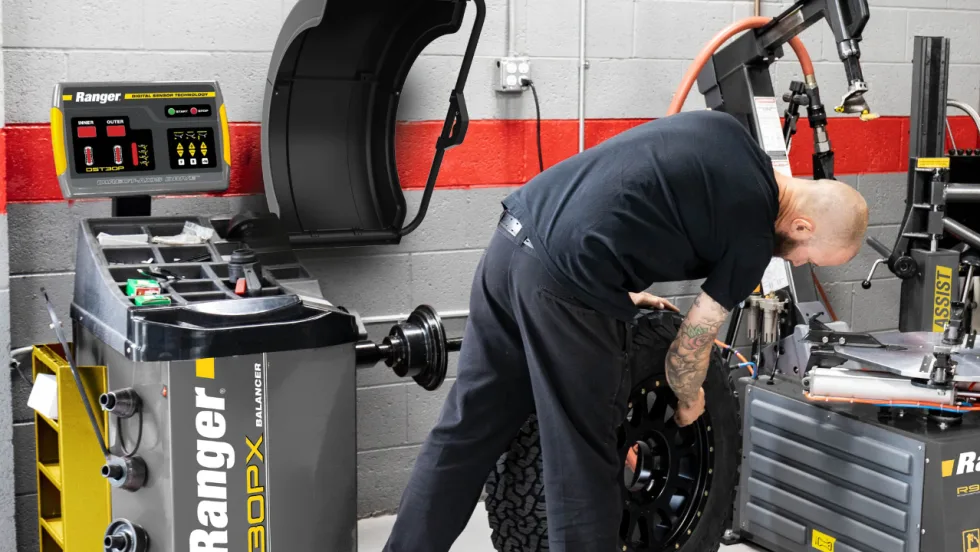
BendPak Launches Ranger DST30PX Balancer for Large Wheel Service
The new DST30PX Professional Wheel Balancer from Ranger Division of BendPak smoothly handles tires up to 43 inches with precision and accuracy.
Read More →
Kooner and Global Partners Connect Mobile Fleet Maintenance and Fueling Services
A new referral partnership connects on-site fueling and maintenance services, with a focus on reducing off-site trips and making better use of fleet downtime.
Read More →From Our Partners
How JASPER Keeps Fleets Moving and Profitable
Sponsored by Jasper Engines & Transmissions

Basic Tracking vs Next Generation Fleet Technology
Sponsored by AT&T Business
5 Facts Every Fleet Manager Should Know About Embedded Telematics
Sponsored by Stellantis/Mobilisights
How AI Video Telematics Boosts Driver Safety and Helps to Avoid Unnecessary Costs
Sponsored by Verizon Connect

Charting the 8 Bottom-Line Benefits of Workforce Optimization
Sponsored by Verizon Connect

Maintenance Failures That Sideline Work Trucks and the Inspection List That Catches Them Early
Unplanned downtime hurts efficiency and even profitability for work truck fleets, but catching potential problems early can help prevent it. Here is an inspection list that can help potentially prevent that downtime.
Read More →
Hunter Engineering Enters Collaborates with Bosch for Remote Diagnostics Service Through ADASLink
Hunter Engineering’s collaboration with Bosch enables ADASLink to connect directly with Bosch diagnostic experts through an integrated remote support platform, allowing shops to service more vehicles.
Read More →
Mack Adds Chassis Coverage Options for Fleet Repair Costs
Mack Trucks introduced four system-specific chassis coverage plans, giving fleets more flexibility to manage repair costs for driveline, HVAC, electronics, safety systems, and other components.
Read More →
GM Launches ‘30 Under 30’ Program to Elevate Automotive Service Technicians and Inspire the Next Generation
The GM Automotive Service Technicians 30 Under 30 program honors GM service technicians under the age of 30 who demonstrate continuous technical training, exemplary customer service, mentorship, and leadership.
Read More →
Kooner Fleet Management Solutions Named Exclusive On-Site Fleet Maintenance Provider for Safe Truck Parking
A strategic partnership between Kooner Fleet Management Solutions and Safe Truck Parking brings mobile maintenance and 24/7 repair services directly to Safe Truck Parking locations, beginning in San Diego, California, with nationwide expansion planned.
Read More →
Building a Better Vehicle Replacement Model
Meter readings still matter, but engine hours, idle time, maintenance trends, and utilization can help fleets spot costly vehicles before the odometer does.
Read More →
How JASPER Keeps Fleets Moving and Profitable
Every business decision within fleet management ultimately comes down to financial performance. Investing in dependable replacement powertrain components and responsive support can measurably impact the bottom line.
Read More →