





Related News: NHTSA Issues Chevrolet Bolt Recall Alert
GM Expands Chevrolet Bolt Recall to All Model Years
The batteries supplied to GM for these electric vehicles may have two manufacturing defects in the same battery cell, which increases the risk of fire.
August 20, 2021
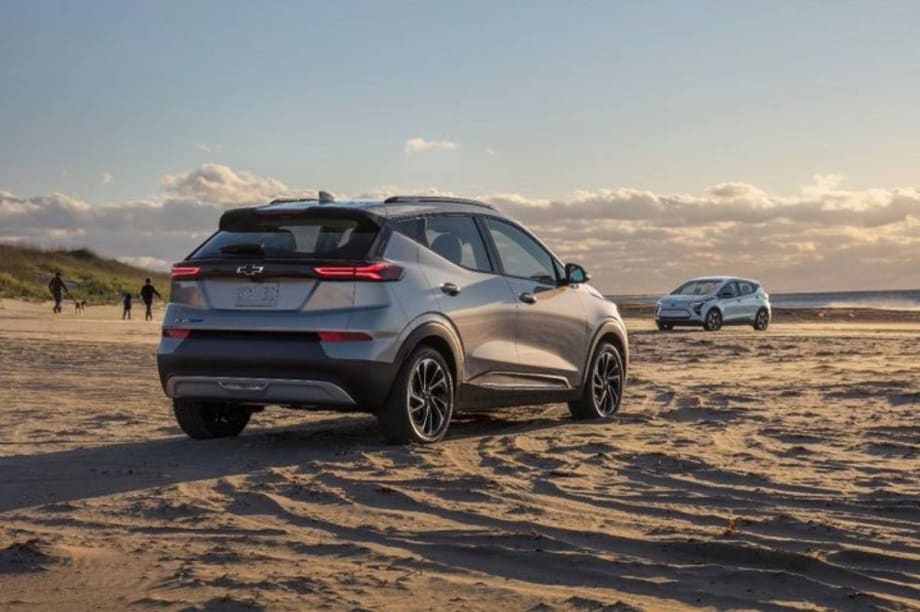
The 2022 Chevrolet Bolt EUV was added to the recall list by GM on Aug. 20, 2021.
Photo: GM
3 min to read
General Motors on Aug. 20 widened an ongoing recall of the Chevrolet Bolt EV to cover the remaining 2019 and all 2020-2022 model year vehicles, including the Bolt EUV, according to a press release.
In rare circumstances, the batteries supplied to GM for these vehicles may have two manufacturing defects – a torn anode tab and folded separator – present in the same battery cell, which increases the risk of fire. Out of an abundance of caution, GM will replace defective battery modules in Chevrolet Bolt EVs and EUVs with new modules, with an expected additional cost of about $1 billion.
This recall affects 73,018 Chevrolet Bolt vehicles. The previous recall spanned 50,932 MY 2017-19 Bolts. The double-down recall comes as GM has promoted goals to sell only electric vehicles by 2035.
In one incident, the Vermont State Police publicized a 2019 Chevrolet Bolt EV that caught fire on July 1 in the driveway of state Rep. Timothy Briglin, CNBC reported. GM has confirmed one fire in the new segment of recalled vehicles in addition to at least nine previous confirmed fires in the first round of vehicles that were recalled, according to the cable news channel.
Doug Parks, GM executive vice president of global product development, purchasing and supply chain, said in the GM release, “As leaders in the transition to an all-electric future, we know that building and maintaining trust is critical. GM customers can be confident in our commitment to taking the steps to ensure the safety of these vehicles.”
After further investigating the manufacturing processes at LG and disassembling battery packs, GM discovered defects in certain battery cells produced at LG manufacturing facilities beyond the Ochang, Korea, plant. GM and LG are working to rectify the cause of these defects. Meanwhile, GM is pursuing commitments from LG for reimbursement of this field action.
This new recall volume includes:
9,335 (6,989 in the U.S. and 1,212 in Canada) – 2019 model year Bolt EVs that were not included in the previous recall
63,683 (52,403 in the U.S. and 9,019 in Canada) – 2020–2022 model year Chevrolet Bolt EVs and EUVs
Batteries with these new modules will come with an 8-year/100,000-mile limited warranty (or 8-year/160,000 km limited warranty in Canada).
GM is working with LG to increase production as soon as possible. GM will notify customers when replacement parts are ready. Until customers in the new recall receive replacement modules, they should:
1. Set their vehicle to a 90% state of charge limitation using target charge level mode. Instructions on how to do this are available on chevy.com/boltevrecall. If customers are unable to make these changes, or do not feel comfortable doing so, GM is asking them to visit their dealer to complete the adjustments.
2. Charge their vehicle more frequently and avoid depleting their battery below about 70 miles (113 km) of remaining range, where possible.
3. Park their vehicles outside immediately after charging and not leave their vehicles charging indoors overnight.
Customers can visit www.chevy.com/boltevrecall or contact the Chevrolet EV Concierge 1-833-EVCHEVY (available Monday through Friday from 8 a.m.–midnight ET; Saturday and Sunday from Noon – 9 p.m. ET) or contact their preferred Chevrolet EV dealer.
Canadian customers can visit the Chevrolet Owner’s Centre or contact their preferred dealer.
Originally posted on Charged Fleet
More Small Fleet


Developing Budget-Friendly Driver Safety Programs
From driver training and safety meetings to one-on-one coaching and incentive programs, several small fleets share how they have developed a safety culture with their drivers using low- to no-cost resources.
Read More →
Sponsored•March 9, 2026
Boosting Last-Mile Fleet Uptime, Safety, and Value with AI Vehicle Inspections
AI-powered inspections are transforming last-mile fleets by replacing manual checks with highly accurate automated scans that detect defects in seconds. By giving fleet operations visibility into the daily condition of their vehicles, you can identify trends over the vehicle’s lifecycle that enable improved procurement decisions, route management, driver training and accountability.
Read More →
Five Ways Seat Belts Help Prevent Injuries
There are five ways seat belts protect occupants from injuries, according to the Tennessee Department of Safety and Homeland Security.
Read More →
Sponsored•January 14, 2026
It’s here: The 2026 Fleet Technology Trends Report
What does AI mean for fleets? Get the answer — and learn other top tech trends.
Read More →
Small Fleets, Big Impact: How Independent Drivers Power Wreaths Across America
Check out how small fleets and independent drivers power Wreaths Across America each December and why their impact matters more than ever.
Read More →
VMS Survey Finds 65% of Small Fleet Managers Run Operations Alone
A new VMS survey shows small fleet managers are stretched thin, with most handling operations solo and eager to adopt digital tools for relief.
Read More →
Tips for Driving Safely on Halloween Night
This video features a reminder from the Connecticut Department of Transportation (DOT) and the Connecticut Police Chiefs Association, urging drivers to prioritize safety this Halloween.
Read More →
AI, Access, and Uptime: VMS’s Next Chapter with David Prusinski
VMS’s new Co-CEO, David Prusinski, shares how an AI-first approach will give small fleets and repair shops the tools to compete like big players.
Read More →
Fleet Managers Share Winter Prep Tips: It's Never Too Early!
Three fleets share best practices to prep vehicles for winter and prevent downtime when the cold sets in.
Read More →