




GM Announces Bi-Fuel Chevrolet Impala
According to GM Chairman and CEO Dan Akerson, GM will build a Chevrolet Impala sedan that operates on either gasoline or CNG for 2015.
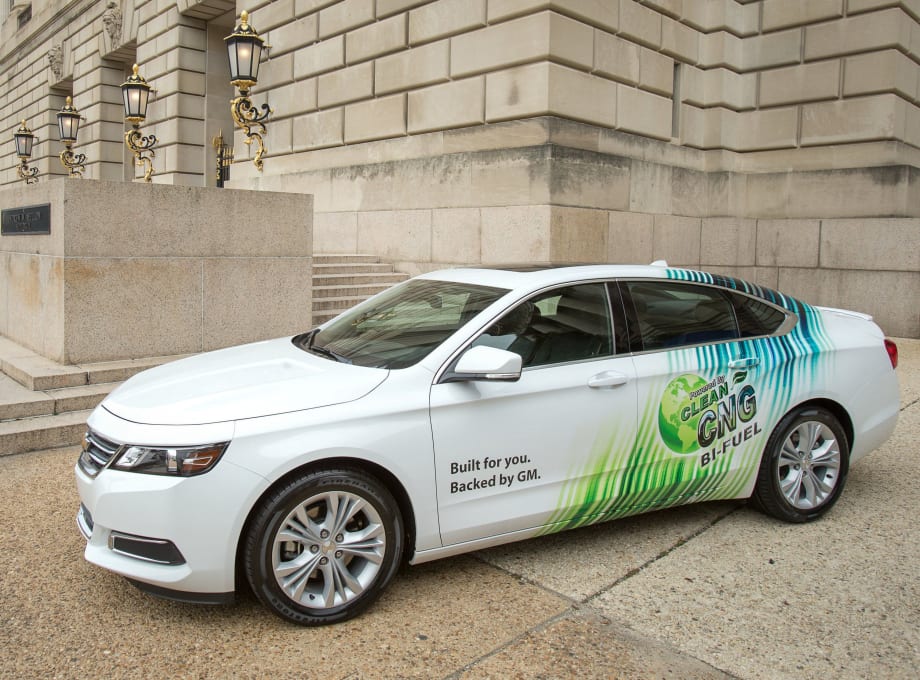
The 2015 Chevrolet CNG-capable Bi-fuel Impala was unveiled in Washington, D.C. Photo credit: General Motors
General Motors
General Motors will build a Chevrolet Impala sedan for retail and fleet customers that operates on either gasoline or compressed natural gas (CNG), GM Chairman and CEO Dan Akerson announced yesterday at an energy summit marking the 40th anniversary of the OPEC Oil Embargo.
It is the only manufacturer-produced full-size bi-fuel sedan and expected to go on sale next summer as a 2015 model, according to GM. The bi-fuel Impala is an example of using affordable technology to reduce oil consumption and save consumers money at the pump, said Akerson.
“We know that U.S. energy security won’t come from a one-off moonshot,” Akerson said. “It will flow from our systematic investment in technology and innovation... our drive to get more from existing energy sources and renewables... our commitment to conservation... and it will be assured by fully and safely exploiting our shale gas reserves.”
Natural gas is a cleaner-burning transportation fuel compared to petroleum products and costs significantly less than gasoline at current prices. CNG vehicles typically have 20% fewer greenhouse gas emissions than gasoline-powered cars, according to the California Air Resources Board.
The Chevrolet Impala bi-fuel sedan addresses the range anxiety issue associated with vehicles that run only on natural gas, Akerson said. It features a factory-engineered and fully warranted powertrain that switches seamlessly from CNG to gasoline. Total range is expected to be up to 500 miles.
In addition to advanced technologies and alternative fuels, Akerson said achieving energy security will require productive partnerships between energy companies, utilities, environmental groups, labor unions, universities and manufacturers. GM is working closely with 14 of the country’s largest unions and environmental groups through the Blue-Green Alliance, and it has relationships with regulators that are “more constructive than ever,” according to Akerson.
More Small Fleet


Developing Budget-Friendly Driver Safety Programs
From driver training and safety meetings to one-on-one coaching and incentive programs, several small fleets share how they have developed a safety culture with their drivers using low- to no-cost resources.
Read More →
Boosting Last-Mile Fleet Uptime, Safety, and Value with AI Vehicle Inspections
AI-powered inspections are transforming last-mile fleets by replacing manual checks with highly accurate automated scans that detect defects in seconds. By giving fleet operations visibility into the daily condition of their vehicles, you can identify trends over the vehicle’s lifecycle that enable improved procurement decisions, route management, driver training and accountability.
Read More →
Five Ways Seat Belts Help Prevent Injuries
There are five ways seat belts protect occupants from injuries, according to the Tennessee Department of Safety and Homeland Security.
Read More →
It’s here: The 2026 Fleet Technology Trends Report
What does AI mean for fleets? Get the answer — and learn other top tech trends.
Read More →
Small Fleets, Big Impact: How Independent Drivers Power Wreaths Across America
Check out how small fleets and independent drivers power Wreaths Across America each December and why their impact matters more than ever.
Read More →
VMS Survey Finds 65% of Small Fleet Managers Run Operations Alone
A new VMS survey shows small fleet managers are stretched thin, with most handling operations solo and eager to adopt digital tools for relief.
Read More →
Tips for Driving Safely on Halloween Night
This video features a reminder from the Connecticut Department of Transportation (DOT) and the Connecticut Police Chiefs Association, urging drivers to prioritize safety this Halloween.
Read More →
AI, Access, and Uptime: VMS’s Next Chapter with David Prusinski
VMS’s new Co-CEO, David Prusinski, shares how an AI-first approach will give small fleets and repair shops the tools to compete like big players.
Read More →
Fleet Managers Share Winter Prep Tips: It's Never Too Early!
Three fleets share best practices to prep vehicles for winter and prevent downtime when the cold sets in.
Read More →