





More Geotab News: Generative AI Copilot for Fleets
Geotab Releases More Efficient Fleet Routing Tool
The telematics provider launches a resource to increase productivity, uptime, and optimization for daily fleet usage.
February 16, 2024
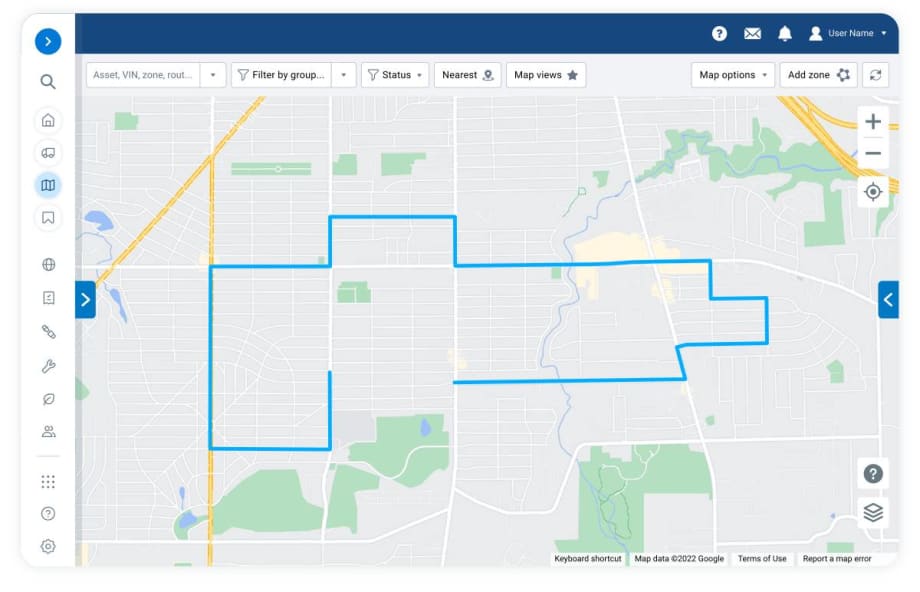
Fleets can use route optimization, which mathematically weighs business priorities when routing, considering continuity of care, timelines, and distance traveled.
Source: Geotab
2 min to read
Geotab launched a new routing and optimization solution for fleets at its annual Geotab Connect event in Las Vegas this week.
For a fleet driver who has 10 stops to complete in one day, there could be upward of three million routes to choose from. Using Geotab’s routing and optimization solution, fleet managers can isolate the most efficient route based on data insights, including customer needs, like requested arrival windows, traffic data and available fleet resources, helping businesses control costs and improve customer service.
The routing and optimization solution addresses cost and efficiency challenges. By driving optimized routes, businesses can increase the number of jobs completed daily, enhance operational transparency, increase on-time arrivals up to 98%, and reduce mileage by about 15 to 30%, which helps reduce fuel costs. For fleets with electric vehicles (EVs), driving more efficient routes can help preserve range, simplifying the use and management of an electric fleet.
“Geotab’s routing and optimization tool is redefining how fleet managers tackle their daily operations to drive efficiency and ultimately increase customer satisfaction,” said Sabina Martin, vice president of product management at Geotab, in a news release. “Using Geotab's data intelligence, our latest technology ensures the right resources are dispatched to the right locations at optimal times. With greater efficiency from the solution, we believe businesses could save millions of dollars annually.”
The routing and optimization solution is designed to be scalable, enabling customers to leverage the tool for a growing number of use cases. Today, the solution has various modules to meet the unique needs of different fleet segments.
5 Benefits of Routing and Optimization Technology
Among the key attributes and functions of the new product:
Fleets can use route optimization, which mathematically weighs business priorities when routing, considering continuity of care, timelines, and distance traveled.
For longer trips, the long-range planning application aids in minimizing driving time and the territory planning application enables users to visualize their service areas and manage resource allocation to prevent route overlap.
The appointment application enhances scheduling capabilities, offering more accurate appointment arrival windows.
To further streamline operations, the solution includes dispatch and real-time notifications, improving visibility and communication, and optimizing task reassignments quickly.
A status interface is incorporated to facilitate direct communication between customers and frontline agents, ensuring that service expectations are met with precision.
Originally posted on Automotive Fleet
More Small Fleet


Developing Budget-Friendly Driver Safety Programs
From driver training and safety meetings to one-on-one coaching and incentive programs, several small fleets share how they have developed a safety culture with their drivers using low- to no-cost resources.
Read More →
Sponsored•March 9, 2026
Boosting Last-Mile Fleet Uptime, Safety, and Value with AI Vehicle Inspections
AI-powered inspections are transforming last-mile fleets by replacing manual checks with highly accurate automated scans that detect defects in seconds. By giving fleet operations visibility into the daily condition of their vehicles, you can identify trends over the vehicle’s lifecycle that enable improved procurement decisions, route management, driver training and accountability.
Read More →
Five Ways Seat Belts Help Prevent Injuries
There are five ways seat belts protect occupants from injuries, according to the Tennessee Department of Safety and Homeland Security.
Read More →
Sponsored•January 14, 2026
It’s here: The 2026 Fleet Technology Trends Report
What does AI mean for fleets? Get the answer — and learn other top tech trends.
Read More →
Small Fleets, Big Impact: How Independent Drivers Power Wreaths Across America
Check out how small fleets and independent drivers power Wreaths Across America each December and why their impact matters more than ever.
Read More →
VMS Survey Finds 65% of Small Fleet Managers Run Operations Alone
A new VMS survey shows small fleet managers are stretched thin, with most handling operations solo and eager to adopt digital tools for relief.
Read More →
Tips for Driving Safely on Halloween Night
This video features a reminder from the Connecticut Department of Transportation (DOT) and the Connecticut Police Chiefs Association, urging drivers to prioritize safety this Halloween.
Read More →
AI, Access, and Uptime: VMS’s Next Chapter with David Prusinski
VMS’s new Co-CEO, David Prusinski, shares how an AI-first approach will give small fleets and repair shops the tools to compete like big players.
Read More →
Fleet Managers Share Winter Prep Tips: It's Never Too Early!
Three fleets share best practices to prep vehicles for winter and prevent downtime when the cold sets in.
Read More →