




Geotab, Mobileye Partner On Advanced Collision Prevention Offering
Geotab is integrating its J1939 platform with the Mobileye 560 Advanced Driver Assistance System so heavy duty fleets will be able to use advanced warning alerts to reduce the likelihood of vehicle crashes from occurring, the telematics provider announced.
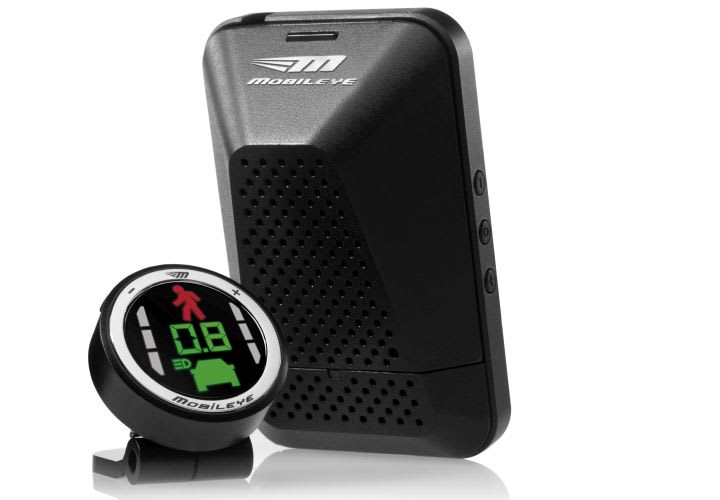
Photo courtesy of Mobileye.
Photo courtesy of Mobileye.
Geotab is integrating its J1939 platform with the Mobileye 560 Advanced Driver Assistance System so heavy duty fleets will be able to use advanced warning alerts to reduce the likelihood of vehicle crashes from occurring, the telematics provider announced.
"Fleet management technology has evolved to include proactive and dynamic solutions that incorporate real time data in the vehicle and in a fleet's operations to predict and alert both safety and efficiency elements of fleets," said Edward Kulperger, Geotab's vice president of business development.
In addition to the reports provided by Mobileye and Geotab that target unsafe driving practices, the solution also provides lane departure warnings, forward collision warnings, pedestrian and bicyclist warnings, distance keeping (headway) warnings, and speeding alerts, according to Geotab.
"With Geotab, we have provided businesses with an unbeatable driver monitoring and evaluation system," said Isaac Litman, Mobileye Inc.'s CEO of Mobileye Aftermarket. "It is the one of the most effective risk management tools available in the marketplace today."
Fleets using this collision avoidance technology typically realize a return on their investment in about eight months, according to Mobileye.
Safe driving habits are significantly improved, costs associated with accidents are reduced or completely avoided, smooth driving patterns are reinforced on a continuous basis, and fuel and maintenance costs are minimized, according to the companies.
For more information, visit the Geotab website.
Originally posted on Automotive Fleet
More Small Fleet


Developing Budget-Friendly Driver Safety Programs
From driver training and safety meetings to one-on-one coaching and incentive programs, several small fleets share how they have developed a safety culture with their drivers using low- to no-cost resources.
Read More →
Boosting Last-Mile Fleet Uptime, Safety, and Value with AI Vehicle Inspections
AI-powered inspections are transforming last-mile fleets by replacing manual checks with highly accurate automated scans that detect defects in seconds. By giving fleet operations visibility into the daily condition of their vehicles, you can identify trends over the vehicle’s lifecycle that enable improved procurement decisions, route management, driver training and accountability.
Read More →
Five Ways Seat Belts Help Prevent Injuries
There are five ways seat belts protect occupants from injuries, according to the Tennessee Department of Safety and Homeland Security.
Read More →
It’s here: The 2026 Fleet Technology Trends Report
What does AI mean for fleets? Get the answer — and learn other top tech trends.
Read More →
Small Fleets, Big Impact: How Independent Drivers Power Wreaths Across America
Check out how small fleets and independent drivers power Wreaths Across America each December and why their impact matters more than ever.
Read More →
VMS Survey Finds 65% of Small Fleet Managers Run Operations Alone
A new VMS survey shows small fleet managers are stretched thin, with most handling operations solo and eager to adopt digital tools for relief.
Read More →
Tips for Driving Safely on Halloween Night
This video features a reminder from the Connecticut Department of Transportation (DOT) and the Connecticut Police Chiefs Association, urging drivers to prioritize safety this Halloween.
Read More →
AI, Access, and Uptime: VMS’s Next Chapter with David Prusinski
VMS’s new Co-CEO, David Prusinski, shares how an AI-first approach will give small fleets and repair shops the tools to compete like big players.
Read More →
Fleet Managers Share Winter Prep Tips: It's Never Too Early!
Three fleets share best practices to prep vehicles for winter and prevent downtime when the cold sets in.
Read More →