




Geotab ITS Study Shows Impact of U.S. Bridge Closures on Freight and Supply Chains
Geotab reveals how bridge closures disrupt traffic, increase risks, and impact work truck fleets. Discover the full report and insights.
October 17, 2024

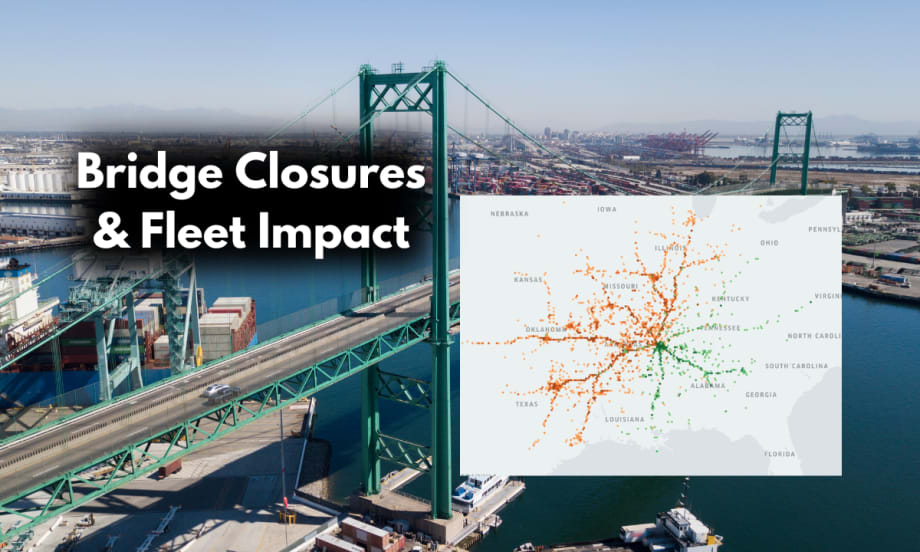
Geotab's analysis of U.S. bridges (including the Vincent Thomas Bridge), highlights the significant impact of closures on traffic, driver safety, and supply chains critical to work truck fleets.
Photo: Work Truck | Geotab ITS
4 min to read
Geotab ITS has released an in-depth analysis of commercial freight data from five critical U.S. bridges, revealing the far-reaching effects of bridge closures on traffic congestion, harsh driving events, and supply chain disruptions.
The findings offer a stark reminder of the importance of resilient infrastructure for the nation's economy, particularly for work truck fleets that rely on these critical routes for efficient goods movement.
The Data: How Bridge Closures Impact Traffic and Freight
The report highlights five major U.S. bridges:
Memphis-Arkansas Bridge and Hernando de Soto Bridge (Tennessee-Arkansas)
Vincent Thomas Bridge (Los Angeles, CA)
George Washington Bridge (New Jersey-New York)
Ambassador Bridge (Detroit, MI-Windsor, Ontario)
Francis Scott Key Bridge (Baltimore, MD)
The study found that any bridge closure, regardless of duration, can significantly affect surrounding traffic, increase the risk of collisions, and disrupt the movement of goods.
For example, the two-week closure of the Memphis-Arkansas Bridge in June 2024 led to a staggering 1,750% increase in harsh driving events on the Hernando de Soto Bridge. Traffic volume also increased by 23%, and travel times into Tennessee rose by 70.8% during peak hours.
Geotab ITS's analysis underscores that these disruptions are not limited to the immediate region. Heavier congestion on the Hernando de Soto Bridge had knock-on effects on freight movement into states such as Texas, Ohio, Georgia, and Indiana, showcasing how critical these bridges are to broader U.S. supply chains.
Why It Matters: Bridge Closures and Work Truck Fleets
The insights from Geotab's analysis are significant for work truck fleets. Fleets operating light- and medium-duty trucks rely heavily on efficient routes to meet delivery schedules and minimize operational costs.
A single bridge closure can have a cascading effect on a fleet's ability to maintain timely deliveries, avoid detours, and keep drivers safe. Increased congestion and harsh driving conditions can also lead to higher vehicle wear and tear, including premature brake wear, increased fuel consumption, and a greater risk of accidents.
The report emphasizes that understanding these data points can help fleet managers make more informed decisions when planning routes and assessing risk during infrastructure disruptions.
By leveraging commercial vehicle traffic data, fleets can adjust real-time routes to avoid problem areas, minimize downtime, and ensure that goods continue to move efficiently, even when key bridges are out of service.
Key Bridges in Focus: How Closures Affect the Nation
Geotab's analysis of the five key bridges offers a detailed look at the specific impacts fleets and drivers may face during closures:
Memphis-Arkansas & Hernando de Soto Bridges (Tennessee-Arkansas): The Memphis-Arkansas Bridge, which connects Tennessee and Arkansas, saw a 1,750% increase in harsh driving events during a two-week closure. The resulting traffic spillover on the Hernando de Soto Bridge increased travel times by 70.8% and disrupted commercial vehicle movement into multiple states.
Vincent Thomas Bridge (Los Angeles): As a major thoroughfare for freight moving to and from the Port of Los Angeles, construction on the Vincent Thomas Bridge will likely cause significant delays for fleets. Heavy-duty trucks make up 28% of the vehicle traffic here, meaning supply chain delays will likely ripple across the region and beyond.
George Washington Bridge (New Jersey-New York): Known as the busiest bridge in the world, the George Washington Bridge handles 59% of all trips between New Jersey and New York. Geotab's data reveals a sharp increase in collision risks during severe weather, highlighting the need for better planning to mitigate traffic hazards.
Ambassador Bridge (Detroit-Windsor): A critical connection between the U.S. and Canada, the Ambassador Bridge saw significant delays during a six-day closure in 2022, with disruptions reaching as far as Nashville and Cincinnati. The bridge is a vital route for long-haul freight, and any closure can have an outsized impact on regional economies.
Francis Scott Key Bridge (Baltimore, Maryland): Following its collapse in March 2024, rerouting commercial vehicles through alternate tunnels resulted in up to a 24% increase in drive times, with 53% of traffic diverting to the Fort McHenry Tunnel. The long-term effects of this closure demonstrate the challenges of quickly adapting to major infrastructure failures.
Using Data to Plan for the Future
Geotab's report not only highlights the challenges posed by bridge closures but also emphasizes the role of data in planning for resilient infrastructure. By analyzing commercial vehicle traffic patterns, transportation planners, government agencies, and fleet managers can better prepare for infrastructure projects and minimize the impact on freight movement.
"Bridges are critical to communities, connecting cities, states, and regional hubs. Our commercial vehicle freight data demonstrates a bridge shutdown's far-reaching effects on road safety, driver behavior, and supply chains," said Nate Veeh, Associate Vice-President of Intelligent Transportation Systems at Geotab.
With federal investments of $5 billion allocated to bridge initiatives across the U.S., data-driven insights will be essential in helping regions enhance their preparedness for future closures and ensure that goods continue to move smoothly through the nation's critical transportation infrastructure.
For the full analysis and insights, visit Geotab's Bridge Freight Analysis Report.
More Operations

2027 GM Trucks, Technician Retention, and Fleet Lessons Lead This Week’s News
New GM pickups, technician retention, fleet leadership lessons, winter equipment, and more headline this week’s Truck Chat Weekly Cheat Sheet.
Read More →
Family Ties Inside the Fleet Families Building Careers Across Generations
Three fleet families share what it really takes to work together, learn across generations, and keep business from following them home.
Read More →
Shades of Fleet Call for Voices: Fleet's Hidden Heroes
Fleet’s hidden heroes are often the ones keeping everything moving behind the scenes. September’s Shades of Fleet is looking for dispatchers, coordinators, parts specialists, and other support pros to share their stories.
Read More →From Our Partners




Truck Centers, Inc. Celebrates National Truck Driver Appreciation Week with $1,000 Fuel Card Giveaways
During National Truck Driver Appreciation Week, Truck Centers, Inc. is offering customers a chance to fuel up for free. Customers at all Truck Centers locations can enter to win one of four $1,000 fuel cards from Sept. 14 - 18.
Read More →
Fleet Guides, AI Time-Savers, Truck Tariffs & Fuel Strategy Lead the News
This week’s Truck Chat Cheat Sheet covers new fleet vehicle guides, practical AI use cases, U.S.-Canada truck production, mixed-energy strategy, and more.
Read More →
What Fleet Employers Are Missing When Hiring Veterans
What if some of the strongest candidates for fleet are already out there, but their experience is written in a language our industry does not always recognize?
Read More →
Teletrac Navman Promotes New CEO from Within
Teletrac Navman’s next CEO, Ricardo Buranello, has served as the company’s chief financial and operating officer. He brings deep financial and operational expertise, a strong strategic orientation, and an intimate knowledge of the business to his new role.
Read More →
Automotive Fleet Opens 2026 Personal Use Survey for Commercial Fleet Managers
Less than two weeks left! Commercial and corporate fleet managers are invited to share how their organizations handle company vehicle personal-use policies, charges, and driver eligibility.
Read More →
What Resilient Fleets Do Differently When Conditions Change
Fleet resilience is about more than reacting to disruption. Lauren Fletcher talks with AP Fleet’s Alex Coveney about flexibility, planning, scaling, and what helps fleets adapt when business conditions shift.
Read More →
Isuzu & U.S. Department of Labor Celebrate Milestone for Veterans Apprenticeship Program
The Isuzu Veterans Apprenticeship Program (IVAP) signing ceremony highlighted Isuzu’s long-term commitment to veterans, Isuzu dealers, and the skilled workforce supporting its customers and the commercial transportation industry.
Read More →