




General Motors Presents CNG Vans for Fleets
Automaker showcases Express and Savana van models with factory-installed CNG systems for the first time at the 2010 Green Fleet Conference in San Diego.
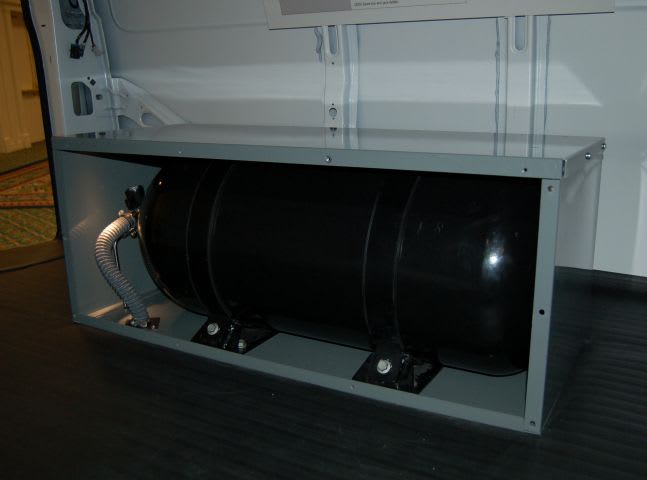
The compressed natural gas tank inside the Chevrolet Express
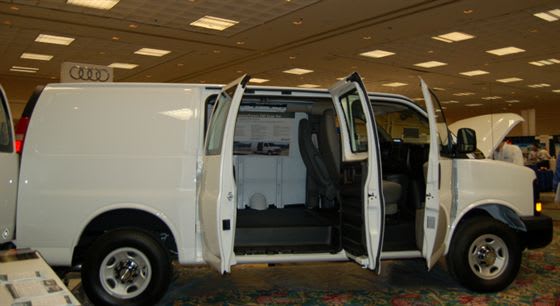
General Motors showcased the industry's only fully integrated, compressed natural gas cargo vans in public for the first time this week at the 2010 Green Fleet Conference in San Diego.
The automaker displayed the Chevrolet Express and GMC Savana CNG vans, as well as all other vehicles in its fuel-efficient lineup.
"Our compressed natural gas cargo vans will make it easier for fleet owners to meet their business objectives and make their transportation more sustainable," said Mary Beth Stanek, GM's director of federal environmental and energy regulatory affairs, and a conference keynote speaker. "Chevrolet and GMC are the only brands to offer a one-source CNG option on vans for fleet customers. What's more, these vans meet all Environmental Protection Agency and California Air Resources Board emission certification requirements."
The fully integrated CNG fuel system option carries a manufacturer's suggested retail price of $15,910. The vans will be covered by GM's three-year, 36,000-mile new vehicle limited warranty and five-year, 100,000-mile limited powertrain warranty.
"Natural gas is an abundant and clean alternative fuel," Stanek said. "Based on today's CNG fuel rates and anticipated payback period, fleet investment in CNG can be quite affordable."
Fleet owners have additional choices to make their vehicles more sustainable and environmentally friendly:
Fuel efficiency: GM offers 12 models with EPA-estimated 30 miles per gallon highway ratings that use innovative engine advancements like active fuel management to deactivate cylinders and spark ignition direct injection. For example, the new Chevrolet Cruze Eco model featuring a 1.4L turbo engine is expected to get up to 40 mpg highway when it goes on sale in early 2011.
Flex-fuel vehicles: GM offers more flex-fuel vehicles than any manufacturer with 19 models that run on up to 85 percent ethanol and 15 percent gasoline or any combination of the two. GM is on track to make more than half of its vehicle production flex-fuel capable by 2012.
Hybrids: GM offers the only hybrid pickup trucks in the market - the Chevrolet Silverado and GMC Sierra. An additional four hybrid models accompany the pickups - the Cadillac Escalade, Chevrolet Tahoe, GMC Yukon and GMC Yukon Denali Hybrids.
An Automotive Fleet census recently reported there were 10,864,637 fleet vehicles on the nation's roads as of Jan. 1, 2010. Any improvements to increase fuel economy and reduce emissions can significantly contribute to a cleaner environment.
Corporate sustainability and green fleet initiatives are playing a larger role in fleet managers' purchasing decisions, as more companies choose to "green" their fleets, Stanek said.
"Purchasing from GM means supporting a company fully dedicated to sustainable practices in every part of our business - from our supply chain, to product manufacturing, to the vehicles we put on the road," she said. "We continually assess environmental impact and take steps to reduce it."
More Small Fleet


Developing Budget-Friendly Driver Safety Programs
From driver training and safety meetings to one-on-one coaching and incentive programs, several small fleets share how they have developed a safety culture with their drivers using low- to no-cost resources.
Read More →
Boosting Last-Mile Fleet Uptime, Safety, and Value with AI Vehicle Inspections
AI-powered inspections are transforming last-mile fleets by replacing manual checks with highly accurate automated scans that detect defects in seconds. By giving fleet operations visibility into the daily condition of their vehicles, you can identify trends over the vehicle’s lifecycle that enable improved procurement decisions, route management, driver training and accountability.
Read More →
Five Ways Seat Belts Help Prevent Injuries
There are five ways seat belts protect occupants from injuries, according to the Tennessee Department of Safety and Homeland Security.
Read More →
It’s here: The 2026 Fleet Technology Trends Report
What does AI mean for fleets? Get the answer — and learn other top tech trends.
Read More →
Small Fleets, Big Impact: How Independent Drivers Power Wreaths Across America
Check out how small fleets and independent drivers power Wreaths Across America each December and why their impact matters more than ever.
Read More →
VMS Survey Finds 65% of Small Fleet Managers Run Operations Alone
A new VMS survey shows small fleet managers are stretched thin, with most handling operations solo and eager to adopt digital tools for relief.
Read More →
Tips for Driving Safely on Halloween Night
This video features a reminder from the Connecticut Department of Transportation (DOT) and the Connecticut Police Chiefs Association, urging drivers to prioritize safety this Halloween.
Read More →
AI, Access, and Uptime: VMS’s Next Chapter with David Prusinski
VMS’s new Co-CEO, David Prusinski, shares how an AI-first approach will give small fleets and repair shops the tools to compete like big players.
Read More →
Fleet Managers Share Winter Prep Tips: It's Never Too Early!
Three fleets share best practices to prep vehicles for winter and prevent downtime when the cold sets in.
Read More →