




Ford’s Atlas Concept Pickup Truck Shows Future Direction of Automaker’s Products
The Atlas Concept features a mix of technologies designed to enhance fuel economy and the vehicle’s overall functionality.
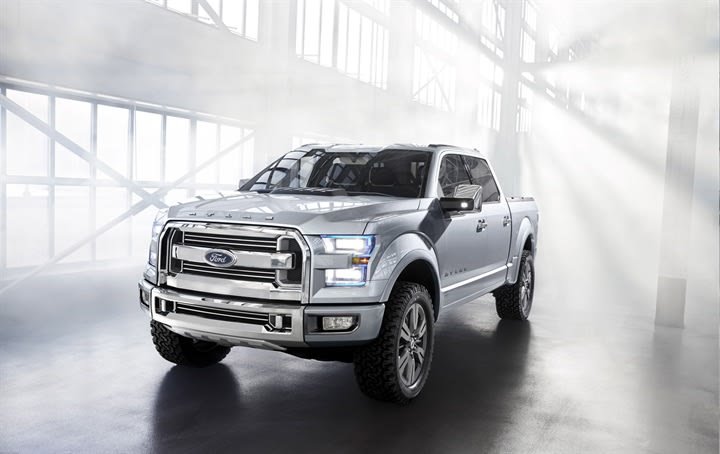
The Ford Atlas Concept is designed to show new technologies the automaker is developing for use in its pickup truck products.
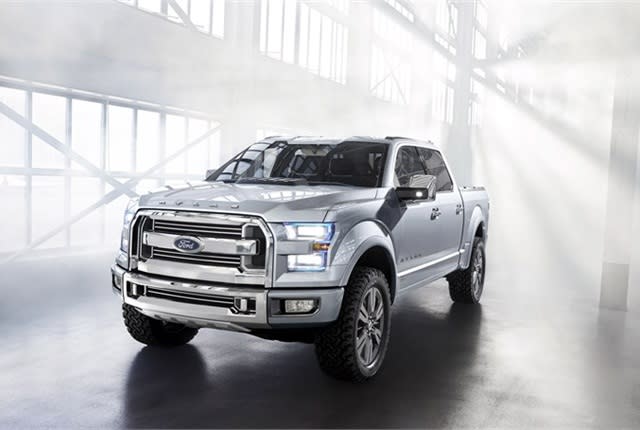
The Ford Atlas Concept is designed to show new technologies the automaker is developing for use in its pickup truck products.
Ford unveiled a new pickup truck concept, the Atlas, which the automaker says showcases design ideas and new technologies that “will define” Ford’s future pickups.
You can view a photo gallery of the Atlas Concept truck here.
“The Ford Atlas Concept previews the innovations that will transform what people expect from their pickup,” said Raj Nair, Ford group vice president, Global Product Development. “With 36 years as America’s best-selling pickup, we are absolutely committed to setting the agenda in the truck market.”
The Atlas Concept features a mix of technologies designed to enhance fuel economy and the vehicle’s overall functionality. Starting with fuel economy, the Atlas Concept features a next-generation EcoBoost powertrain that integrates auto-start-stop functionality designed to work in a pickup truck. The system in the Atlas Concept shuts off the engine when the truck is stopped on the road but can detect when the vehicle is towing so it can turn the feature off.
The next-generation EcoBoost engine uses gasoline direct injection and turbocharging to improve fuel efficiency by up to 20% and reduce CO2 emissions by up to 15% when compared with larger displacement engines, Ford said.
Beyond the next-gen EcoBoost engine, the Atlas features a number of other technologies designed to enhance fuel efficiency. They include Active Grille Shutters, which open and close depending on the vehicle’s speed in order to improve aerodynamics but provide cooling when needed; Active Wheel Shutters, which close at highway speeds to further improve aerodynamics; a Drop-Down Front Air Dam, which is a spoiler that lowers at highway speeds to improve airflow under the vehicle but raises at low speeds to provide extra ground clearance; and Power Running Boards, which auto deploy to help passengers get into the vehicle but retract when the vehicle is in motion to further improve aerodynamics and ground clearance. Ford said that when combined, these features can save more than 2 mpg on the highway without affecting towing or hauling capabilities.
The truck’s interior features lightweight seating in leather that provide added legroom for rear-seat passengers and storage for small items.
The Atlas Concept shows other features designed to improve a pickup’s functionality as a work truck. Ford added multiple tie-down points to the cargo box and load floor, and installed 110-volt electrical outlets in the cargo box for charging power tools. The truck also features an integrated roof carrying system and hidden extendable (and removable) ramps that stow below the cargo box.
For better visibility when working at night, the truck’s cargo box has integrated LED lights that don’t use as much energy as standard headlights or plug-in lights.
In the back of the truck, the tailgate can act as a cargo cradle by lifting and holding extra-long items above the truck, which frees up space in the bed. The truck also comes with what Ford calls a “Dynamic Hitch Assist,” which helps line up the truck’s hitch with a trailer coupling. For improved lighting, the truck comes with LED headlamps and taillamps.
To improve backing safety, Ford has created a new feature called Backup Assist, which allows a driver to back a trailer automatically. The truck also features a new 360-degree camera, which gives a driver a bird’s eye view of the truck in order to help him or her position the vehicle.
More Small Fleet


Developing Budget-Friendly Driver Safety Programs
From driver training and safety meetings to one-on-one coaching and incentive programs, several small fleets share how they have developed a safety culture with their drivers using low- to no-cost resources.
Read More →
Boosting Last-Mile Fleet Uptime, Safety, and Value with AI Vehicle Inspections
AI-powered inspections are transforming last-mile fleets by replacing manual checks with highly accurate automated scans that detect defects in seconds. By giving fleet operations visibility into the daily condition of their vehicles, you can identify trends over the vehicle’s lifecycle that enable improved procurement decisions, route management, driver training and accountability.
Read More →
Five Ways Seat Belts Help Prevent Injuries
There are five ways seat belts protect occupants from injuries, according to the Tennessee Department of Safety and Homeland Security.
Read More →
It’s here: The 2026 Fleet Technology Trends Report
What does AI mean for fleets? Get the answer — and learn other top tech trends.
Read More →
Small Fleets, Big Impact: How Independent Drivers Power Wreaths Across America
Check out how small fleets and independent drivers power Wreaths Across America each December and why their impact matters more than ever.
Read More →
VMS Survey Finds 65% of Small Fleet Managers Run Operations Alone
A new VMS survey shows small fleet managers are stretched thin, with most handling operations solo and eager to adopt digital tools for relief.
Read More →
Tips for Driving Safely on Halloween Night
This video features a reminder from the Connecticut Department of Transportation (DOT) and the Connecticut Police Chiefs Association, urging drivers to prioritize safety this Halloween.
Read More →
AI, Access, and Uptime: VMS’s Next Chapter with David Prusinski
VMS’s new Co-CEO, David Prusinski, shares how an AI-first approach will give small fleets and repair shops the tools to compete like big players.
Read More →
Fleet Managers Share Winter Prep Tips: It's Never Too Early!
Three fleets share best practices to prep vehicles for winter and prevent downtime when the cold sets in.
Read More →