




Ford Survey: Drivers Want Safety Features that Bolster Awareness of Hazards
The survey found that the vast majority of drivers are interested in getting some extra assist features in their next vehicle to help them avoid potential accidents.
According to a new survey commissioned by Ford Motor Co., most Americans say they consider themselves to be careful drivers but admit they would welcome some extra electronic help when they’re behind the wheel.
Recently, market research firm Penn Schoen Berland conducted the survey of American drivers over the age of 18 to learn more about their attitudes toward driver assist technology. The survey found that the vast majority of drivers are interested in getting some extra assist features in their next vehicle to help them avoid potential accidents.
“We found the drivers we talked to were definitely inclined toward features that provided real practical benefits by alerting them to potentially hazardous situations they may have missed,” said Billy Mann, managing director of Penn Schoen Berland. “For them, assistance features that increase awareness ranked high among their priorities.”
Even under ideal daytime conditions on a dry road, traffic can suddenly slow or someone can slip into the gap between you and the car ahead. When the sun goes down or the clouds open up, it gets harder to judge what a suitable following distance might be. Nearly nine out of 10 of the survey respondents expressed interest in technology that could assist in slowing their car if it determines there is a potential collision ahead.
Whether on the highway during rush hour, in urban traffic or a parking lot, driving in close quarters with other vehicles can be stressful for any driver. Two-thirds of the drivers who participated in the survey indicated they would be interested in systems that can help them see around other vehicles while backing out of a parking space and detect other vehicles that might be in a blind spot over their shoulders.
“This survey shows that as consumers have become accustomed to using electronic assistants in other aspects of life, they are increasingly recognizing how technology can help them cope with the stresses of driving,” said Amy Marentic, Ford group marketing manager.
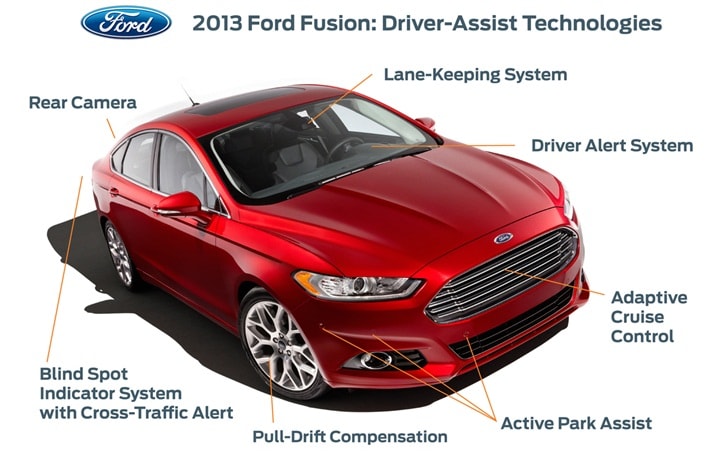
Fatigue or inattentiveness can lead to a car drifting out of its lane, and eight in 10 of the surveyed drivers expressed interest in a system that could provide an alert or even help to keep the vehicle in the lane. Ford’s Lane-Keeping System uses a forward-facing camera to watch for visible road markings, alerting the driver by vibrating the steering wheel if the system senses the car drifting out of its lane. The Fusion also applies a torque to the steering wheel to help nudge the car back into the lane.
“With the emergence of sensor-packed smartphones over the past several years, consumers have become accustomed to using their electronic gadgets to realize real-world benefits such as finding their way in unfamiliar places, figuring out the best place to grab a meal and track their exercise,” says Sheryl Connelly, Ford manager of global trends and futuring. “Advanced driver assistance features bring those benefits to the driving experience by extending the driver’s senses beyond the car.”
While respondents almost universally consider themselves to be safe behind the wheel, most of them also acknowledge that they engage in other activities when they are behind the wheel. Three-quarters admit to eating or drinking behind the wheel and more than half have exceeded the speed limit or used a hand-held mobile phone. Eighty-three percent admit that either they or someone they know has driven when very tired.
Adult American drivers are self-aware enough to recognize the flaws in their own driving habits and express interest in technological aids.
“We see the driver as always being at the center of control of the vehicle,” said Randy Visintainer, director of Ford research and innovation. “With improvements in sensing and control technologies, we can now provide unprecedented levels of assistance to drivers.”
Though it’s critical that drivers always retain full control of their vehicle, Ford engineers recognize there will always be situations where drivers can use some help, said Visintainer. Consequently, Ford engineers have developed a full suite of driver assistance technologies to help mitigate the risks. Until now, it’s only been possible to get many of these features in luxury cars costing $100,000 or more.
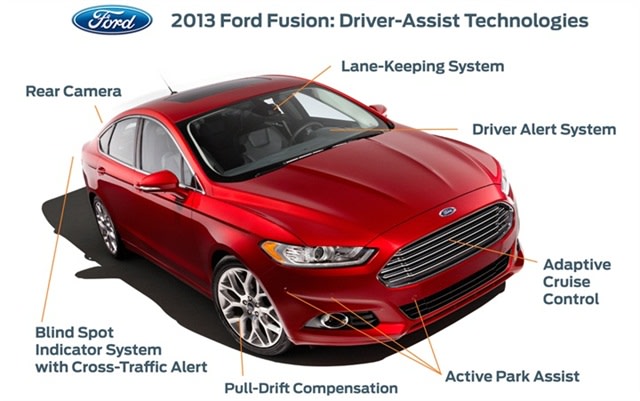
The 2013 Ford Fusion’s safety features include:
Blind Spot Information System (BLIS) with cross-traffic alert
Adaptive cruise control and forward collision warning with brake support
Lane-Keeping System with Driver Alert System
Active park assist
Rear-view camera system
SYNC
More Small Fleet


Developing Budget-Friendly Driver Safety Programs
From driver training and safety meetings to one-on-one coaching and incentive programs, several small fleets share how they have developed a safety culture with their drivers using low- to no-cost resources.
Read More →
Boosting Last-Mile Fleet Uptime, Safety, and Value with AI Vehicle Inspections
AI-powered inspections are transforming last-mile fleets by replacing manual checks with highly accurate automated scans that detect defects in seconds. By giving fleet operations visibility into the daily condition of their vehicles, you can identify trends over the vehicle’s lifecycle that enable improved procurement decisions, route management, driver training and accountability.
Read More →
Five Ways Seat Belts Help Prevent Injuries
There are five ways seat belts protect occupants from injuries, according to the Tennessee Department of Safety and Homeland Security.
Read More →
It’s here: The 2026 Fleet Technology Trends Report
What does AI mean for fleets? Get the answer — and learn other top tech trends.
Read More →
Small Fleets, Big Impact: How Independent Drivers Power Wreaths Across America
Check out how small fleets and independent drivers power Wreaths Across America each December and why their impact matters more than ever.
Read More →
VMS Survey Finds 65% of Small Fleet Managers Run Operations Alone
A new VMS survey shows small fleet managers are stretched thin, with most handling operations solo and eager to adopt digital tools for relief.
Read More →
Tips for Driving Safely on Halloween Night
This video features a reminder from the Connecticut Department of Transportation (DOT) and the Connecticut Police Chiefs Association, urging drivers to prioritize safety this Halloween.
Read More →
AI, Access, and Uptime: VMS’s Next Chapter with David Prusinski
VMS’s new Co-CEO, David Prusinski, shares how an AI-first approach will give small fleets and repair shops the tools to compete like big players.
Read More →
Fleet Managers Share Winter Prep Tips: It's Never Too Early!
Three fleets share best practices to prep vehicles for winter and prevent downtime when the cold sets in.
Read More →