




Ford Introduces New 2008 E-Series Van
New model sports a more aggressive hood appearance and increased carrying capacity.
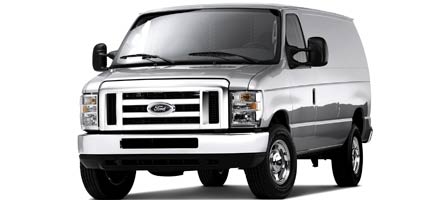
Ford introduces their new 2008 E-Series commercial van with a bold new look and a number of upgrades to improve ride and handling. The most noticeable difference in the 2008 E-Series is the redesigned hood and grill inspired by the new F-Series Super Duty’s new front-end design. The front of the vans have been enlarged with a new bold grille to project a look of strength and reliability, and the larger grille also serves a functional purpose in that it increases the airflow into the powertrain to improve engine capability. A re-engineered front suspension with larger sway bars and an all-new braking system with larger calipers have improved handling and load carrying capabilities on the 2008. The maximum gross vehicle weight rating (GVWR) has now moved up to 14,500 pounds, making the E-350 a more capable van with customers not feeling as pressured to make the move up to the E-450. The E-Series also tries to offer versatility in their power choices. The E-150 and E-250 both come with a 4.6-liter V8, while the E-350 comes with a standard 5.4 liter V8 but can be upgraded to a 6.8-liter V10 for more power. The E-Series, however, has kept their cargo dimensions the same even throughout the upgrades. Door structures and floor structure measurements are the same as older models and the seat attachments are in the same locations. This was done to retain customers who specifically select their tools to fit inside of the van.
More Small Fleet


Developing Budget-Friendly Driver Safety Programs
From driver training and safety meetings to one-on-one coaching and incentive programs, several small fleets share how they have developed a safety culture with their drivers using low- to no-cost resources.
Read More →
Boosting Last-Mile Fleet Uptime, Safety, and Value with AI Vehicle Inspections
AI-powered inspections are transforming last-mile fleets by replacing manual checks with highly accurate automated scans that detect defects in seconds. By giving fleet operations visibility into the daily condition of their vehicles, you can identify trends over the vehicle’s lifecycle that enable improved procurement decisions, route management, driver training and accountability.
Read More →

Five Ways Seat Belts Help Prevent Injuries
There are five ways seat belts protect occupants from injuries, according to the Tennessee Department of Safety and Homeland Security.
Read More →
Basic Tracking vs Next Generation Fleet Technology
Fleet software is getting more sophisticated and effective than ever, tying big data models together to transform maintenance, safety, and the value of your existing tech stack. Fleet technology upgrades are undoubtedly an investment, but updated technology can offer a much higher return. Read how upgrading your fleet technology can increase the return on your investment.
Read More →
It’s here: The 2026 Fleet Technology Trends Report
What does AI mean for fleets? Get the answer — and learn other top tech trends.
Read More →
Small Fleets, Big Impact: How Independent Drivers Power Wreaths Across America
Check out how small fleets and independent drivers power Wreaths Across America each December and why their impact matters more than ever.
Read More →
VMS Survey Finds 65% of Small Fleet Managers Run Operations Alone
A new VMS survey shows small fleet managers are stretched thin, with most handling operations solo and eager to adopt digital tools for relief.
Read More →
Tips for Driving Safely on Halloween Night
This video features a reminder from the Connecticut Department of Transportation (DOT) and the Connecticut Police Chiefs Association, urging drivers to prioritize safety this Halloween.
Read More →
AI, Access, and Uptime: VMS’s Next Chapter with David Prusinski
VMS’s new Co-CEO, David Prusinski, shares how an AI-first approach will give small fleets and repair shops the tools to compete like big players.
Read More →