




Ford Highlights How F-Series Shaped America
Ford recently highlighted how the F-Series has been a part of the U.S. workplace for nearly a century.
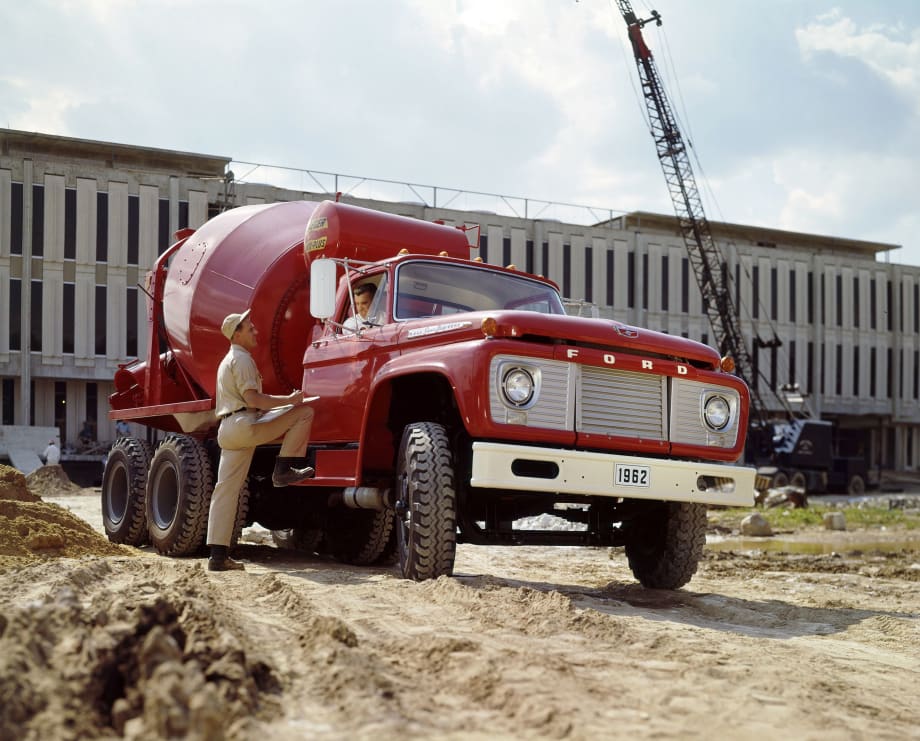
A 1962 Ford F-850 truck with concrete mixer at a job site. Photo: Ford Archives
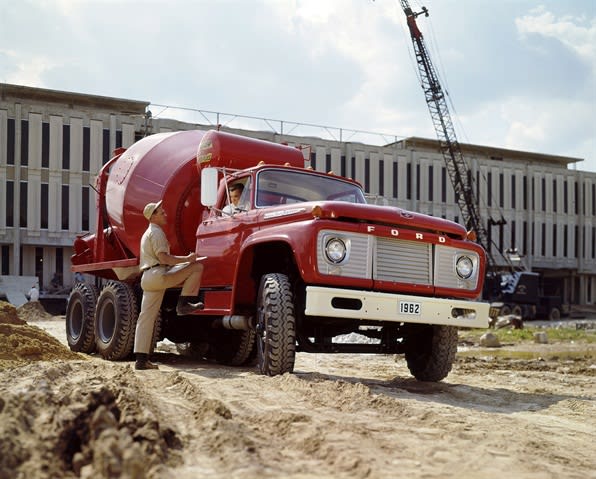
A 1962 Ford F-850 truck with concrete mixer at a job site. Photo: Ford Archives
Ford recently highlighted how the F-Series has been a part of the U.S. workplace for nearly a century.
One of the early landmark projects that involved the F-Series was the building of the Hoover Dam in 1931. According to Ford archives, estimates of the project included 5.5 million barrels of cement, 5 million cubic yards of concrete masonry, 15 million pounds of hydraulic equipment, 40 million pounds of electrical equipment, nearly 20 million pounds of gates and valves, and 30 million pounds of reinforcing steel.
The Alaska Road Commission used Ford trucks to help build and maintain more than 2,000 miles of road and 70,000 miles of trails. In 1939, a loaded, 2-ton Ford V-8 truck could make the 370-mile run from Valdez to Fairbanks, via gravel roads, at an average speed of over 20 mph, according to Ford records.
In 1933, Ford F-Series trucks were used in another major dam project near Glasgow, Montana, with the building of the Fort Peck Dam across the Missouri River. At the time, the Fort Peck Dam was the world's largest earthen dam, containing 123 million cubic yards of earth. During construction, Ford V-8 trucks hauled 14 million yards of earth to clear a path, according the automaker's records.
In addition to helping with the construction of the Hoover Dam, Ford F-Series trucks were used in the late 1930s on the construction of the Hoover Dam Transmission Line, which was designed to power the city of Los Angeles. Ford trucks were used as concrete mixers, were equipped with winch gear for hoisting power towers, and even as a portable service station for fueling field equipment in the high desert, according to the automaker.
Today, Ford F-Series trucks are employed across numerous industries, including waste management; street and highway construction; electric services; water, sewer, and pipeline construction; and in the crude petroleum and natural gas industry.
Originally posted on Automotive Fleet
More Operations
Family Ties Inside the Fleet Families Building Careers Across Generations
Three fleet families share what it really takes to work together, learn across generations, and keep business from following them home.
Read More →
Shades of Fleet Call for Voices: Fleet's Hidden Heroes
Fleet’s hidden heroes are often the ones keeping everything moving behind the scenes. September’s Shades of Fleet is looking for dispatchers, coordinators, parts specialists, and other support pros to share their stories.
Read More →
Truck Centers, Inc. Celebrates National Truck Driver Appreciation Week with $1,000 Fuel Card Giveaways
During National Truck Driver Appreciation Week, Truck Centers, Inc. is offering customers a chance to fuel up for free. Customers at all Truck Centers locations can enter to win one of four $1,000 fuel cards from Sept. 14 - 18.
Read More →
Fleet Guides, AI Time-Savers, Truck Tariffs & Fuel Strategy Lead the News
This week’s Truck Chat Cheat Sheet covers new fleet vehicle guides, practical AI use cases, U.S.-Canada truck production, mixed-energy strategy, and more.
Read More →
What Fleet Employers Are Missing When Hiring Veterans
What if some of the strongest candidates for fleet are already out there, but their experience is written in a language our industry does not always recognize?
Read More →
Automotive Fleet Opens 2026 Personal Use Survey for Commercial Fleet Managers
Less than two weeks left! Commercial and corporate fleet managers are invited to share how their organizations handle company vehicle personal-use policies, charges, and driver eligibility.
Read More →
What Resilient Fleets Do Differently When Conditions Change
Fleet resilience is about more than reacting to disruption. Lauren Fletcher talks with AP Fleet’s Alex Coveney about flexibility, planning, scaling, and what helps fleets adapt when business conditions shift.
Read More →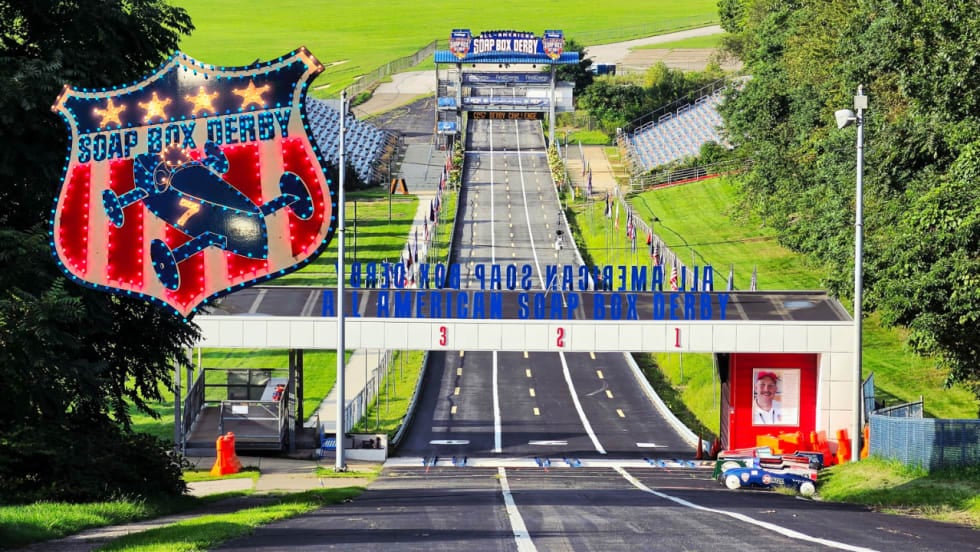
If We Want the Next Generation in Automotive, We Have to Give Them a Reason to Care
The automotive industry talks constantly about its workforce shortage. But before we can recruit the next generation, we may need to do a better job giving kids a reason to care about automotive in the first place.
Read More →
Ram ProMaster City Under $40K, Truck Tariffs, and AI Maintenance Lead the News
A sub-$40K commercial van, tariff questions, AI-powered maintenance, and a new EV production strategy headline this week’s Truck Chat Cheat Sheet.
Read More →
Bob Adamsky Shares the Fleet Lessons You Usually Learn the Hard Way
After more than 30 years in fleet, Arrow International’s Bob Adamsky has learned that the job is about far more than vehicles. He shares the lessons he wishes every fleet manager could learn a little earlier.
Read More →