




Ford F-150 EcoBoost Hits 1 Million Sales
More than 1 million Ford F-150 pickups with segment-exclusive EcoBoost engines have now been sold in the United States.
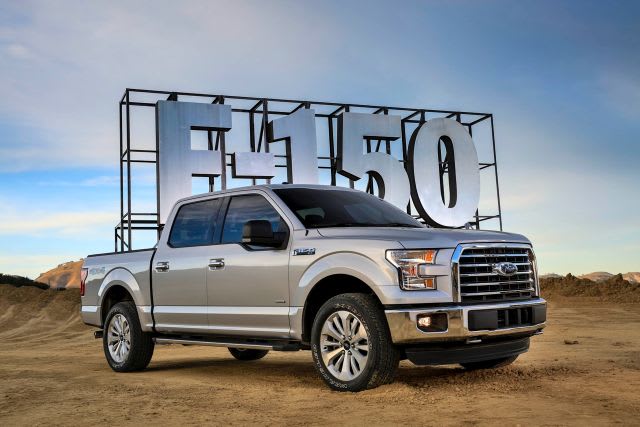
ith more than 1 million EcoBoost trucks on the road, F-150 owners will save more than 110 million gallons of gas over the course of the next year. Photo courtesy of Ford.
ith more than 1 million EcoBoost trucks on the road, F-150 owners will save more than 110 million gallons of gas over the course of the next year. Photo courtesy of Ford.
Ford Motor Co. set a new benchmark in truck capability and efficiency: More than 1 million F-150 pickups with segment-exclusive EcoBoost engines have now been sold in the United States.
“We are proving that with advanced technologies like EcoBoost and high-strength, military-grade, aluminum-alloy construction, Ford continues to outperform the competition by virtually every metric,” said Doug Scott, Ford truck group marketing manager. “EcoBoost is delivering the value, capability and performance F-150 customers insist upon, while helping improve their No. 1 demand – better fuel economy.”
F-150 is the only truck in its segment pushing into the future and offering turbocharged direct injection engines – a move the competition is expected to copy going forward.
The advanced 2.7L EcoBoost with standard Auto Start-Stop offers EPA-estimated fuel economy of 19 mpg city and 26 mpg highway for F-150, while the 3.5L EcoBoost offers large V-8 power and best-in-class towing.
This fall, an all-new second-generation 3.5L EcoBoost with standard Auto Start-Stop and an all-new 10-speed automatic transmission will continue the story with even more power and better efficiency, providing at least 30 lb.-ft. more peak torque compared with the first-generation 3.5L EcoBoost engine, more than a best-in-class 450-plus lb.-ft. for a V-6.
These fuel-efficient, powerful engines have been leading the world of work since January 2011, and over the course of 1 million units sold, have saved customers a staggering amount of fuel. With more than 1 million EcoBoost trucks on the road, F-150 owners will save more than 110 million gallons of gas over the course of the next year..
That’s enough fuel to fill approximately 13 supertankers. With average nationwide gasoline prices hovering around $2.30 a gallon according to AAA, F-150 owners will collectively save an estimated $255 million simply by choosing EcoBoost. The average 2.7L EcoBoost customer will save enough fuel for 2,891 miles of highway driving – roughly the distance from New York City to San Francisco.
According to Ford, it took more than 1,000 days to sell the first 400,000 EcoBoost engines, but it has taken only 2,000 days to sell 1 million. The 2.7L EcoBoost has more than 13,000 orders placed in the past two months. Combined with the 3.5L version, the two EcoBoost engines have sold more than 300,000 units in 2016.
Estimated fuel savings are based on EPA-estimated combined ratings for 2011-16 F-150 EcoBoost models relative to the V-8 models they replaced, and an assumed 15,000 miles driven per truck per year.
Originally posted on Automotive Fleet
More Operations

Family Ties Inside the Fleet Families Building Careers Across Generations
Three fleet families share what it really takes to work together, learn across generations, and keep business from following them home.
Read More →
Shades of Fleet Call for Voices: Fleet's Hidden Heroes
Fleet’s hidden heroes are often the ones keeping everything moving behind the scenes. September’s Shades of Fleet is looking for dispatchers, coordinators, parts specialists, and other support pros to share their stories.
Read More →
Truck Centers, Inc. Celebrates National Truck Driver Appreciation Week with $1,000 Fuel Card Giveaways
During National Truck Driver Appreciation Week, Truck Centers, Inc. is offering customers a chance to fuel up for free. Customers at all Truck Centers locations can enter to win one of four $1,000 fuel cards from Sept. 14 - 18.
Read More →
Fleet Guides, AI Time-Savers, Truck Tariffs & Fuel Strategy Lead the News
This week’s Truck Chat Cheat Sheet covers new fleet vehicle guides, practical AI use cases, U.S.-Canada truck production, mixed-energy strategy, and more.
Read More →
What Fleet Employers Are Missing When Hiring Veterans
What if some of the strongest candidates for fleet are already out there, but their experience is written in a language our industry does not always recognize?
Read More →
Automotive Fleet Opens 2026 Personal Use Survey for Commercial Fleet Managers
Less than two weeks left! Commercial and corporate fleet managers are invited to share how their organizations handle company vehicle personal-use policies, charges, and driver eligibility.
Read More →
What Resilient Fleets Do Differently When Conditions Change
Fleet resilience is about more than reacting to disruption. Lauren Fletcher talks with AP Fleet’s Alex Coveney about flexibility, planning, scaling, and what helps fleets adapt when business conditions shift.
Read More →
If We Want the Next Generation in Automotive, We Have to Give Them a Reason to Care
The automotive industry talks constantly about its workforce shortage. But before we can recruit the next generation, we may need to do a better job giving kids a reason to care about automotive in the first place.
Read More →
Ram ProMaster City Under $40K, Truck Tariffs, and AI Maintenance Lead the News
A sub-$40K commercial van, tariff questions, AI-powered maintenance, and a new EV production strategy headline this week’s Truck Chat Cheat Sheet.
Read More →
Bob Adamsky Shares the Fleet Lessons You Usually Learn the Hard Way
After more than 30 years in fleet, Arrow International’s Bob Adamsky has learned that the job is about far more than vehicles. He shares the lessons he wishes every fleet manager could learn a little earlier.
Read More →