




Ford: 10 Segment Leaders in Lowest Collision Insurance Cost Study
The National Highway Traffic Safety Administration 2010 Relative Collision Insurance Cost Information Booklet shows more Ford, Lincoln and Mercury vehicles lead their segments for the lowest collision insurance cost than any other automaker.
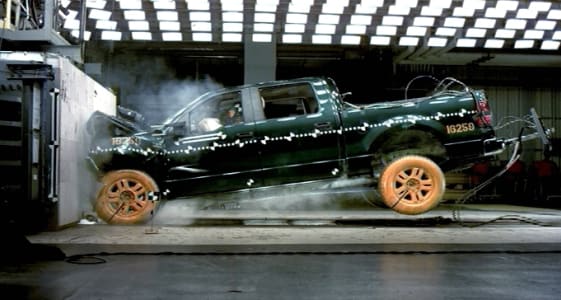
Many Ford Motor Company vehicles cost less to repair after a collision on average than all other vehicles in their segments, according to a new U.S. government report based in insurance claims database.
This is good news for the pocketbooks of current and future Ford, Lincoln and Mercury owners because auto insurance companies often factor in model-specific claims data in setting premium costs.
The National Highway Traffic Safety Administration (NHTSA) 2010 Relative Collision Insurance Cost Information Booklet shows more Ford, Lincoln and Mercury vehicles lead their segments for the lowest collision insurance cost than any other automaker. The report will be available in all dealerships this spring to help consumers anticipate repair costs that insurers rely on for setting insurance rates.
Ford has 10 segments leaders, including Taurus, Focus and F-Series trucks, from the 2007-2009 model years, more than three times as many as Toyota and Honda combined. The NHTSA ratings based on claim costs data from the Insurance Institute for Highway Safety.
"Vehicle affordability continues to be the most important purchase consideration for car and truck buyers, rivaled only by fuel economy," said Frederiek Toney, vice president, Ford Customer Service Division. "We design our vehicles to be easier and more affordable to repair because we know this saves our customers money in insurance premiums and repair costs over the long term."
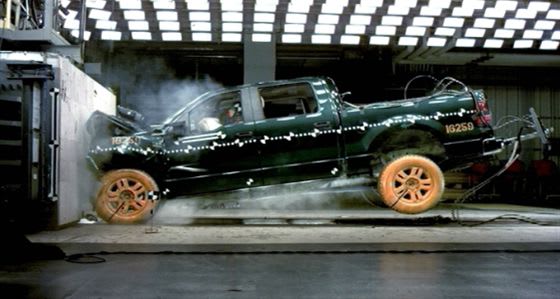
According to NHTSA, Ford's 10 segment-leading 2009 model year vehicles include:
Ford Focus - Small Cars (four-door)
Ford Taurus - Large Cars (four-door)
Ford F-150 - Large Pickups (two-door)
Ford F-150 Super Cab 4WD - Large Pickups (two-door-plus)
Ford F-250 4WD - Very Large Pickups (two-door)
Ford F-250 Super Cab - Very Large Pickups (two-door-plus)
Ford E-350 Econoline wagon - Cargo/Passenger Vans (tied with Chevrolet Express 3500)
Mercury Grand Marquis - Very Large Cars (four-door)
Mercury Mariner 4WD - Small SUV
Lincoln Town Car - Very Large Luxury Cars
Approximately 78 percent of Ford, Lincoln and Mercury models rated at or better than the industry average.
Designing to reduce damage
In 2009, Ford opened a Paint and Body Technology Center to leverage the combined expertise of Ford's repair and safety experts, auto repair technicians and insurance companies to identify design solutions and repair procedures that will lower repair costs.
"If your vehicle costs less to repair, it generally costs less to insure," said Gerry Bonanni, Ford damageability collision repair senior engineer. "We're working harder to help reduce insurers' repair costs by developing more affordable repairs earlier in a vehicle's development."
For example, Ford Focus maintained its hold on the top spot in the four-door small car segment thanks in part to a bumper design improvements.
"Ford's repair-ability experts and safety engineers made the Focus's bumper bigger and stronger to better protect adjacent components," said Larry Coan, Ford damageability engineer. "The new technology center will help us build on these leading efforts."
More Small Fleet

Developing Budget-Friendly Driver Safety Programs
From driver training and safety meetings to one-on-one coaching and incentive programs, several small fleets share how they have developed a safety culture with their drivers using low- to no-cost resources.
Read More →
Boosting Last-Mile Fleet Uptime, Safety, and Value with AI Vehicle Inspections
AI-powered inspections are transforming last-mile fleets by replacing manual checks with highly accurate automated scans that detect defects in seconds. By giving fleet operations visibility into the daily condition of their vehicles, you can identify trends over the vehicle’s lifecycle that enable improved procurement decisions, route management, driver training and accountability.
Read More →

Five Ways Seat Belts Help Prevent Injuries
There are five ways seat belts protect occupants from injuries, according to the Tennessee Department of Safety and Homeland Security.
Read More →
Basic Tracking vs Next Generation Fleet Technology
Fleet software is getting more sophisticated and effective than ever, tying big data models together to transform maintenance, safety, and the value of your existing tech stack. Fleet technology upgrades are undoubtedly an investment, but updated technology can offer a much higher return. Read how upgrading your fleet technology can increase the return on your investment.
Read More →
It’s here: The 2026 Fleet Technology Trends Report
What does AI mean for fleets? Get the answer — and learn other top tech trends.
Read More →
Small Fleets, Big Impact: How Independent Drivers Power Wreaths Across America
Check out how small fleets and independent drivers power Wreaths Across America each December and why their impact matters more than ever.
Read More →
VMS Survey Finds 65% of Small Fleet Managers Run Operations Alone
A new VMS survey shows small fleet managers are stretched thin, with most handling operations solo and eager to adopt digital tools for relief.
Read More →
Tips for Driving Safely on Halloween Night
This video features a reminder from the Connecticut Department of Transportation (DOT) and the Connecticut Police Chiefs Association, urging drivers to prioritize safety this Halloween.
Read More →
AI, Access, and Uptime: VMS’s Next Chapter with David Prusinski
VMS’s new Co-CEO, David Prusinski, shares how an AI-first approach will give small fleets and repair shops the tools to compete like big players.
Read More →