




Fleet Sales Bolstered By Economic Growth, Low Fuel Costs
Sales of light-duty vehicles from nine manufacturers to commercial fleet users rose 16.7 percent in January mostly on the strength of trucks, vans, and SUVs, according to Automotive Fleet data.

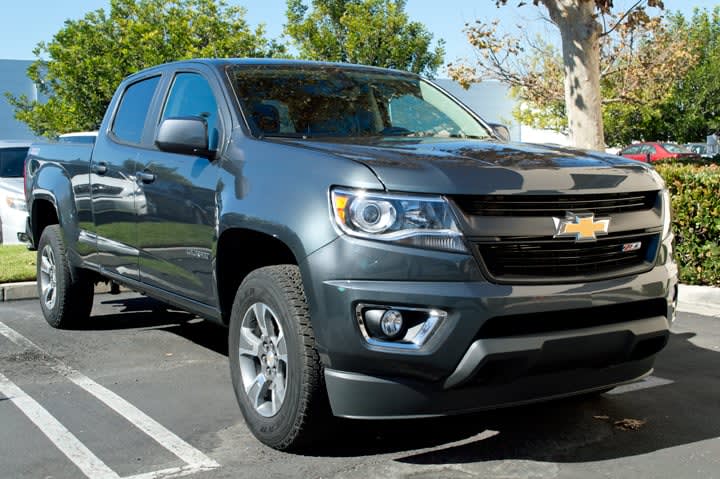
Photo of 2015 Chevrolet Colorado by Vince Taroc.
Photo of 2015 Chevrolet Colorado by Vince Taroc.
Sales of light-duty vehicles from nine manufacturers to commercial fleet users rose 17.1 percent in January mostly on the strength of trucks, vans, and SUVs, according to Automotive Fleet data.
The growth surge in fleet and retail channels has been propelled by pent-up pre-recession demand, a relatively strong U.S. economy, and low fuel prices, executives of fleet management companies said.
"We have seen a strong percentage of our clients growing their fleets once again," said Laura Jozwiak, vice president of client relations for Wheels Inc. "The low gas prices, pent-up consumer demand for all products, and the overall economy have certainly helped most industries rebound from the recession."
Sales of vehicles to commercial fleets and fleet management companies reached 41,874 units in January compared with 35,757 units sold in January of 2013. This follows an increase of 9.1 percent in the segment for the 2014 calendar year.
As in the retail channel, full-size trucks, vans and SUVs are driving the sales growth at the expense of passenger cars. The nine manufacturers sold 35,999 vehicles in this segment, which represented a 25.6 percent increase over the 28,662 vehicles sold a year ago. In contrast, sales of cars fell 17.2 percent to 5,875 from the 7,095 cars sold in January of 2013.
Fleet sales have kept strong forward momentum even if executives from fleet management companies may have different explanations for the underlying causes. Lower fuel prices appear to be fueling truck sales in the retail channel, but they may not be the same driver in the fleet channel, said Partha Ghosh, ARI's director of supply chain management.
"Fleet sales are usually driven by capital expenditure budgets and business needs," Ghosh said. "To the degree that more favorable operating expenses occur (perhaps as a result of lower fuel expense), companies will have more to invest in capital expenditures and if that occurs we may see a positive impact to fleet sales."
Fuel prices have been in a steady decline since late summer of 2014. For the week ending Feb. 3, the price of a gallon of regular unleaded reached $2.06. It has fallen from its perch of $3.70 per gallon in late June. A prolonged period of lower prices could have an impact, Ghosh acknowledged.
"Of course, if lower gas prices remain in place for a significant period of time, this also may enable companies to grow faster and hire more people, and that could have an indirect positive effect on fleet sales as well," Ghosh said.
In this lower-fuel-cost environment, fleet managers should keep a close eye on vehicle purchasing, said Jozwiak.
"Although fuel expenses have been cut in half as of late, our account managers continue to caution our clients to stay vigilant on fuel management best practices, expectations for future budgets, and proper vehicle selection," said Jozwiak. "The low gas prices give us all an opportunity to decide how to manage the windfall, and to mitigate any underlying risks."
By Paul Clinton
Originally posted on Automotive Fleet
More Operations

Family Ties Inside the Fleet Families Building Careers Across Generations
Three fleet families share what it really takes to work together, learn across generations, and keep business from following them home.
Read More →
Shades of Fleet Call for Voices: Fleet's Hidden Heroes
Fleet’s hidden heroes are often the ones keeping everything moving behind the scenes. September’s Shades of Fleet is looking for dispatchers, coordinators, parts specialists, and other support pros to share their stories.
Read More →
Truck Centers, Inc. Celebrates National Truck Driver Appreciation Week with $1,000 Fuel Card Giveaways
During National Truck Driver Appreciation Week, Truck Centers, Inc. is offering customers a chance to fuel up for free. Customers at all Truck Centers locations can enter to win one of four $1,000 fuel cards from Sept. 14 - 18.
Read More →From Our Partners




Fleet Guides, AI Time-Savers, Truck Tariffs & Fuel Strategy Lead the News
This week’s Truck Chat Cheat Sheet covers new fleet vehicle guides, practical AI use cases, U.S.-Canada truck production, mixed-energy strategy, and more.
Read More →
What Fleet Employers Are Missing When Hiring Veterans
What if some of the strongest candidates for fleet are already out there, but their experience is written in a language our industry does not always recognize?
Read More →
Automotive Fleet Opens 2026 Personal Use Survey for Commercial Fleet Managers
Less than two weeks left! Commercial and corporate fleet managers are invited to share how their organizations handle company vehicle personal-use policies, charges, and driver eligibility.
Read More →
What Resilient Fleets Do Differently When Conditions Change
Fleet resilience is about more than reacting to disruption. Lauren Fletcher talks with AP Fleet’s Alex Coveney about flexibility, planning, scaling, and what helps fleets adapt when business conditions shift.
Read More →
If We Want the Next Generation in Automotive, We Have to Give Them a Reason to Care
The automotive industry talks constantly about its workforce shortage. But before we can recruit the next generation, we may need to do a better job giving kids a reason to care about automotive in the first place.
Read More →
Ram ProMaster City Under $40K, Truck Tariffs, and AI Maintenance Lead the News
A sub-$40K commercial van, tariff questions, AI-powered maintenance, and a new EV production strategy headline this week’s Truck Chat Cheat Sheet.
Read More →
Bob Adamsky Shares the Fleet Lessons You Usually Learn the Hard Way
After more than 30 years in fleet, Arrow International’s Bob Adamsky has learned that the job is about far more than vehicles. He shares the lessons he wishes every fleet manager could learn a little earlier.
Read More →