




Fleet Safety Video Tip: Driving Near Railroad Crossings
Here's some advice, provided by nonprofit group Operation Lifesaver, aimed at promoting railroad crossing safety.
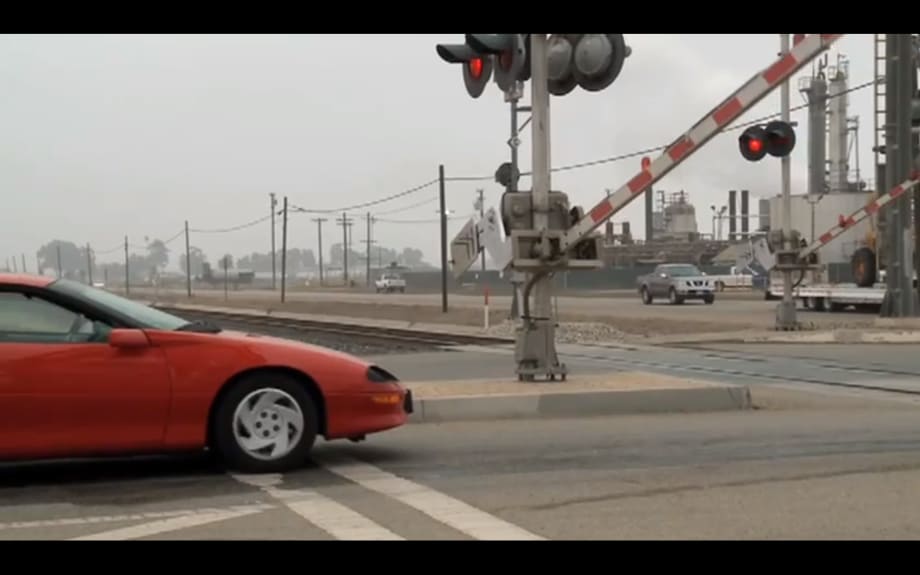

On average, nearly 2,000 Americans are killed or injured at railroad crossings each year. A motorist in a train/vehicle collision is approximately 40 times more likely to die compared to a motorist in a collision between two cars.
Here are some safety tips from Operation Lifesaver, a nonprofit group dedicated to preventing such crashes. You may want to pass this advice along to your fleet drivers as a friendly reminder.
Trains and cars don't mix. Never race a train to the crossing — even if you tie, you lose.
The train you see is closer and faster-moving than you think. If you see a train approaching, wait for it to go by before you proceed across the tracks.
Be aware that trains cannot stop quickly. Even if the locomotive engineer sees you, a freight train moving at 55 miles per hour can take a mile or more to stop once the emergency brakes are applied. That's 18 football fields!
Never drive around lowered gates — it's illegal and deadly. If you suspect a signal is malfunctioning, call the 1-800 number posted on or near the crossing signal or your local law enforcement agency.
Don't get trapped on the tracks. Proceed through a highway-rail grade crossing only if you're sure you can completely clear the crossing without stopping. Remember, the train is three feet wider than the tracks on both sides.
If your vehicle ever stalls on a track with a train coming, get out immediately and move quickly away from the tracks in the direction from which the train is coming. If you run in the same direction the train is traveling, when the train hits your car you could be injured by flying debris. Call 911 for assistance.
At a multiple track crossing waiting for a train to pass, watch out for a second train on the other tracks, approaching from either direction.
When you need to cross train tracks, go to a designated crossing, look both ways, and cross the tracks quickly, without stopping. Remember, it isn't safe to stop closer than 15 feet from a rail.
Always expect a train. Freight trains do not follow set schedules.
To view a video on the subject, click on the link or photo above (just under the headline).
Originally posted on Automotive Fleet
More Small Fleet


Developing Budget-Friendly Driver Safety Programs
From driver training and safety meetings to one-on-one coaching and incentive programs, several small fleets share how they have developed a safety culture with their drivers using low- to no-cost resources.
Read More →
Boosting Last-Mile Fleet Uptime, Safety, and Value with AI Vehicle Inspections
AI-powered inspections are transforming last-mile fleets by replacing manual checks with highly accurate automated scans that detect defects in seconds. By giving fleet operations visibility into the daily condition of their vehicles, you can identify trends over the vehicle’s lifecycle that enable improved procurement decisions, route management, driver training and accountability.
Read More →
Five Ways Seat Belts Help Prevent Injuries
There are five ways seat belts protect occupants from injuries, according to the Tennessee Department of Safety and Homeland Security.
Read More →
It’s here: The 2026 Fleet Technology Trends Report
What does AI mean for fleets? Get the answer — and learn other top tech trends.
Read More →
Small Fleets, Big Impact: How Independent Drivers Power Wreaths Across America
Check out how small fleets and independent drivers power Wreaths Across America each December and why their impact matters more than ever.
Read More →
VMS Survey Finds 65% of Small Fleet Managers Run Operations Alone
A new VMS survey shows small fleet managers are stretched thin, with most handling operations solo and eager to adopt digital tools for relief.
Read More →
Tips for Driving Safely on Halloween Night
This video features a reminder from the Connecticut Department of Transportation (DOT) and the Connecticut Police Chiefs Association, urging drivers to prioritize safety this Halloween.
Read More →
AI, Access, and Uptime: VMS’s Next Chapter with David Prusinski
VMS’s new Co-CEO, David Prusinski, shares how an AI-first approach will give small fleets and repair shops the tools to compete like big players.
Read More →
Fleet Managers Share Winter Prep Tips: It's Never Too Early!
Three fleets share best practices to prep vehicles for winter and prevent downtime when the cold sets in.
Read More →