





Read More: 10 Night Driving Tips
FHWA Mandates New Standard for Retroreflective Pavement Markings
The Federal Highway Administration announced a final rule that aims to improve safety for all road users by ensuring that pavement markings are made more visible in dark or low light conditions.
August 16, 2022
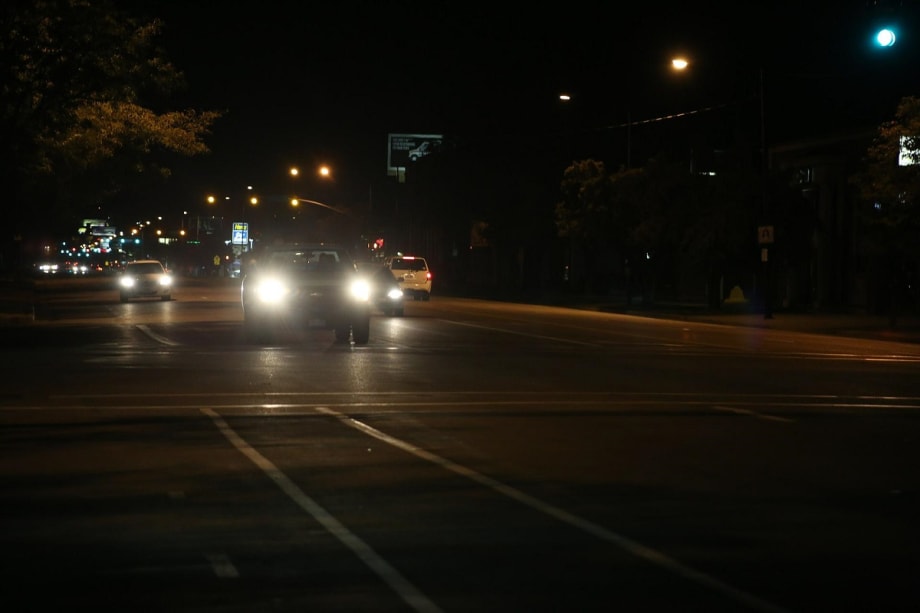
Americans do just 25% of driving at night, yet 50% of traffic fatalities occur at night.
Photo: Pixabay.com/John R. Perry
2 min to read
In an effort to reduce highway fatalities after dark, the U.S. Department of Transportation’s Federal Highway Administration (FHWA) is mandating a new minimum standard for pavement marking “retroreflectivity” effective September 6, 2022.
The goal is to ensure that pavement markings are made more visible in dark or low light conditions. Retroreflective material reflects light more effectively back to the human eye, making pavement markings brighter and more easily seen in dark conditions.
Currently, the Manual on Uniform Traffic Control Devices for Streets and Highways (MUTCD) requires that pavement markings be visible at night and that all markings on interstate highways be retroreflective, but it does not require a minimum level. By creating one, FHWA believes state and local transportation agencies can reduce the number of severe crashes that happen in dark, unlighted conditions and result in an annual nighttime fatality rate that is roughly three times the daytime fatality rate.
While we do only one quarter of our driving at night, 50% of traffic deaths happen at night, according to the National Safety Council (NSC). Moreover, depth perception, color recognition, and peripheral vision can be compromised in the dark, and the glare of headlights from an oncoming vehicle can temporarily blind a driver.
As the NSC notes, even with high-beam headlights on, visibility is limited to about 500 feet, creating less time to react to something in the road, especially when driving at higher speeds.
The new rule aims to save lives by helping drivers see pavement markings more clearly and know what lies ahead, especially in darkness and other instances when visibility is critical, according to the FHWA.
Noteworthy, the new rule is also expected to help reduce crashes by enhancing the ability of advanced driver assistance and autonomous vehicle technologies to identify pavement markings more readily, too.
Originally posted on Automotive Fleet
More Small Fleet


Developing Budget-Friendly Driver Safety Programs
From driver training and safety meetings to one-on-one coaching and incentive programs, several small fleets share how they have developed a safety culture with their drivers using low- to no-cost resources.
Read More →
Sponsored•March 9, 2026
Boosting Last-Mile Fleet Uptime, Safety, and Value with AI Vehicle Inspections
AI-powered inspections are transforming last-mile fleets by replacing manual checks with highly accurate automated scans that detect defects in seconds. By giving fleet operations visibility into the daily condition of their vehicles, you can identify trends over the vehicle’s lifecycle that enable improved procurement decisions, route management, driver training and accountability.
Read More →
Five Ways Seat Belts Help Prevent Injuries
There are five ways seat belts protect occupants from injuries, according to the Tennessee Department of Safety and Homeland Security.
Read More →
Sponsored•January 14, 2026
It’s here: The 2026 Fleet Technology Trends Report
What does AI mean for fleets? Get the answer — and learn other top tech trends.
Read More →
Small Fleets, Big Impact: How Independent Drivers Power Wreaths Across America
Check out how small fleets and independent drivers power Wreaths Across America each December and why their impact matters more than ever.
Read More →
VMS Survey Finds 65% of Small Fleet Managers Run Operations Alone
A new VMS survey shows small fleet managers are stretched thin, with most handling operations solo and eager to adopt digital tools for relief.
Read More →
Tips for Driving Safely on Halloween Night
This video features a reminder from the Connecticut Department of Transportation (DOT) and the Connecticut Police Chiefs Association, urging drivers to prioritize safety this Halloween.
Read More →
AI, Access, and Uptime: VMS’s Next Chapter with David Prusinski
VMS’s new Co-CEO, David Prusinski, shares how an AI-first approach will give small fleets and repair shops the tools to compete like big players.
Read More →
Fleet Managers Share Winter Prep Tips: It's Never Too Early!
Three fleets share best practices to prep vehicles for winter and prevent downtime when the cold sets in.
Read More →