




Elio Personal Transportation Vehicle May Reach Fleets
Elio Motors’ E-Series, a three-wheel, two-person personal transportation vehicles, is a step closer to production reality, according to the company.

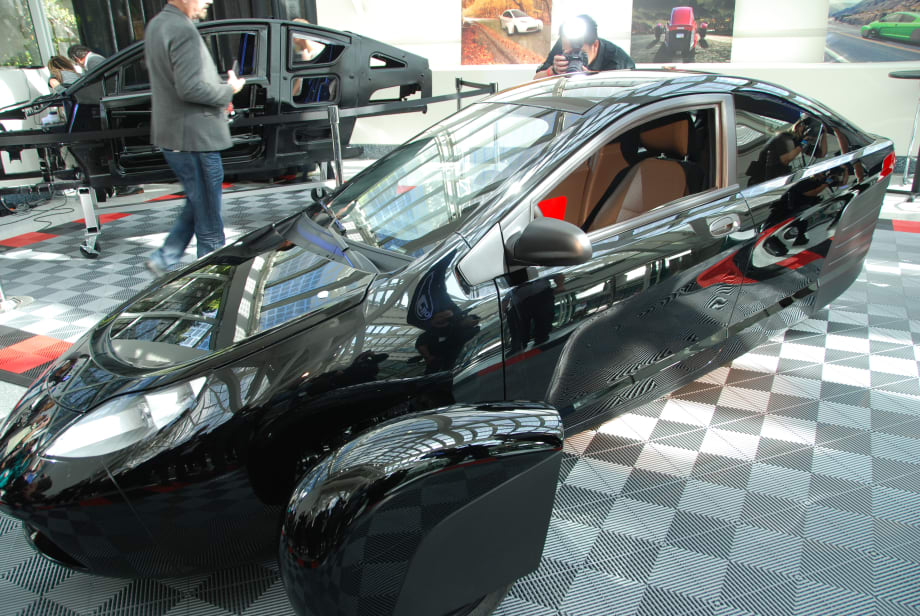
Elio Motors debuted its E1c engineering vehicle during the L.A. Auto Show. The production model is expected to go on sale to consumers and fleets in late 2017. Photo: Chris Wolski
Elio Motors debuted its E1c engineering vehicle during the L.A. Auto Show. The production model is expected to go on sale to consumers and fleets in late 2017. Photo: Chris Wolski
Elio Motors’ E-Series, a three-wheel, two-person personal transportation vehicles, is a step closer to production reality, according to the company, which debuted its E1c, an engineering vehicle that is a proof of concept that the company can deliver an assembly-line produced vehicle during the media preview days at the 2016 Los Angeles Auto Show.
While the vehicle is being positioned as a personal transport for low-income Americans, there has been high fleet interest for the Elio E-Series from fleets, according to Tim Andrews, senior vice president of marketing for Elio Motors.
Andrews said that there is high interest among the food service and pest control industries in the vehicle, which is expected to have a base price of $7,300, and get 84 mpg, and will be able to cruise at highway speeds to a maximum 100 mph.
The vehicle is classified as a motorcycle, and currently, in 48 states, will not require the driver to wear a helmet or have a motorcycle license.
Because it is classified as a motorcycle, drivers will be able to take advantage of HOV lanes in states with these lanes according to Andrews.
The engineering vehicle features a number of advances from the previous iteration, including safety features such as a steel cage construction and a driver and curtain air bags—which will all deploy simultaneously in the event of a collision. An optional back up camera is available (since the vehicle is classified as a motorcycle it is not required to have a backup camera).
More important for fleets, maintenance will be provided by Pep Boys.
The E1c features a unibody frame, which was developed specifically for Elio Motors by the Elio Motors engineering team, Schwab Industries and Roush Engineering. In addition to the safety benefits, the unibody frame also will improve the production vehicle's fit and finish and will manufacturability, according to the automaker.
The modified suspension will sharpen handling and improve aerodynamics, improve long-term vehicle durability and reduce noise, vibration and harshness (NVH), according to the automaker.
Elio Motors has a fleet program, which will include volume discounts per the company’s web site and the ability to include branding and wraps, according to Andrews.
In addition to its capabilities, several fleets have expressed interest in the vehicle because it will be 100% American made.
“Fleets are supporting the cause of bringing back jobs to America,” said Andrews.
The Elio Motors E-Series will be produced at a plant in Shreveport, La., which will employ about 1,500 workers, according to Andrews. The company expects to produce 250,000 E-Series vehicles by 2018. The first E-Series vehicles are expected to roll off the assembly line in late 2017.
The company will set up a retail dealership model, similar to Tesla’s.
Originally posted on Automotive Fleet
More Small Fleet


Developing Budget-Friendly Driver Safety Programs
From driver training and safety meetings to one-on-one coaching and incentive programs, several small fleets share how they have developed a safety culture with their drivers using low- to no-cost resources.
Read More →
Boosting Last-Mile Fleet Uptime, Safety, and Value with AI Vehicle Inspections
AI-powered inspections are transforming last-mile fleets by replacing manual checks with highly accurate automated scans that detect defects in seconds. By giving fleet operations visibility into the daily condition of their vehicles, you can identify trends over the vehicle’s lifecycle that enable improved procurement decisions, route management, driver training and accountability.
Read More →
Five Ways Seat Belts Help Prevent Injuries
There are five ways seat belts protect occupants from injuries, according to the Tennessee Department of Safety and Homeland Security.
Read More →
It’s here: The 2026 Fleet Technology Trends Report
What does AI mean for fleets? Get the answer — and learn other top tech trends.
Read More →
Small Fleets, Big Impact: How Independent Drivers Power Wreaths Across America
Check out how small fleets and independent drivers power Wreaths Across America each December and why their impact matters more than ever.
Read More →
VMS Survey Finds 65% of Small Fleet Managers Run Operations Alone
A new VMS survey shows small fleet managers are stretched thin, with most handling operations solo and eager to adopt digital tools for relief.
Read More →
Tips for Driving Safely on Halloween Night
This video features a reminder from the Connecticut Department of Transportation (DOT) and the Connecticut Police Chiefs Association, urging drivers to prioritize safety this Halloween.
Read More →
AI, Access, and Uptime: VMS’s Next Chapter with David Prusinski
VMS’s new Co-CEO, David Prusinski, shares how an AI-first approach will give small fleets and repair shops the tools to compete like big players.
Read More →
Fleet Managers Share Winter Prep Tips: It's Never Too Early!
Three fleets share best practices to prep vehicles for winter and prevent downtime when the cold sets in.
Read More →