





Learn More: How Telematics is Transforming Trailers
East Manufacturing Celebrates Employee's 50 Years of Service
Jim Lindsay joins three other East staff members who have reached their 50th Anniversary at the company.
September 30, 2021
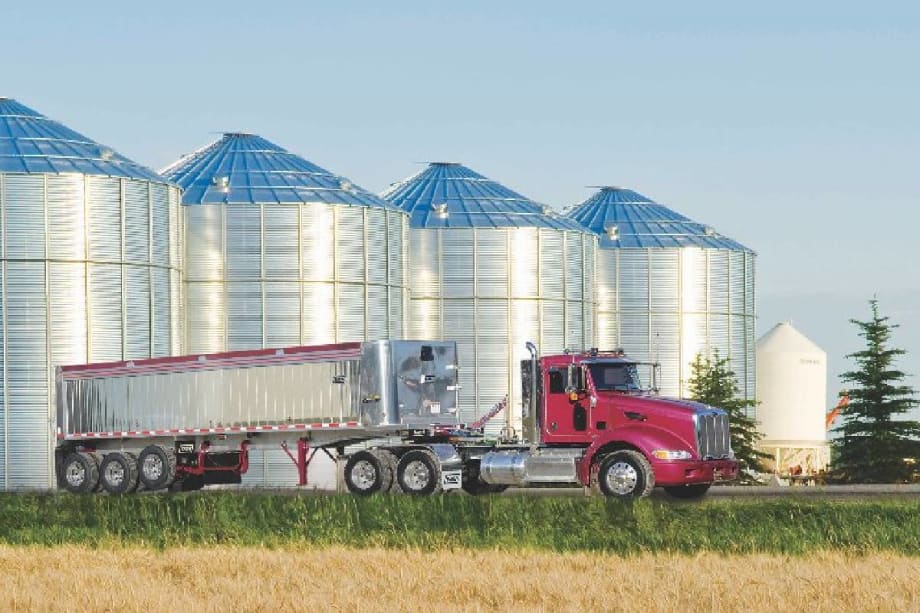
Jim Lindsay joins three other East staff members who have reached their 50th Anniversary at the company.
Photo: East Manufacturing
4 min to read
East Manufacturing, a manufacturer of aluminum flatbed, drop deck, dump and refuse trailers, and aluminum truck bodies, has announced Jim Lindsay joins three other East staff members who have reached their 50th Anniversary at the company. Lindsay celebrated 50 years of service June 21.
Lindsay joins Howard Booher and Bob Bruce, founders of the company who achieved 50 years in 2018, as well as Bill Boldizsar who retired in October 2018 after 50 years.
“Over the past 50 years, Jim has done everything from welding to building welder jigs for flatbeds to building and grounds maintenance,” said Booher. “He’s been a part of a lot of our firsts at East – the first aluminum frame trailer, the first pusher (Unloader refuse) trailer, the first flatbed and drop deck trailers, the first of East Genesis smooth-sided trailer, and many new additions and buildings, including our robotic building. Now, 50 years later, Jim is still an active employee. He continues to find new ways to solve challenges around the East campus.”
With a half century of experience behind him, the soft-spoken Lindsay had much to say about East: “I started in 1971 under Russ Pitman [Pitman, a friend, asked him to join him at East]. I played football nearby, but didn’t know anything about the company. I was 19 years old when I started on June 21, 1971.”
Early Days
Lindsay started in the frame department. He had no welding experience, but pointed out that East trained him to be a proficient welder. He said he “started with stick welding and became a welder on the frame trailers.” After a couple of months, he moved to a frame station, where a trailer is worked on from start to finish.
Frame station workers start out by placing the I-beams with the neck already formed into them. Then they add cross members, suspensions, and axles as well as plumb the trailer.
“There were four body stations and two frame stations,” Lindsay said. “We had designated areas for various functions, including assembling the wheel ends, where brake, and suspensions are attached to the axle.”
At the time, East produced three to four finished trailers per week, compared to 18 per week by later in the 1970s. Eventually, East moved to an assembly line approach, while continuing as a custom shop to provide whatever a customer wants.
“We had a lot of custom features on our trailers early on at East,” Lindsay recalled. “If a customer wanted a walkway on their trailer to be able to easily inspect their load, we added it. We had special tire carriers and many other custom features.”
Lindsay was with the frame station for five years and then moved to the leadman position in the frame department. From there, he went into the maintenance department, where he worked on building maintenance, crane, and welder maintenance as well as building welding jigs and more.
Most Memorable Experience
His most memorable experience at East was when he moved to the maintenance department. He said he enjoyed building things and there he had plenty of opportunity to do so. For example, he built beams for flatbeds, which at the time was a brand-new and exciting product.
Biggest Challenge
Back in 1972-73, East started producing aluminum frame trailers. “Prior to that they were steel. No one else was making an aluminum framed trailer. I learned Mig welding, which is faster as far as production work. The welder runs continuously.”
The Pusher trailer evolved to become the Unloader refuse trailer, and also came on the scene during Lindsay’s time at East. In 1982, when East launched a flatbed, Lindsay and his team in maintenance were on hand to build fixtures for the beams of the flatbeds.
With East bringing out a new product about every ten years, Lindsay appreciated the diversification. He remembers building the first Michigan trains, which were heavy-duty framed trailers with a lead and pup trailer. Lindsay worked on the first prototype.
What Kept You at East?
“I got a lot of satisfaction with my job. During the building processes, I could see the completed building, which was truly rewarding. I sure love to put things together and East allowed me to build many things – lots of different types of work, too. East started as one 8,000 sq.-ft. building, and I saw that building expand four or five times during my time at East. I helped in constructing new buildings. We even added a 5- or 6-bay service building. I saw lots of expansion, lots of changes over the years. With East taking pride in the workmanship that went into the product, most of the guys like me stayed for decades," he said.
What Else Did You Like About East?
“The people, everyone had a common goal – to build quality trailers. A lot of nice people who became good friends over the years. East has been a great place to work over the years and it’s been wonderful to be a part of East’s growth," he said.
More Operations
Family Ties Inside the Fleet Families Building Careers Across Generations
Three fleet families share what it really takes to work together, learn across generations, and keep business from following them home.
Read More →
Shades of Fleet Call for Voices: Fleet's Hidden Heroes
Fleet’s hidden heroes are often the ones keeping everything moving behind the scenes. September’s Shades of Fleet is looking for dispatchers, coordinators, parts specialists, and other support pros to share their stories.
Read More →
Truck Centers, Inc. Celebrates National Truck Driver Appreciation Week with $1,000 Fuel Card Giveaways
During National Truck Driver Appreciation Week, Truck Centers, Inc. is offering customers a chance to fuel up for free. Customers at all Truck Centers locations can enter to win one of four $1,000 fuel cards from Sept. 14 - 18.
Read More →
Fleet Guides, AI Time-Savers, Truck Tariffs & Fuel Strategy Lead the News
This week’s Truck Chat Cheat Sheet covers new fleet vehicle guides, practical AI use cases, U.S.-Canada truck production, mixed-energy strategy, and more.
Read More →
What Fleet Employers Are Missing When Hiring Veterans
What if some of the strongest candidates for fleet are already out there, but their experience is written in a language our industry does not always recognize?
Read More →
Automotive Fleet Opens 2026 Personal Use Survey for Commercial Fleet Managers
Less than two weeks left! Commercial and corporate fleet managers are invited to share how their organizations handle company vehicle personal-use policies, charges, and driver eligibility.
Read More →
What Resilient Fleets Do Differently When Conditions Change
Fleet resilience is about more than reacting to disruption. Lauren Fletcher talks with AP Fleet’s Alex Coveney about flexibility, planning, scaling, and what helps fleets adapt when business conditions shift.
Read More →
If We Want the Next Generation in Automotive, We Have to Give Them a Reason to Care
The automotive industry talks constantly about its workforce shortage. But before we can recruit the next generation, we may need to do a better job giving kids a reason to care about automotive in the first place.
Read More →
Ram ProMaster City Under $40K, Truck Tariffs, and AI Maintenance Lead the News
A sub-$40K commercial van, tariff questions, AI-powered maintenance, and a new EV production strategy headline this week’s Truck Chat Cheat Sheet.
Read More →
Bob Adamsky Shares the Fleet Lessons You Usually Learn the Hard Way
After more than 30 years in fleet, Arrow International’s Bob Adamsky has learned that the job is about far more than vehicles. He shares the lessons he wishes every fleet manager could learn a little earlier.
Read More →