




Distracted Driving Kicks Off Fleet Safety Conference
SCHAUMBURG, IL -- The annual Fleet Safety Conference kicked off Tuesday with an opening keynote address by Mike Pitcher, president and CEO of LeasePlan USA, took a look at changing corporate safety culture, specifically talking about his company's adoption of a no-cell-phone ban.

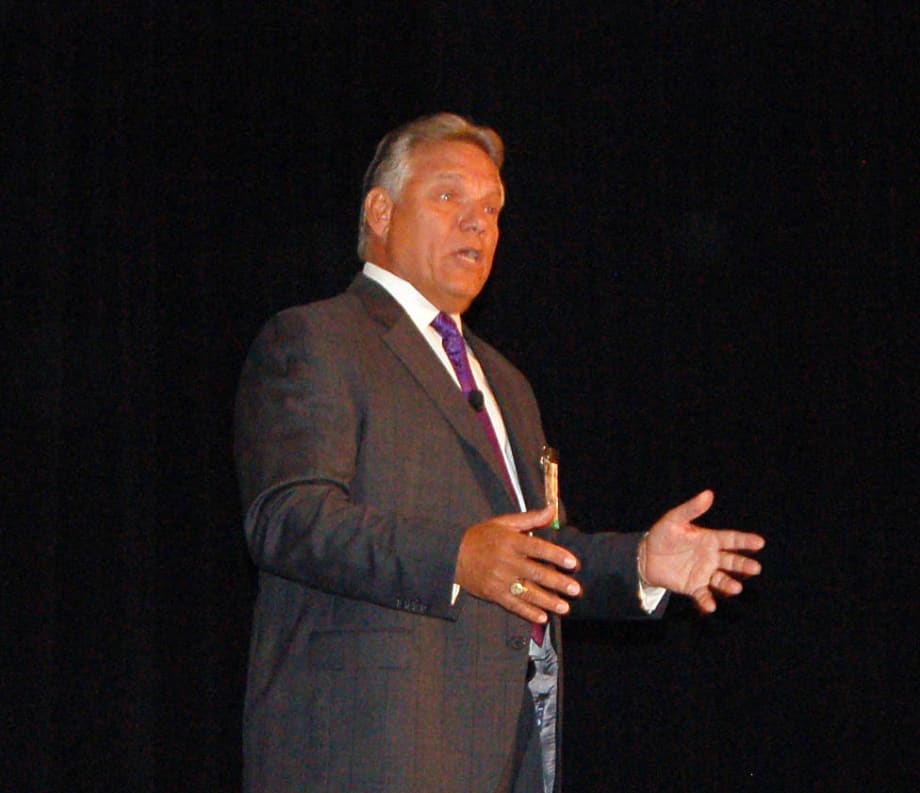
Mike Pitcher talks about how his company, LeasePlan USA, implemented a cell phone policy.
SCHAUMBURG, IL -- The annual Fleet Safety Conference kicked off Tuesday in this Chicago suburb with a keynote speech on corporate safety culture.
In the opening keynote address, Mike Pitcher, president and CEO of LeasePlan USA, took a look at changing corporate safety culture, specifically talking about his company's adoption of a no-cell-phone ban.
He pointed out that distracted driving is universal, whether it's cell phones, eating, reading, putting on your makeup, or other activities.
When states starting making cell phone use illegal, many people started using their phones down by their hip so police couldn't see them breaking the law – but that takes your attention off the road even more than having it by the steering wheel.
Pitcher asked the audience to take out their cell phones, hold them down by their hips and text the simple message, "I'm on my way." It took about 8 to 10 seconds. "If you're on a highway, you've driven about two football fields."
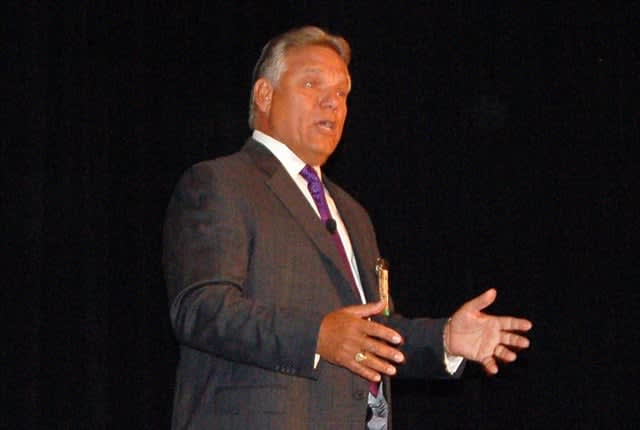
Mike Pitcher talks about how his company, LeasePlan USA, implemented a cell phone policy.
Setting the right example is important. "As a parent, we say it, we say it, we say it. [Don't text and drive]. As an employer, we say it, we say it, and say it. Then we get in the car and do it."
At his company, he said, the corporate culture emphasis on things such as family and teamwork were an important part of the equation.
"I will not stand here and preach and say LeasePlan's way is the right way," Pitcher said. But the culture (the company has been honored as a best company to work for) was a good starting point. In addition, they looked at how to position the message to appeal to the diverse generations working in the company.
One argument sometimes made by companies in not enacting a cell phone ban is a fear of loss of productivity.
"I don't buy it," Pitcher said. "Fortune 500 companies argue they have seen neither increase nor decrease in productivity after enacting cell phone ban." Much of cell phone use, it turns out, was done simply to pass the time.
Has his company's policy resulted in a complete cessation of cell phone use in vehicles? Of course not, Pitcher said. "You will never eliminate risk. You will simply mitigate it."
Technology could solve this situation, he said, "but I'm hoping it becomes personal choice."
Distracted driving was also the topic of a panel discussion at a breakout session immediately following the keynote.
Ken Latzko with CEI Group said research from the Virginia Tech Transportation Institute found that a text message takes at least five seconds, "which is like driving the length of a football field blindfolded. You wouldn't pay me to close my eyes for five seconds going down the Interstate, but people do the same thing voluntarily with texting."
The panelists also stressed the importance of looking beyond the distractions of cell phones and technology. Jodie Varner of Fleet Response said one of its client fleets banned listening to the radio in the vehicle, after in-cab cameras caught drivers singing and dancing right before crashes happened.
For the second year, the conference featured sessions aimed at the heavy-duty truck fleet in addition to the event's traditional focus on automotive and light- to medium-duty fleets.
First-day breakout sessions included:
A panel discussion on helping drivers deal with in-vehicle distractions
Training drivers how to respond at the scene of an accident
Hours of service and electronic logs
How Johnson & Johnson used the NETS benchmark survey process
Fleet safety for vocational vehicles operating in off-road and construction areas
Moving beyond the checklist to a strategic "blueprint for safety"
Emerging trends in fleet safety and accident management
Collision reduction through driver monitoring and incentives
Watch for more in-depth coverage on Truckinginfo.com and in Heavy Duty Trucking of some of these sessions.
The event continues with a full day of sessions on Wednesday. Fleet Safety Conference is put on by Bobit Business Media fleet publications, including Heavy Duty Trucking and Automotive Fleet.
CORRECTION: Jodie Varner with Fleet Response was initially identified incorrectly as Jane Vaner. We apologize for the error.
Originally posted on Automotive Fleet
More Small Fleet


Developing Budget-Friendly Driver Safety Programs
From driver training and safety meetings to one-on-one coaching and incentive programs, several small fleets share how they have developed a safety culture with their drivers using low- to no-cost resources.
Read More →
Boosting Last-Mile Fleet Uptime, Safety, and Value with AI Vehicle Inspections
AI-powered inspections are transforming last-mile fleets by replacing manual checks with highly accurate automated scans that detect defects in seconds. By giving fleet operations visibility into the daily condition of their vehicles, you can identify trends over the vehicle’s lifecycle that enable improved procurement decisions, route management, driver training and accountability.
Read More →
Five Ways Seat Belts Help Prevent Injuries
There are five ways seat belts protect occupants from injuries, according to the Tennessee Department of Safety and Homeland Security.
Read More →
It’s here: The 2026 Fleet Technology Trends Report
What does AI mean for fleets? Get the answer — and learn other top tech trends.
Read More →
Small Fleets, Big Impact: How Independent Drivers Power Wreaths Across America
Check out how small fleets and independent drivers power Wreaths Across America each December and why their impact matters more than ever.
Read More →
VMS Survey Finds 65% of Small Fleet Managers Run Operations Alone
A new VMS survey shows small fleet managers are stretched thin, with most handling operations solo and eager to adopt digital tools for relief.
Read More →
Tips for Driving Safely on Halloween Night
This video features a reminder from the Connecticut Department of Transportation (DOT) and the Connecticut Police Chiefs Association, urging drivers to prioritize safety this Halloween.
Read More →
AI, Access, and Uptime: VMS’s Next Chapter with David Prusinski
VMS’s new Co-CEO, David Prusinski, shares how an AI-first approach will give small fleets and repair shops the tools to compete like big players.
Read More →
Fleet Managers Share Winter Prep Tips: It's Never Too Early!
Three fleets share best practices to prep vehicles for winter and prevent downtime when the cold sets in.
Read More →