




Chrysler Surges Forward with Production-Intent Electric Vehicles
The automaker introduces three advanced electric-drive vehicle prototypes.
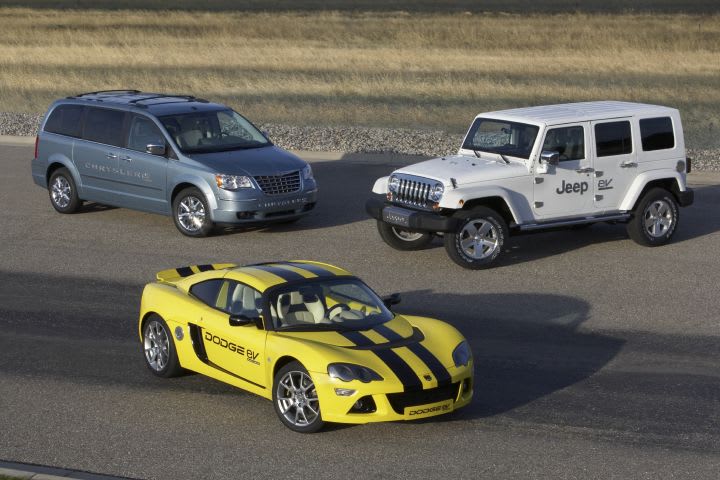
Left to right: Chrysler EV, Dodge EV and Jeep EV
Chrysler LLC recently announced that the company and its ENVI organization have new production-intent, advanced electric-drive technology packaged in three different vehicles—one for each of its brands, Chrysler, Jeep and Dodge.
Chrysler will select one electric-drive model to be produced in 2010 for consumers in North American markets, and European markets after 2010. Additionally, approximately 100 Chrysler electric vehicles will be on the road in government, business, utility and Chrysler development fleets in 2009.
Chrysler recently revealed its electric-drive prototypes–Dodge EV, Jeep EV and Chrysler EV–and demonstrated the driving performance and capability of each.
Dodge EV
The Dodge EV development electric vehicle is a two-passenger, rear-wheel-drive sports car that marries high performance with zero tailpipe emissions.
The electric-drive system consists of three primary components: a 200 kW (268 horsepower) electric motor, an advanced lithium-ion battery and an integrated power controller.
The 200 kW electric-drive motor generates 650 N″m (480 lb.-ft.) of torque. The instant high torque of the electric-drive motor delivers quality performance, accelerating the Dodge EV to 60 mph in less than five seconds, with quarter-mile times of 13 seconds. The Dodge EV has a top speed of more than 120 mph.
Working with the latest advanced lithium-ion battery technology, the Dodge EV has a continuous driving range of 150 to 200 miles–more than triple the average daily commute of most consumers. Recharging the vehicle is a one-step process: Plugging into a standard 110-volt household outlet for eight hours. The recharge time can be cut in half to four hours by using a typical 220-volt household appliance power outlet.
The Dodge EV offers driving enthusiasts a performance sports car that can be driven to work every day–without consuming gasoline or producing tailpipe emissions.
Jeep EV
The Jeep EV development vehicle is a range-extended electric vehicle that provides a glimpse into the future of a "Go Anywhere, Do Anything" vehicle with renowned Jeep Wrangler capability.
The Jeep EV combines Wrangler's off-road capability with the ultimate "Tread Lightly" mindset by providing nature ambassadors with the ability to roam the planet and take care of it at the same time.
The Jeep EV Range-extended electric vehicle uses an electric motor, an advanced lithium-ion battery system, and a small gasoline engine with an integrated electric generator to produce additional energy to power the electric-drive system when needed. The 200 kW (268 horsepower) electric motor generates 400 N″m (295 lb.-ft.) of torque. With approximately eight gallons of gasoline, the Jeep EV has a range of 400 miles, including 40 miles of zero fuel-consumption, zero-emissions, all-electric operation.
The instant high torque of the electric-drive motor and the ability to precisely control each wheel independently results in off-road capability ideally suited for the Jeep brand, without compromising on-road driving capability.
Chrysler EV
The Chrysler EV development vehicle is also a range-extended electric vehicle that demonstrates another possible application of ENVI electric-drive technology in the Chrysler Town & Country minivan.
The Chrysler EV combines the electric-drive components of an electric vehicle with an integrated small-displacement engine and generator to produce additional electricity to power the electric-drive system when needed.
This provides all of the positive attributes of an electric vehicle and extends the driving range to be equivalent to today's gasoline-powered vehicles–without compromises. The Chrysler EV uses a 190 kW (255 horsepower) motor, producing 350 N″m (258 lb.-ft.) of torque, providing 0 to 60 mph acceleration in approximately nine seconds.
The Chrysler EV Range-extended Electric Vehicle can drive 40 miles on all-electric power, and boasts a range of 400 miles on approximately eight gallons of gasoline. This makes the Chrysler EV the perfect fuel-efficient family vehicle.
For more information on Chrysler's electric initiatives, visit www.Chryslergoeselectric.com.
More Small Fleet


Developing Budget-Friendly Driver Safety Programs
From driver training and safety meetings to one-on-one coaching and incentive programs, several small fleets share how they have developed a safety culture with their drivers using low- to no-cost resources.
Read More →
Boosting Last-Mile Fleet Uptime, Safety, and Value with AI Vehicle Inspections
AI-powered inspections are transforming last-mile fleets by replacing manual checks with highly accurate automated scans that detect defects in seconds. By giving fleet operations visibility into the daily condition of their vehicles, you can identify trends over the vehicle’s lifecycle that enable improved procurement decisions, route management, driver training and accountability.
Read More →
Five Ways Seat Belts Help Prevent Injuries
There are five ways seat belts protect occupants from injuries, according to the Tennessee Department of Safety and Homeland Security.
Read More →
It’s here: The 2026 Fleet Technology Trends Report
What does AI mean for fleets? Get the answer — and learn other top tech trends.
Read More →
Small Fleets, Big Impact: How Independent Drivers Power Wreaths Across America
Check out how small fleets and independent drivers power Wreaths Across America each December and why their impact matters more than ever.
Read More →
VMS Survey Finds 65% of Small Fleet Managers Run Operations Alone
A new VMS survey shows small fleet managers are stretched thin, with most handling operations solo and eager to adopt digital tools for relief.
Read More →
Tips for Driving Safely on Halloween Night
This video features a reminder from the Connecticut Department of Transportation (DOT) and the Connecticut Police Chiefs Association, urging drivers to prioritize safety this Halloween.
Read More →
AI, Access, and Uptime: VMS’s Next Chapter with David Prusinski
VMS’s new Co-CEO, David Prusinski, shares how an AI-first approach will give small fleets and repair shops the tools to compete like big players.
Read More →
Fleet Managers Share Winter Prep Tips: It's Never Too Early!
Three fleets share best practices to prep vehicles for winter and prevent downtime when the cold sets in.
Read More →