




Chrysler Brand Marks 90th Anniversary
Fiat Chrysler Automobiles is celebrating the 90th anniversary of the Chrysler nameplate in 2015, a year after CEO Sergio Marchionne rolled it into the FCA US umbrella.
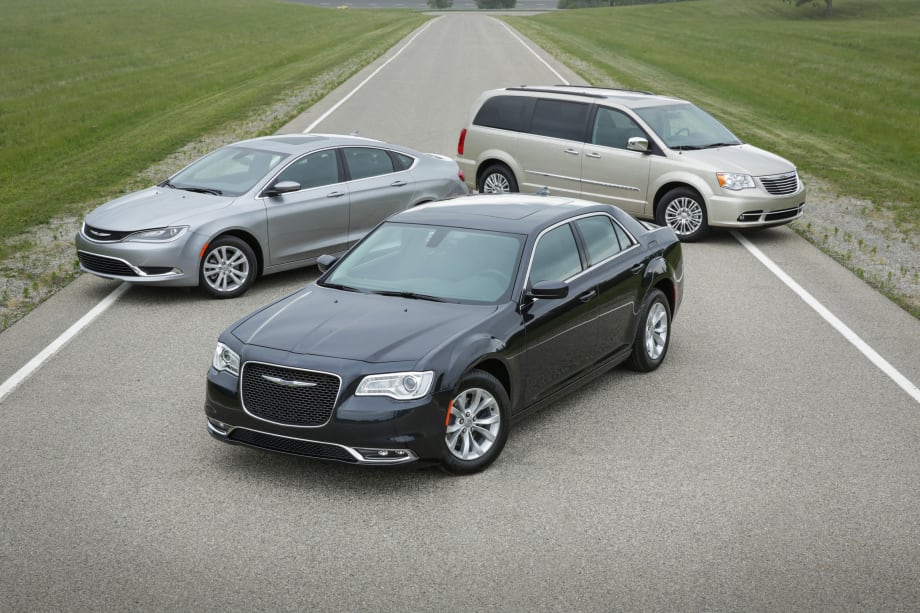
(From left to right) 200, 300 (front), Town and Country. Photo courtesy of FCA.
(From left to right) 200, 300 (front), Town and Country. Photo courtesy of FCA.
Fiat Chrysler Automobiles is celebrating the 90th anniversary of the Chrysler nameplate in 2015, a year after CEO Sergio Marchionne rolled it into the FCA US umbrella.
Walter P. Chrysler founded the brand on June 6, 1925. The influence of its founder can still be felt today with a legacy of Chrysler vehicles that were known for innovative engineering, groundbreaking style and "looking more expensive than they were," the forerunner to affordable luxury, according to the company.
After Walter Chrysler realized his dream of creating his own company, he dedicated the company’s efforts to excellence in engineering, while building affordable, luxurious cars at a price consumers could afford. The company would eventually roll out the Chrysler Six, Airflow, Imperial, New Yorker, 300 and Town & Country among its nameplates.
Here's a closer look at Chrysler milestones through the decades.
The 1920s marked the creation of the first Chrysler branded car, known as the Chrysler Six, which was priced at $1,565.
The 1930s brought about the Great Depression and the Chrysler Airflow, which was introduced in 1934. The Airflow was an "engineer's" car with innovations such as a beam-and-truss body that increased strength but weighed less than expected due to a tighter interlocking method of blending body and chassis, according to FCA. The 1934 Imperial Airflow set 72 national speed records and recorded 95.7 mph in the flying mile at Bonneville.
In the late 1930s, Chrysler made significant steps in transmissions with the introduction of Fluid Drive, which used a hydraulic coupling instead of a flywheel, and performed the same function as a modern torque converter.
The 1940s saw the Chrysler Thurderbolt and the death of Walter P. Chrysler. By the end of the decade, Chrysler introduced its Town & Country sedans and convertibles.
The first muscle car, the Chrysler 300, was introduced by the automaker in 1955.
In 1963, Chrysler began offering a 100,000-mile powertrain warranty, which was the first of its kind in the industry.
In the 1970s, due in part to fuel shortages and an oil embargo, Chrysler shifted its focus and began creating mid-size and small vehicles.
Chrysler introduced the minivan segment in 1984 and later acquired Lamborghini.
By the 1990s, Chrysler offered only front-wheel-drive vehicles. The 1990 models included a driver's side airbag as standard equipment. The first luxury van, the Chrysler Town & Country, was introduced in the 1990 model year.
The 2000s were marked by the merger of the Daimler and Chrysler companies. In 2001, the PT Cruiser arrived to the lineup. In 2010, after overcoming bankruptcy, Chrysler became part of Fiat Chrysler.
In 2014, FCA debuted the Chrysler 200. The Chrysler 200 was the first mid-size sedan to offer a nine-speed automatic transmission as standard equipment.
The Chrysler story continues in the second half of the decade with the introduction of an next-generation Chrysler Town & Country minivan that will make its debut in the first quarter of 2016.
Originally posted on Automotive Fleet
More Small Fleet


Developing Budget-Friendly Driver Safety Programs
From driver training and safety meetings to one-on-one coaching and incentive programs, several small fleets share how they have developed a safety culture with their drivers using low- to no-cost resources.
Read More →
Boosting Last-Mile Fleet Uptime, Safety, and Value with AI Vehicle Inspections
AI-powered inspections are transforming last-mile fleets by replacing manual checks with highly accurate automated scans that detect defects in seconds. By giving fleet operations visibility into the daily condition of their vehicles, you can identify trends over the vehicle’s lifecycle that enable improved procurement decisions, route management, driver training and accountability.
Read More →
Five Ways Seat Belts Help Prevent Injuries
There are five ways seat belts protect occupants from injuries, according to the Tennessee Department of Safety and Homeland Security.
Read More →
It’s here: The 2026 Fleet Technology Trends Report
What does AI mean for fleets? Get the answer — and learn other top tech trends.
Read More →
Small Fleets, Big Impact: How Independent Drivers Power Wreaths Across America
Check out how small fleets and independent drivers power Wreaths Across America each December and why their impact matters more than ever.
Read More →
VMS Survey Finds 65% of Small Fleet Managers Run Operations Alone
A new VMS survey shows small fleet managers are stretched thin, with most handling operations solo and eager to adopt digital tools for relief.
Read More →
Tips for Driving Safely on Halloween Night
This video features a reminder from the Connecticut Department of Transportation (DOT) and the Connecticut Police Chiefs Association, urging drivers to prioritize safety this Halloween.
Read More →
AI, Access, and Uptime: VMS’s Next Chapter with David Prusinski
VMS’s new Co-CEO, David Prusinski, shares how an AI-first approach will give small fleets and repair shops the tools to compete like big players.
Read More →
Fleet Managers Share Winter Prep Tips: It's Never Too Early!
Three fleets share best practices to prep vehicles for winter and prevent downtime when the cold sets in.
Read More →