




Chicago Incentivizing Fleets to Replace Diesel with Electric
The city of Chicago announced it will launch an incentive program for electric trucks in spring 2013, designed to encourage private and public fleets to convert their diesel trucks to electric operations.
The city of Chicago announced it will launch an incentive program for electric trucks in spring 2013, designed to encourage private and public fleets to convert their diesel trucks to electric operations. The Chicago program will be the first program in the nation based on the size of the battery being placed in the vehicle.
“This first-of-its-kind incentive program will make Chicago the leader in building a robust public and private electric truck fleet and dramatically increase the number of these trucks on Chicago’s streets, allowing companies to operate more efficiently and creating economic opportunity in the process,” said Mayor Emanuel, according to a Nov. 27 press release. “This program is a creative way to achieve sustainability goals and business goals at the same time, and I’m pleased to be leading the charge on this effort.”
Eligible fleets for the program will be those that operate in the Chicago area, which for the purpose of this program will be the counties of Cook, DuPage, Kane, Lake, McHenry and Will. The program will be applied in the form of a voucher applied to the purchase price at the point of sale — whether at a dealership or through a manufacturer.
The value of the voucher will be about 60% of the incremental cost of the electric vehicle (over the cost that might be expected for a traditional diesel vehicle) and will be determined by the size of the truck’s battery pack.
The city will issue a call for applications in spring 2013, and expects to issue approximately 250 vouchers.
“The city is encouraging companies to invest in electric vehicles in order to incrementally improve Chicago’s air quality while helping to advance these emerging transportation technologies,” said Chicago Department of Transportation (CDOT) Commissioner Gabe Klein. “By offering a voucher at the point of sale, rather than as a post-sale rebate, we hope that more companies will be encouraged to participate in the program.”
The program is funded by resources from the Chicago Metropolitan Agency for Planning (CMAP) and their Congestion Mitigation and Air Quality (CMAQ) Improvement Program selection committee, which awarded the City $15 million in CMAQ funds. Those funds, which come from U.S. Department of Transportation funding, will make the E-Truck incentive program possible.
“Electric trucks can improve quality of life for residents of the Chicago region by making our streets cleaner and quieter,” said CMAP Executive Director Randy Blankenhorn. “By supporting worthy projects such as this, CMAP encourages the use of cleaner transportation technologies and fuels to help achieve regional goals for air quality and sustainability.”
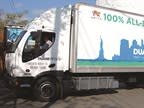
Photos courtesy of Duane Reade.
Duane Reade’s all-electric trucks are from Smith Electric. Duane Reade chose the 80-kWh battery-electric Newton 24-ft. box truck.
Related article:The Urban Maze - Making Deliveries Count in NYC
Operating its chain of drug stores in the tight spaces of New York City, Duane Reade has engineered a new concept in inventory management while optimizing its fleet for electrification.
More Small Fleet


Developing Budget-Friendly Driver Safety Programs
From driver training and safety meetings to one-on-one coaching and incentive programs, several small fleets share how they have developed a safety culture with their drivers using low- to no-cost resources.
Read More →
Boosting Last-Mile Fleet Uptime, Safety, and Value with AI Vehicle Inspections
AI-powered inspections are transforming last-mile fleets by replacing manual checks with highly accurate automated scans that detect defects in seconds. By giving fleet operations visibility into the daily condition of their vehicles, you can identify trends over the vehicle’s lifecycle that enable improved procurement decisions, route management, driver training and accountability.
Read More →
Five Ways Seat Belts Help Prevent Injuries
There are five ways seat belts protect occupants from injuries, according to the Tennessee Department of Safety and Homeland Security.
Read More →
It’s here: The 2026 Fleet Technology Trends Report
What does AI mean for fleets? Get the answer — and learn other top tech trends.
Read More →
Small Fleets, Big Impact: How Independent Drivers Power Wreaths Across America
Check out how small fleets and independent drivers power Wreaths Across America each December and why their impact matters more than ever.
Read More →
VMS Survey Finds 65% of Small Fleet Managers Run Operations Alone
A new VMS survey shows small fleet managers are stretched thin, with most handling operations solo and eager to adopt digital tools for relief.
Read More →
Tips for Driving Safely on Halloween Night
This video features a reminder from the Connecticut Department of Transportation (DOT) and the Connecticut Police Chiefs Association, urging drivers to prioritize safety this Halloween.
Read More →
AI, Access, and Uptime: VMS’s Next Chapter with David Prusinski
VMS’s new Co-CEO, David Prusinski, shares how an AI-first approach will give small fleets and repair shops the tools to compete like big players.
Read More →
Fleet Managers Share Winter Prep Tips: It's Never Too Early!
Three fleets share best practices to prep vehicles for winter and prevent downtime when the cold sets in.
Read More →