




Chevy Announces 2007 HHR Panel
HHR Panel delivers 30 mpg highway and cruising range of 450 miles per tank of gas.
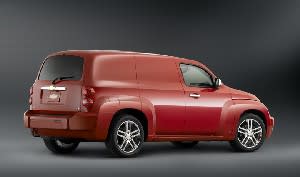
The 2007 HHR Panel, designed for commercial and private uses, features windowless side panels and rear cargo doors in place of conventional rear doors. A flat load floor provides more than 57 cubic feet of cargo space, along with approximately 5 cubic feet of additional covered, under-floor storage. HHR Panel production is expected to start late in the first quarter of 2007. It will be offered in LS and LT trims, with 2.2L and 2.4L engines. The body of the HHR Panel features steel inserts in place of side windows and cargo doors in place of conventional rear doors. The cargo doors open wide to enable cargo access from both sides of the vehicle, as well as from the rear liftgate. The windowless cargo doors and rear panels provides a large area for business logos, advertising or personalization. An auxiliary power outlet is available in the rear of the cargo area, with available 40-amp service for a variety of specialty equipment needs. This also answers the call of upfitters, who asked for an additional power source to suit their specialty vehicles. Power front seats, radios with MP3 capability, XM Satellite Radio and OnStar Turn-by-Turn Navigation are available on both LS and LT models. LT models also offer 17-inch wheels and leather-appointed seating. Standard safety features include dual-stage frontal air bags with GM’s Passenger Sensing System. Head curtain side-impact air bags are available. Since its launch, HHR has received five-star crash ratings for frontal and side-impact crashes from the National Highway Traffic Safety Administration’s (NHTSA) New Car Assessment Program. The HHR also was the highest-rated SUV for the 2006 model year in NHTSA rollover testing.
More Small Fleet


Developing Budget-Friendly Driver Safety Programs
From driver training and safety meetings to one-on-one coaching and incentive programs, several small fleets share how they have developed a safety culture with their drivers using low- to no-cost resources.
Read More →
Boosting Last-Mile Fleet Uptime, Safety, and Value with AI Vehicle Inspections
AI-powered inspections are transforming last-mile fleets by replacing manual checks with highly accurate automated scans that detect defects in seconds. By giving fleet operations visibility into the daily condition of their vehicles, you can identify trends over the vehicle’s lifecycle that enable improved procurement decisions, route management, driver training and accountability.
Read More →
Five Ways Seat Belts Help Prevent Injuries
There are five ways seat belts protect occupants from injuries, according to the Tennessee Department of Safety and Homeland Security.
Read More →
It’s here: The 2026 Fleet Technology Trends Report
What does AI mean for fleets? Get the answer — and learn other top tech trends.
Read More →
Small Fleets, Big Impact: How Independent Drivers Power Wreaths Across America
Check out how small fleets and independent drivers power Wreaths Across America each December and why their impact matters more than ever.
Read More →
VMS Survey Finds 65% of Small Fleet Managers Run Operations Alone
A new VMS survey shows small fleet managers are stretched thin, with most handling operations solo and eager to adopt digital tools for relief.
Read More →
Tips for Driving Safely on Halloween Night
This video features a reminder from the Connecticut Department of Transportation (DOT) and the Connecticut Police Chiefs Association, urging drivers to prioritize safety this Halloween.
Read More →
AI, Access, and Uptime: VMS’s Next Chapter with David Prusinski
VMS’s new Co-CEO, David Prusinski, shares how an AI-first approach will give small fleets and repair shops the tools to compete like big players.
Read More →
Fleet Managers Share Winter Prep Tips: It's Never Too Early!
Three fleets share best practices to prep vehicles for winter and prevent downtime when the cold sets in.
Read More →