




Chevrolet Debuts 2014 Cruze Clean Turbo Diesel at Chicago Auto Show
GM told Automotive Fleet that it would be an ideal choice for fleet customers whose drivers spend a lot of time on the road commuting, traveling to visit customers, or driving between offices.


GM expects the 2014 Chevrolet Cruze Clean Turbo Diesel will get 42 mpg highway.
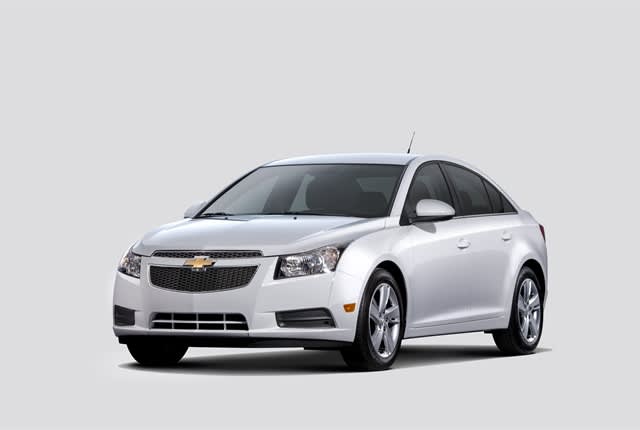
GM expects the 2014 Chevrolet Cruze Clean Turbo Diesel will get 42 mpg highway.
General Motors’ Chevrolet brand debuted a new clean diesel version of its Chevrolet Cruze sedan for the 2014 model-year, the Cruze Clean Turbo Diesel, at the Chicago Auto Show on Feb. 7.
The company told Automotive Fleet that although it’s focusing on retail sales during the launch, it’s interested in gauging its fleet customers' interest and hearing feedback about the vehicle. GM added that it would be an ideal choice for fleet customers whose drivers spend a lot of time on the road commuting, traveling to visit customers, or driving between offices. One key advantage of the Cruze Clean Turbo Diesel for fleets is that because diesel fuel prices are generally more stable, using this fuel type can make it easier for fleet customers to predict fuel-related costs and budget accordingly, according to GM.
In terms of fuel economy, GM said it expects its 2014-MY Chevrolet Cruze Clean Turbo Diesel to get 42 mpg highway and that emissions-wise it will produce emissions below the limit set by U.S. Tier 2 Bin 5 standards. The automaker said the compact sedan comes equipped with a 2.0L turbodiesel engine which produces an estimated 148 hp and 258 lb. ft. of torque. The diesel Cruze model’s final drive ratio is 3.20. GM added that the engine is rated for biodiesel and can use B20.
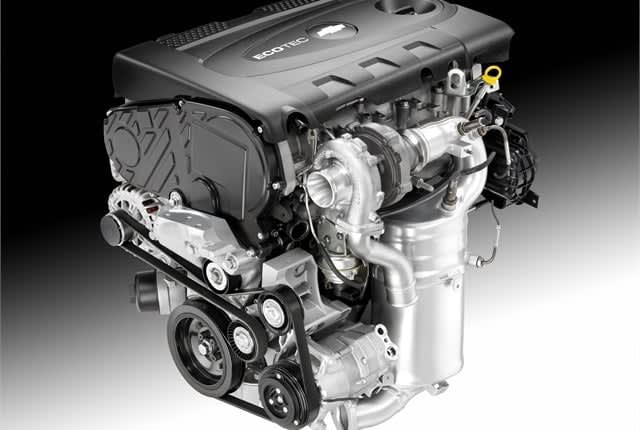
The engine in the Chevrolet Cruze Clean Turbo Diesel is a 2.0L that can produce an estimated 148 hp and 258 lb. ft. of torque.
Starting MSRP for this vehicle is $25,695, including a $810 destination charge (this price excludes tax, title, license, and dealer fees). The vehicle comes standard with a six-speed automatic transmission, four-wheel antilock disc brakes, 17-inch alloy wheels, ultra-low-rolling resistance all-season tires, a rear spoiler, an Aero Performance Package, a 140-amp alternator, an 800 cold-cranking amps battery, and leather-appointed seating. The Chevrolet MyLink infotainment system is also standard.
During a conference call, GM revealed additional details about the vehicle. To start, the company said the sedan uses selective catalytic reduction technology and will require diesel exhaust fluid (DEF) roughly every 10,000 miles. GM is offering a two-year maintenance plan, which will cover DEF, oil changes, tire rotations, and other basic preventive maintenance, and a five-year, 100,000-mile powertrain warranty. The DEF tank is located in the trunk area and owners will fill the tank via a nozzle there. GM said there isn’t a separate indicator for DEF and that owners should bring the vehicle in to check DEF levels when the oil change indicator activates (oil changes are set for every 7,500 miles).
As with the Duramax diesel engine used in other GM vehicles, when DEF levels start to get low, an indicator will alert the driver that he or she needs to add more. According to GM, the indicator will alert the driver and he or she will have another 400 miles before having to add more DEF. If the driver fails to add DEF after this limit, the vehicle will initiate a staged deceleration down to 4 mph.
Sales-wise, GM is planning a staged rollout, specifically in 13 markets during the first couple of months after launch. The automaker said it plans to sell them in markets where Chevrolet Silverado diesel models have done well. Examples of these markets include the West Coast, the Baltimore area, D.C., and the East Coast. You can expect to see this vehicle arrive in dealer showrooms later this summer.
By Greg Basich
Originally posted on Automotive Fleet
More Small Fleet


Developing Budget-Friendly Driver Safety Programs
From driver training and safety meetings to one-on-one coaching and incentive programs, several small fleets share how they have developed a safety culture with their drivers using low- to no-cost resources.
Read More →
Boosting Last-Mile Fleet Uptime, Safety, and Value with AI Vehicle Inspections
AI-powered inspections are transforming last-mile fleets by replacing manual checks with highly accurate automated scans that detect defects in seconds. By giving fleet operations visibility into the daily condition of their vehicles, you can identify trends over the vehicle’s lifecycle that enable improved procurement decisions, route management, driver training and accountability.
Read More →
Five Ways Seat Belts Help Prevent Injuries
There are five ways seat belts protect occupants from injuries, according to the Tennessee Department of Safety and Homeland Security.
Read More →
It’s here: The 2026 Fleet Technology Trends Report
What does AI mean for fleets? Get the answer — and learn other top tech trends.
Read More →
Small Fleets, Big Impact: How Independent Drivers Power Wreaths Across America
Check out how small fleets and independent drivers power Wreaths Across America each December and why their impact matters more than ever.
Read More →
VMS Survey Finds 65% of Small Fleet Managers Run Operations Alone
A new VMS survey shows small fleet managers are stretched thin, with most handling operations solo and eager to adopt digital tools for relief.
Read More →
Tips for Driving Safely on Halloween Night
This video features a reminder from the Connecticut Department of Transportation (DOT) and the Connecticut Police Chiefs Association, urging drivers to prioritize safety this Halloween.
Read More →
AI, Access, and Uptime: VMS’s Next Chapter with David Prusinski
VMS’s new Co-CEO, David Prusinski, shares how an AI-first approach will give small fleets and repair shops the tools to compete like big players.
Read More →
Fleet Managers Share Winter Prep Tips: It's Never Too Early!
Three fleets share best practices to prep vehicles for winter and prevent downtime when the cold sets in.
Read More →