




California Eases Up On Zero Emissions Mandate
Bloomberg News has reported that California has amended its zero-emission vehicle mandate, pushing back the start two years and easing some requirements in the hope that car makers that have sued to block the program will reconsider their opposition. According to Bloomberg News, the program requires that 10 percent of cars sold in California by the six biggest makers emit almost no pollution from the tailpipe or from gasoline evaporation. General Motors and DaimlerChrysler AG were joined by the US Justice Department last year to win a federal injunction temporarily blocking California's Air Resources Board from enforcing the rule. According to the proposal, California said it would delay the program's start until 2005 from 2003, halve the required number of pollution-free cars, and make it easier for companies to comply by offering more hybrid-electric cars, the news agency said. According to Bloomberg News, a General Motors spokesman declined to say whether the changes would affect the company's suit with DaimlerChrysler, filed with a US district court in Fresno, California, in January 2002. The suit alleged that the state's emissions program attempted to regulate fuel economy, violating the Energy Policy and Conservation Act of 1975 that permits only the federal government to set such standards. All references to fuel economy have been removed in the latest version of the plan, first proposed in 1990, Air Board spokesman Jerry Martin told Bloomberg.
More Small Fleet


Developing Budget-Friendly Driver Safety Programs
From driver training and safety meetings to one-on-one coaching and incentive programs, several small fleets share how they have developed a safety culture with their drivers using low- to no-cost resources.
Read More →
Boosting Last-Mile Fleet Uptime, Safety, and Value with AI Vehicle Inspections
AI-powered inspections are transforming last-mile fleets by replacing manual checks with highly accurate automated scans that detect defects in seconds. By giving fleet operations visibility into the daily condition of their vehicles, you can identify trends over the vehicle’s lifecycle that enable improved procurement decisions, route management, driver training and accountability.
Read More →
Five Ways Seat Belts Help Prevent Injuries
There are five ways seat belts protect occupants from injuries, according to the Tennessee Department of Safety and Homeland Security.
Read More →
It’s here: The 2026 Fleet Technology Trends Report
What does AI mean for fleets? Get the answer — and learn other top tech trends.
Read More →
Small Fleets, Big Impact: How Independent Drivers Power Wreaths Across America
Check out how small fleets and independent drivers power Wreaths Across America each December and why their impact matters more than ever.
Read More →
VMS Survey Finds 65% of Small Fleet Managers Run Operations Alone
A new VMS survey shows small fleet managers are stretched thin, with most handling operations solo and eager to adopt digital tools for relief.
Read More →
Tips for Driving Safely on Halloween Night
This video features a reminder from the Connecticut Department of Transportation (DOT) and the Connecticut Police Chiefs Association, urging drivers to prioritize safety this Halloween.
Read More →
AI, Access, and Uptime: VMS’s Next Chapter with David Prusinski
VMS’s new Co-CEO, David Prusinski, shares how an AI-first approach will give small fleets and repair shops the tools to compete like big players.
Read More →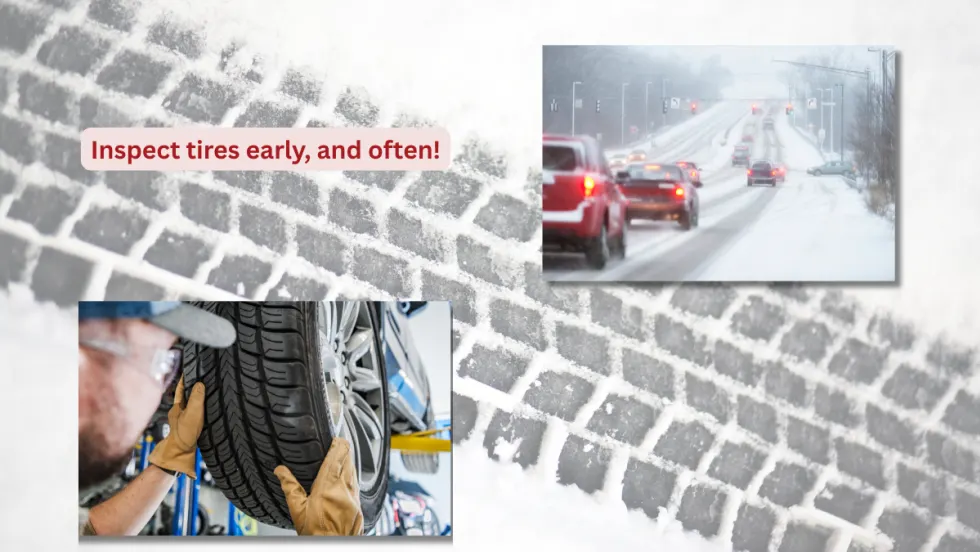
Fleet Managers Share Winter Prep Tips: It's Never Too Early!
Three fleets share best practices to prep vehicles for winter and prevent downtime when the cold sets in.
Read More →