




Calif. Proposes New Autonomous Car Rules
In response to recently released federal guidelines, the state DMV softens its stance on future testing of driverless cars.
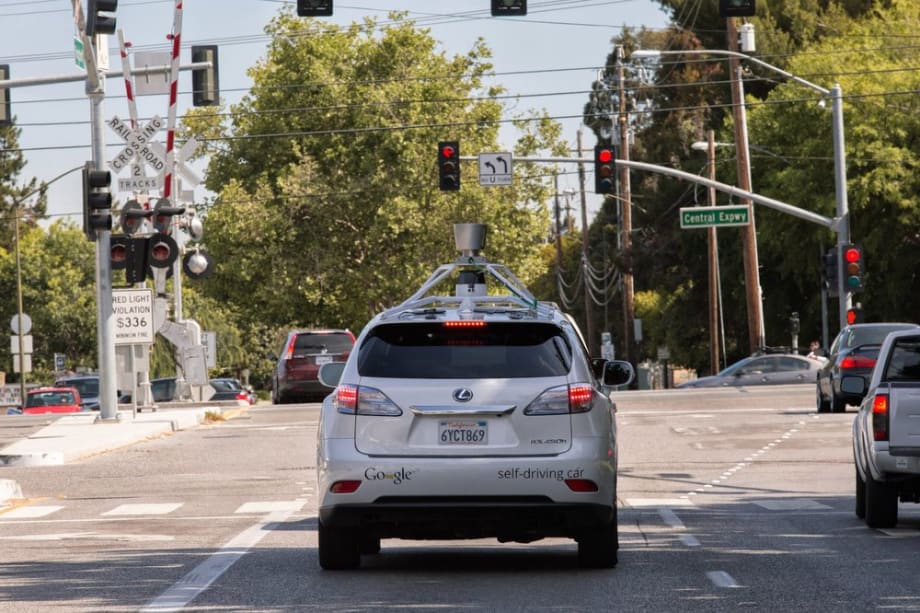
Photo of Google self-driving car courtesy of Google.
Photo of Google self-driving car courtesy of Google.
The California Department of Motor Vehicles has released revised draft rules for autonomous cars, providing a regulatory framework for driverless vehicles to be tested and operated on state roads in the future.
A public workshop on the draft regulations will be held Oct. 19 at the California State Capitol in Sacramento.
The draft rules reflect a shift in policy, since proposed regulations released last December required the constant presence of a human driver and prohibited vehicles lacking a steering wheel or pedals.
“The recently released Federal Automated Vehicles Policy sets a direction for addressing vehicle safety at the federal level, and California’s revised draft regulations take this new policy into account and focus on rules for California public roads, including testing requirements, enforcement of traffic laws, driver licensing, and vehicle registration,” the California DMV said in a released statement.
The agency also noted it has worked with the National Highway Traffic Safety Administration and the American Association of Motor Vehicle Administrators to define the state’s role in regulating autonomous vehicles. The draft rules provide that before testing or deploying an autonomous car, manufacturers must certify that the vehicle meets NHTSA performance guidelines. The federal agency developed a 15-point safety assessment system.
California’s proposed regulations reference the six levels of autonomous driving, as defined by SAE International. The draft rules also seek to prohibit the advertisement of lower levels of automated systems — those that still require a human driver for vehicle monitoring and control — as “autonomous,” “self-driving,” or similar terms.
According to the draft rules, SAE Level 3 vehicles would still require the constant presence of a human driver to potentially to take control of the vehicle when needed. But vehicles meeting criteria for levels 4 and 5 will, in the future, operate driverless.
“These revised draft regulations represent the next step in the process to encourage public dialogue and collect feedback prior to the DMV formally submitting the regulations for consideration and adoption,” the California DMV said.
Originally posted on Automotive Fleet
More Small Fleet


Developing Budget-Friendly Driver Safety Programs
From driver training and safety meetings to one-on-one coaching and incentive programs, several small fleets share how they have developed a safety culture with their drivers using low- to no-cost resources.
Read More →
Boosting Last-Mile Fleet Uptime, Safety, and Value with AI Vehicle Inspections
AI-powered inspections are transforming last-mile fleets by replacing manual checks with highly accurate automated scans that detect defects in seconds. By giving fleet operations visibility into the daily condition of their vehicles, you can identify trends over the vehicle’s lifecycle that enable improved procurement decisions, route management, driver training and accountability.
Read More →
Five Ways Seat Belts Help Prevent Injuries
There are five ways seat belts protect occupants from injuries, according to the Tennessee Department of Safety and Homeland Security.
Read More →
It’s here: The 2026 Fleet Technology Trends Report
What does AI mean for fleets? Get the answer — and learn other top tech trends.
Read More →
Small Fleets, Big Impact: How Independent Drivers Power Wreaths Across America
Check out how small fleets and independent drivers power Wreaths Across America each December and why their impact matters more than ever.
Read More →
VMS Survey Finds 65% of Small Fleet Managers Run Operations Alone
A new VMS survey shows small fleet managers are stretched thin, with most handling operations solo and eager to adopt digital tools for relief.
Read More →
Tips for Driving Safely on Halloween Night
This video features a reminder from the Connecticut Department of Transportation (DOT) and the Connecticut Police Chiefs Association, urging drivers to prioritize safety this Halloween.
Read More →
AI, Access, and Uptime: VMS’s Next Chapter with David Prusinski
VMS’s new Co-CEO, David Prusinski, shares how an AI-first approach will give small fleets and repair shops the tools to compete like big players.
Read More →
Fleet Managers Share Winter Prep Tips: It's Never Too Early!
Three fleets share best practices to prep vehicles for winter and prevent downtime when the cold sets in.
Read More →