




Calif. Lags in Penetration of New Clean Diesel Engines
According to the Diesel Technology Forum, California’s truck and bus fleet rule has effectively kept older, higher-emitting trucks on the road for longer, in turn delaying emissions reductions and cleaner air.

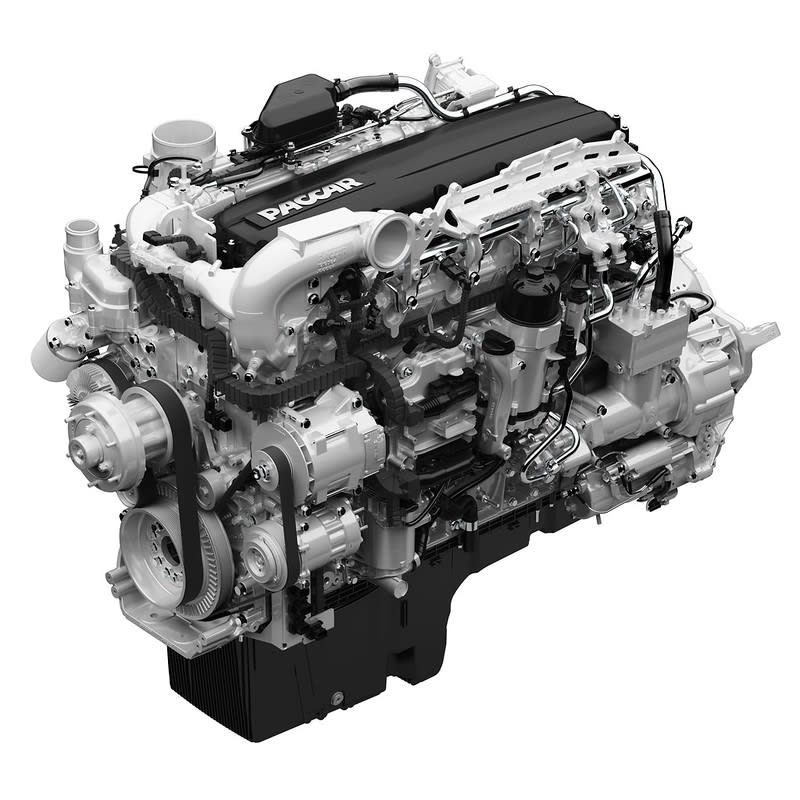
The Paccar MX-13 diesel engine is certified to use B20 biofuel in the U.S. Biofuel capable unit sales represent 45% of PACCAR's total global truck sales.
The Diesel Technology Forum’s executive director Allen Schaeffer issued the following statement today on the occasion of the California Air Resources Board’s (CARB) consideration of the Advanced Clean Truck regulation:
“Even as the California Air Resources Board contemplates mandates for zero emissions vehicles, diesel technology in commercial vehicles will continue to play an important role in California and the nation’s economy for decades to come.
“Diesel is the technology of choice for America’s trucking industry because of its unique combination of features; the most energy efficient internal combustion engine, power density, driving range, reliability, durability and widely available fueling, servicing and parts networks. Continuous improvement that has now achieved near zero emissions, improving energy efficiency and capabilities of using low-carbon renewable biodiesel fuels, ensure diesel’s place in the future.
“Since 2010, a new generation of diesel technology has become the standard for heavy-duty trucks that delivers reductions of 98% of emissions of particulate matter and nitrogen oxide emissions.
“According to the Diesel Technology Forum’s analysis of 2018-2019 U.S. vehicles in operation data (Class 3-8) provided by IHS Markit, 43% of the nearly 11 million diesel-powered commercial vehicles on U.S. roads – from box delivery trucks to 18-wheelers – are now powered by the newest generation of diesel technologies (MY 2010 and newer).
Over just four years, the percentage of new-generation diesel trucks on America’s roads has nearly doubled, up from just 25.7% of the fleet in 2015. Even by 2040, IHS Markit projects that the newest-generation diesel technologies will retain the majority share of Class 8 vehicle sales.
“Beginning in 2011, all new heavy-duty trucks have been equipped with selective catalytic reduction (SCR) and particulate control technologies. These combine to achieve stringent new U.S. Environmental Protection Agency (EPA) and CARB emissions requirements for NOx emissions of no more than 0.20 grams per brake horsepower hour (g/BHP-hr). This is in addition to PM emissions levels of no more than 0.01 g/BHP-hr.
“In California only 36% of registered diesel trucks in operation are of this newest generation, placing the golden state 40th out of 50 for the penetration of new technology diesel engines on the road, falling short of the national average of 43%, and well behind Indiana where over 65% of all registered trucks are of the newest generation.
“A combination of factors contributes to the lower penetration of new technology diesel engines, including economic conditions but also the regulatory environment where California’s truck and bus fleet rule has disrupted the marketplace, effectively delaying regular fleet turnover rates, keeping older, higher emitting trucks on the road for longer, and in turn delaying emissions reductions and cleaner air.
“California’s consideration of an Advanced Clean Truck Rule is principally about meeting the state’s climate goals. Today, diesel engines using renewable diesel fuel and blends of biodiesel fuels in California are delivering more greenhouse gas benefits than all electric vehicles combined. The replacement of older trucks in California with more efficient new diesel models coupled with the use of these biofuels represents a low-cost solution to deliver substantial and immediate greenhouse gas reductions compared to other approaches.
“Among the West Coast states in Region 9 & 10, which includes California, Washington and Oregon, the use of newest-generation diesel trucks has delivered substantial emissions reductions and fuel savings.
Between 2011 and 2018, the use of the newest, cleanest diesel Class 3-8 trucks has saved 12.3 million tonnes of carbon dioxide (CO2) and eliminated 1.8 million tonnes of nitrogen oxides (NOx). By 2030, the increased use of the cleanest diesel technologies is expected to deliver an additional 120.7 million tonnes of CO2 reductions and eliminate an additional 5.5 million tonnes of NOx collectively in these three West Coast states.
“Beyond this ACT rule, manufacturers are working with regulators at CARB and EPA on a Cleaner Trucks Initiative and rulemaking that will be finalized in the coming months and establish even further reductions in nitrogen oxide emissions making future diesel truck engines even nearer-to-zero emissions and contributing to achieve clean air goals.
“Meeting the climate and clean air challenges in the future will require many solutions, and we are confident that the newest generation of diesel technology is one of them.”
More Small Fleet


Developing Budget-Friendly Driver Safety Programs
From driver training and safety meetings to one-on-one coaching and incentive programs, several small fleets share how they have developed a safety culture with their drivers using low- to no-cost resources.
Read More →
Boosting Last-Mile Fleet Uptime, Safety, and Value with AI Vehicle Inspections
AI-powered inspections are transforming last-mile fleets by replacing manual checks with highly accurate automated scans that detect defects in seconds. By giving fleet operations visibility into the daily condition of their vehicles, you can identify trends over the vehicle’s lifecycle that enable improved procurement decisions, route management, driver training and accountability.
Read More →
Five Ways Seat Belts Help Prevent Injuries
There are five ways seat belts protect occupants from injuries, according to the Tennessee Department of Safety and Homeland Security.
Read More →
It’s here: The 2026 Fleet Technology Trends Report
What does AI mean for fleets? Get the answer — and learn other top tech trends.
Read More →
Small Fleets, Big Impact: How Independent Drivers Power Wreaths Across America
Check out how small fleets and independent drivers power Wreaths Across America each December and why their impact matters more than ever.
Read More →
VMS Survey Finds 65% of Small Fleet Managers Run Operations Alone
A new VMS survey shows small fleet managers are stretched thin, with most handling operations solo and eager to adopt digital tools for relief.
Read More →
Tips for Driving Safely on Halloween Night
This video features a reminder from the Connecticut Department of Transportation (DOT) and the Connecticut Police Chiefs Association, urging drivers to prioritize safety this Halloween.
Read More →
AI, Access, and Uptime: VMS’s Next Chapter with David Prusinski
VMS’s new Co-CEO, David Prusinski, shares how an AI-first approach will give small fleets and repair shops the tools to compete like big players.
Read More →
Fleet Managers Share Winter Prep Tips: It's Never Too Early!
Three fleets share best practices to prep vehicles for winter and prevent downtime when the cold sets in.
Read More →