




Bolt EV’s Drive Unit, Battery Detailed
The 2017 Chevrolet Bolt EV’s drive system uses a single high capacity electric motor to propel the car that's charged from a lithium-ion battery pack, General Motors has announced at the Detroit auto show.
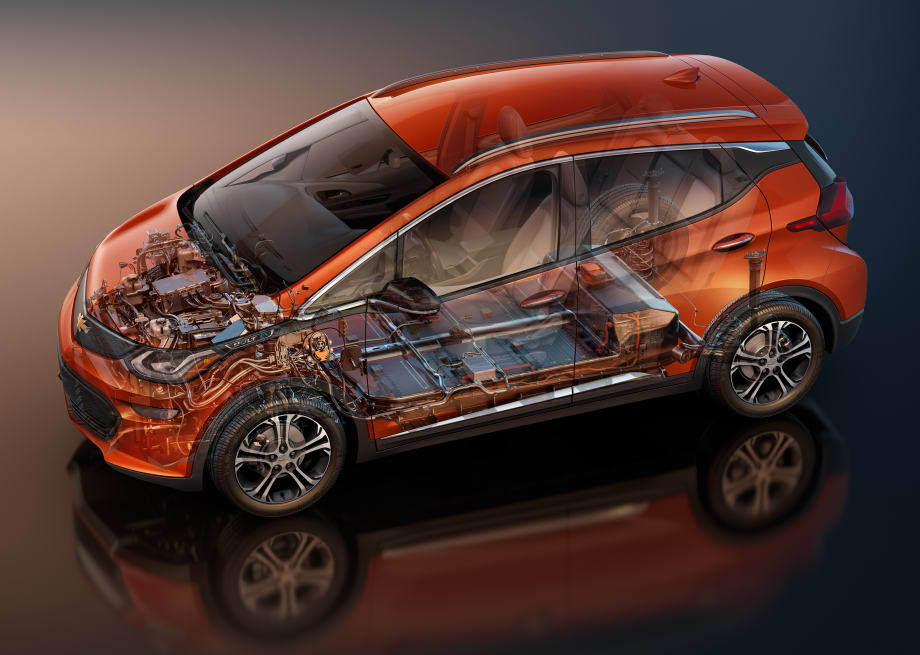
Photo courtesy of Chevrolet
Photo courtesy of Chevrolet
The 2017 Chevrolet Bolt EV’s drive system uses a single high capacity electric motor to propel the car that's charged from a lithium-ion battery pack, General Motors has announced at the Detroit auto show.
The electric motor was designed with an offset gear and shaft configuration tailored to meet an estimated 200 miles of range. The motor is capable of producing up to 266 lb.-ft. of torque and 200 hp of motoring power. Combined with a 7.05:1 final drive ratio, it helps propel the Bolt EV from 0-60 mph in less than seven seconds.
Power delivery is controlled by Chevrolet’s first Electronic Precision Shift system. This shift and park-by-wire system sends electronic signals to the Bolt EV’s drive unit to manage precise feel and delivery of power and torque, based on drive mode selection and accelerator inputs. A by-wire shifter requires less packaging space than a traditional mechanical shifter, resulting in more interior space and improved interior layout.
Preliminary specifications of the battery include a 60 kWh lithium-ion battery pack with 288 lithium ion cells, weighing 960 lbs. The battery uses active thermal conditioning, similar to the Chevrolet Volt, to keep the battery operating at its optimum temperature. The Bolt EV battery will be covered by an 8-year/ 100,000 mile (whichever comes first) limited warranty.
Inside the battery pack – which spans the entire floor, from the front foot well to back of the rear seat – is a new cell design and chemistry. The nickel-rich lithium-ion chemistry provides improved thermal operating performance, which requires a smaller active cooling system for more efficient packaging. The chemistry allows the Bolt EV to maintain peak performance in varying climates and driver demands. The cells are arranged in a “landscape” format and each measures in at 3.9 in. high and 13.1 in. wide, providing improved packaging underfloor.
The battery system is mated to a standard equipment 7.2 kW onboard charger for regular overnight charging from a 240-V wall box. A typical commute of 50 miles can be recharged in less than two hours. Bolt EV also features an optional DC Fast Charging system using the industry standard SAE Combo connector. Using DC Fast Charging, the Bolt EV battery can be charged up to 90 miles of range in 30 minutes.
To see more of the vehicles specs, read the company’s press release.
Originally posted on Automotive Fleet
More Small Fleet


Developing Budget-Friendly Driver Safety Programs
From driver training and safety meetings to one-on-one coaching and incentive programs, several small fleets share how they have developed a safety culture with their drivers using low- to no-cost resources.
Read More →
Boosting Last-Mile Fleet Uptime, Safety, and Value with AI Vehicle Inspections
AI-powered inspections are transforming last-mile fleets by replacing manual checks with highly accurate automated scans that detect defects in seconds. By giving fleet operations visibility into the daily condition of their vehicles, you can identify trends over the vehicle’s lifecycle that enable improved procurement decisions, route management, driver training and accountability.
Read More →
Five Ways Seat Belts Help Prevent Injuries
There are five ways seat belts protect occupants from injuries, according to the Tennessee Department of Safety and Homeland Security.
Read More →
It’s here: The 2026 Fleet Technology Trends Report
What does AI mean for fleets? Get the answer — and learn other top tech trends.
Read More →
Small Fleets, Big Impact: How Independent Drivers Power Wreaths Across America
Check out how small fleets and independent drivers power Wreaths Across America each December and why their impact matters more than ever.
Read More →
VMS Survey Finds 65% of Small Fleet Managers Run Operations Alone
A new VMS survey shows small fleet managers are stretched thin, with most handling operations solo and eager to adopt digital tools for relief.
Read More →
Tips for Driving Safely on Halloween Night
This video features a reminder from the Connecticut Department of Transportation (DOT) and the Connecticut Police Chiefs Association, urging drivers to prioritize safety this Halloween.
Read More →
AI, Access, and Uptime: VMS’s Next Chapter with David Prusinski
VMS’s new Co-CEO, David Prusinski, shares how an AI-first approach will give small fleets and repair shops the tools to compete like big players.
Read More →
Fleet Managers Share Winter Prep Tips: It's Never Too Early!
Three fleets share best practices to prep vehicles for winter and prevent downtime when the cold sets in.
Read More →