





Related: IIHS to Rate Automatic Braking Systems for Pedestrian Detection
Automatic Braking Study to Identify More Benefits of the Tech
Although automatic emergency brake systems have proven to prevent typical front-to-rear crashes, a new study from the Insurance Institute for Highway Safety is exploring additional opportunities to increase the effectiveness of the technology.
February 26, 2019
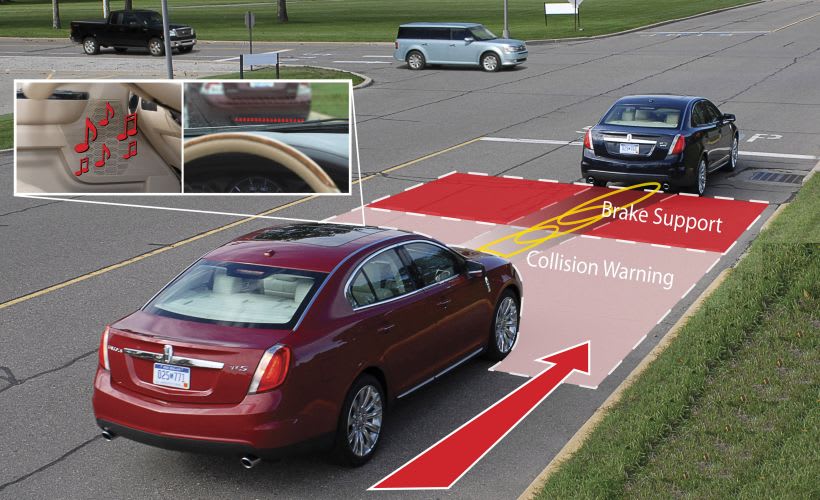
A new IIHS study will look at how automatic braking technology can be improved to maximize its benefits.
Photo via Ford/Wikimedia.
2 min to read
Although automatic emergency brake systems have proven to prevent typical front-to-rear crashes — reducing rates of rear-end crashes by 50% and rear-end crashes involving injuries by 56% — a new study from the Insurance Institute for Highway Safety is exploring additional opportunities to increase the effectiveness of the technology.
The findings indicate that extending the functionality of automatic braking to address less common types of rear-end crashes such as those involving turning, changing lanes or striking heavy trucks or motorcycles would help maximize the benefits of the technology.
In fact, IIHS estimates that automatic braking could potentially prevent as many as 70% of front-to-rear crashes involving passenger vehicles as striking vehicles and 20% of all passenger vehicle crashes reported to police.
To determine what types of rear-end crashes in which vehicles with automatic braking are involved, IIHS examined police crash reporting data from 23 states during 2009 to 2016 for striking passenger vehicles with and without autobrake among models on which the system was optional.
Many of the crashes during the study period involved typical scenarios that current autobrake systems already address.
For example, over two-thirds of the crashes happened when the road surface was dry, the striking vehicle was moving straight, or the vehicle hit was slowing or stopped. More than 50% of crashes occurred at speed limits of 45 mph or below, and about half of the vehicles struck were cars.
The remainder of the crashes studied involved less-typical situations.
For example, vehicles with the systems that are involved in crashes were more likely to be turning or to strike a vehicle that was turning or changing lanes. In some cases, the vehicle struck a non-passenger vehicle or special-use vehicle such as a medium- or heavy-duty truck or motorcycle. Other atypical situations involving vehicles with automatic braking included crashes on a snowy or icy road, or on a road with a speed limit of 70 mph or higher.
The findings indicate that designers of autobrake to date have focused on creating technology that addresses the most common types of collisions.
Going forward, IIHS believes there's a clear need for automatic braking systems that reliably detect other vehicles.
For example, a 2017 IIHS research report suggests that automatic braking could prevent up to 13% of passenger vehicle crashes with motorcycles. Systems that reliably detect large trucks could prevent underride crashes.
Originally posted on Automotive Fleet
More Small Fleet


Developing Budget-Friendly Driver Safety Programs
From driver training and safety meetings to one-on-one coaching and incentive programs, several small fleets share how they have developed a safety culture with their drivers using low- to no-cost resources.
Read More →
Sponsored•March 9, 2026
Boosting Last-Mile Fleet Uptime, Safety, and Value with AI Vehicle Inspections
AI-powered inspections are transforming last-mile fleets by replacing manual checks with highly accurate automated scans that detect defects in seconds. By giving fleet operations visibility into the daily condition of their vehicles, you can identify trends over the vehicle’s lifecycle that enable improved procurement decisions, route management, driver training and accountability.
Read More →
Five Ways Seat Belts Help Prevent Injuries
There are five ways seat belts protect occupants from injuries, according to the Tennessee Department of Safety and Homeland Security.
Read More →
Sponsored•January 14, 2026
It’s here: The 2026 Fleet Technology Trends Report
What does AI mean for fleets? Get the answer — and learn other top tech trends.
Read More →
Small Fleets, Big Impact: How Independent Drivers Power Wreaths Across America
Check out how small fleets and independent drivers power Wreaths Across America each December and why their impact matters more than ever.
Read More →
VMS Survey Finds 65% of Small Fleet Managers Run Operations Alone
A new VMS survey shows small fleet managers are stretched thin, with most handling operations solo and eager to adopt digital tools for relief.
Read More →
Tips for Driving Safely on Halloween Night
This video features a reminder from the Connecticut Department of Transportation (DOT) and the Connecticut Police Chiefs Association, urging drivers to prioritize safety this Halloween.
Read More →
AI, Access, and Uptime: VMS’s Next Chapter with David Prusinski
VMS’s new Co-CEO, David Prusinski, shares how an AI-first approach will give small fleets and repair shops the tools to compete like big players.
Read More →
Fleet Managers Share Winter Prep Tips: It's Never Too Early!
Three fleets share best practices to prep vehicles for winter and prevent downtime when the cold sets in.
Read More →