




Association Of Fleet Professionals Warns Against PHEV Fleet Policies
The chair of the Association of Fleet Professionals (AFP), a UK-based organization representing the interests of fleet managers, believes fleets should skip plug-in hybrid models on fleet policies and focus on pure electric models.
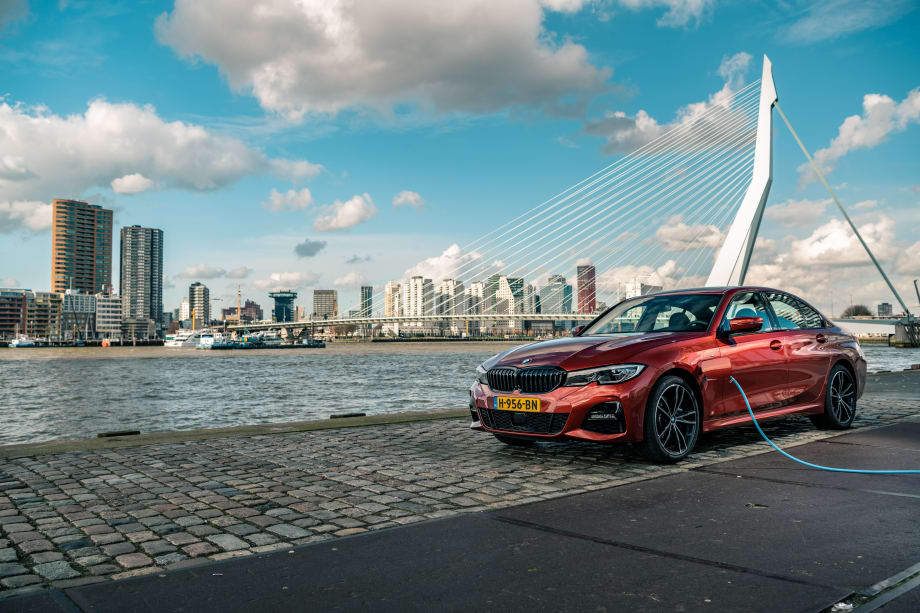
BMW 3 Series PHEV charging.
BMW
The chair of the Association of Fleet Professionals (AFP), a UK-based organisation representing the interests of fleet managers, believes fleets should skip plug-in hybrid models on fleet policies. Instead they should concentrate on pure electric models.

Association of Fleet Professionals
Speaking exclusively to Global Fleet Management, chair Paul Hollick explained that while PHEVs were decent vehicles if they were used extensively on the electric cycle - by as much as 65% - but otherwise he said, “you’re carrying around a heavy lump of battery that’s adding to fuel consumption and costing much more to run than predicted.”
Hollick continued:
“At the AFP many fleet managers who have put PHEVs on fleet have found that they were costing them more in terms of fuel and charging because they were using OEM figures - which suggest very impressive consumption based on WLTP testing.
“And that's the issue.
“The problem with PHEVs is that it very much depends on the usage model as to what the vehicle achieves in reality. We’ve seen a few fleets that have handed back PHEVs to go fully electric instead.”
Hollick added that it was also important for fleet managers to ensure that PHEVs were being fully charged as often as possible through the use of Approved Electric Mileage rates for the vehicle’s official electric mileage range, rather than using the higher fuel reimbursement rate. These are rates that fleet drivers can charge per mile without incurring any personal tax liability.
“For example, if a driver covered 100 miles on business, in say a BMW 330e with a 37-mile electric range, then the first 37 miles of that journey would be reimbursed at the Approved Electric Mileage rate of 5p per mile, while the rest of the journey would be reimbursed at the higher rate for petrol cars, which is currently 15p for a petrol engine of that size.
“We’ve seen many fleet managers now swapping from just paying a standard fuel rate to reimbursing with the electric rate for the first 30 miles to encourage proper use of the battery.”
Hollick’s warning comes as the popularity of PHEVs is possibly plateauing.
According to market analyst Matthias Schmidt, reporting in the October issue of the European Electric Car Outlook, PHEVs grew by just 3% year-on-year, while Germany witnessed the first fall in its PHEV market for 26 months.
In comparison, the pure electric market continued to grow with volumes rising by 43% year-on-year, in a total passenger car market decreased by 30%.
Schmidt added:
“It will be crucial to monitor if this PHEV impact is solely the result of the semiconductor crisis, or if it’s the result of an underlying trend that’s seeing a shift away from PHEVs towards BEVs.”
Hollick was far more bullish on the issue, however, adding,
“Everyone’s into battery electric vehicles at the moment driven by the tax advantages. In the main, fleets have a good steer on the data and are managing that data to reduce costs. They are actively telling their drivers to go full electric. The only difficulty at the moment is over supply.”
Originally posted on Automotive Fleet
More Small Fleet


Developing Budget-Friendly Driver Safety Programs
From driver training and safety meetings to one-on-one coaching and incentive programs, several small fleets share how they have developed a safety culture with their drivers using low- to no-cost resources.
Read More →
Boosting Last-Mile Fleet Uptime, Safety, and Value with AI Vehicle Inspections
AI-powered inspections are transforming last-mile fleets by replacing manual checks with highly accurate automated scans that detect defects in seconds. By giving fleet operations visibility into the daily condition of their vehicles, you can identify trends over the vehicle’s lifecycle that enable improved procurement decisions, route management, driver training and accountability.
Read More →
Five Ways Seat Belts Help Prevent Injuries
There are five ways seat belts protect occupants from injuries, according to the Tennessee Department of Safety and Homeland Security.
Read More →
It’s here: The 2026 Fleet Technology Trends Report
What does AI mean for fleets? Get the answer — and learn other top tech trends.
Read More →
Small Fleets, Big Impact: How Independent Drivers Power Wreaths Across America
Check out how small fleets and independent drivers power Wreaths Across America each December and why their impact matters more than ever.
Read More →
VMS Survey Finds 65% of Small Fleet Managers Run Operations Alone
A new VMS survey shows small fleet managers are stretched thin, with most handling operations solo and eager to adopt digital tools for relief.
Read More →
Tips for Driving Safely on Halloween Night
This video features a reminder from the Connecticut Department of Transportation (DOT) and the Connecticut Police Chiefs Association, urging drivers to prioritize safety this Halloween.
Read More →
AI, Access, and Uptime: VMS’s Next Chapter with David Prusinski
VMS’s new Co-CEO, David Prusinski, shares how an AI-first approach will give small fleets and repair shops the tools to compete like big players.
Read More →
Fleet Managers Share Winter Prep Tips: It's Never Too Early!
Three fleets share best practices to prep vehicles for winter and prevent downtime when the cold sets in.
Read More →