




All-New Toyota RAV4 EV Unveiled
The all-electric SUV has an expected driving range rating of approximately 100 miles and charging time of approximately six hours on a 240V/40A charger.
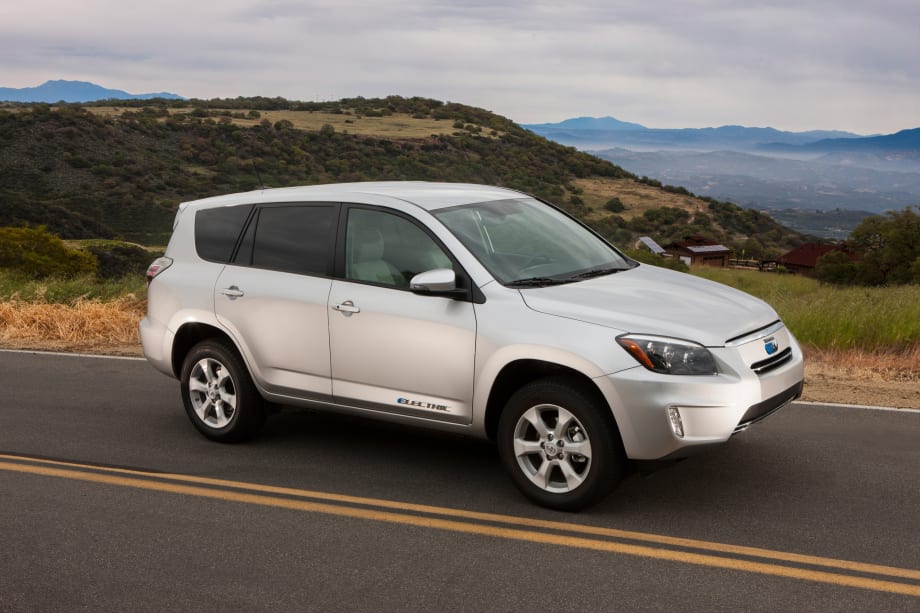
The RAV4 EV will go on sale in late summer 2012 through select dealers, initially in four major California metropolitan markets including Sacramento, San Francisco Bay Area, Los Angeles/Orange County, and San Diego.
The RAV4 EV will go on sale in late summer 2012 through select dealers, initially in four major California metropolitan markets including Sacramento, San Francisco Bay Area, Los Angeles/Orange County, and San Diego.
Toyota Motor Sales, U.S.A. revealed the all-new Toyota RAV4 EV at the 26th annual Electric Vehicle Symposium in Los Angeles. The all-electric SUV has an expected driving range rating of approximately 100 miles and charging time of approximately six hours on a 240V/40A charger.
Driving performance, dynamics and cargo capacity of the all-electric SUV are equal to or exceed the gasoline-powered RAV4 V-6, which arrives fully-equipped with an MSRP of $49,800, according to the automaker.
Toyota worked with Tesla Motors over 22 months to bring the product to market. Designed for customer ease of use and maximum vehicle range, the RAV4 EV is a combination of Tesla’s battery and electric powertrain and Toyota’s SUV model.
The front-wheel-drive RAV4 EV allows drivers to select from two distinctly different drive modes, Sport and Normal. In Sport mode, the vehicle reaches 0-60 mph in just 7.0 seconds and has a maximum speed of 100 mph. Normal mode achieves 0-60 mph in 8.6 seconds with a maximum speed of 85 mph. Maximum output from the electric powertrain is 154 HP (115kW) @ 2,800 rpm.
Toyota re-styled the front bumper, upper and lower grill, side mirrors, rear spoiler and under body design to maximize air flow around the vehicle and the EV’s battery pack is mounted low and to the center of the vehicle.
On the exterior, RAV4 EV features LED low-beam projector headlights with halogen projector high beams. A manual leveling system allows customers to redirect the headlights when the vehicle changes significantly in pitch due to a heavy load. Five vertical LEDs make up the daytime running lights, which dim to parking lights. The rear combination lights are LEDs accented by a unique light smoke outer lens. Other exterior variations from the gasoline-powered RAV4 include new exterior emblems on the front, rear and front door panel utilizing the signature Toyota “environmental blue.”
Cargo space has also been increased from the conventional RAV4 to 73 cu. ft.
Toyota’s approved electric vehicle supplier equipment provider is Leviton. Leviton offers multiple options for charging solutions. For the shortest charge time of approximately six hours, Leviton offers a custom 240V (Level 2), 40A, 9.6 kW output charging station. For more information visit Leviton.com/Toyota. The vehicle comes equipped with a 120V (Level 1) emergency charging cable for instances when the recommended 240V (Level 2) charging is not available.
The RAV4 EV will go on sale in late summer 2012 through select dealers, initially in four major California metropolitan markets including Sacramento, San Francisco Bay Area, Los Angeles/Orange County and San Diego. Sales volume is planned for approximately 2,600 units over the next three years and the battery warranty is 8 years or 100,000 miles, according to the manufacturer.
More Small Fleet

Developing Budget-Friendly Driver Safety Programs
From driver training and safety meetings to one-on-one coaching and incentive programs, several small fleets share how they have developed a safety culture with their drivers using low- to no-cost resources.
Read More →
Boosting Last-Mile Fleet Uptime, Safety, and Value with AI Vehicle Inspections
AI-powered inspections are transforming last-mile fleets by replacing manual checks with highly accurate automated scans that detect defects in seconds. By giving fleet operations visibility into the daily condition of their vehicles, you can identify trends over the vehicle’s lifecycle that enable improved procurement decisions, route management, driver training and accountability.
Read More →
Five Ways Seat Belts Help Prevent Injuries
There are five ways seat belts protect occupants from injuries, according to the Tennessee Department of Safety and Homeland Security.
Read More →
It’s here: The 2026 Fleet Technology Trends Report
What does AI mean for fleets? Get the answer — and learn other top tech trends.
Read More →
Small Fleets, Big Impact: How Independent Drivers Power Wreaths Across America
Check out how small fleets and independent drivers power Wreaths Across America each December and why their impact matters more than ever.
Read More →
VMS Survey Finds 65% of Small Fleet Managers Run Operations Alone
A new VMS survey shows small fleet managers are stretched thin, with most handling operations solo and eager to adopt digital tools for relief.
Read More →
Tips for Driving Safely on Halloween Night
This video features a reminder from the Connecticut Department of Transportation (DOT) and the Connecticut Police Chiefs Association, urging drivers to prioritize safety this Halloween.
Read More →
AI, Access, and Uptime: VMS’s Next Chapter with David Prusinski
VMS’s new Co-CEO, David Prusinski, shares how an AI-first approach will give small fleets and repair shops the tools to compete like big players.
Read More →
Fleet Managers Share Winter Prep Tips: It's Never Too Early!
Three fleets share best practices to prep vehicles for winter and prevent downtime when the cold sets in.
Read More →