




ADESA: Used-Car Prices Stay High
Wholesale used-vehicle prices in February averaged $10,138, a 3 percent increase from November 2009 and an 8.3 percent increase from the prior year. This is the first time since July 2009 that average prices have topped $10,000.
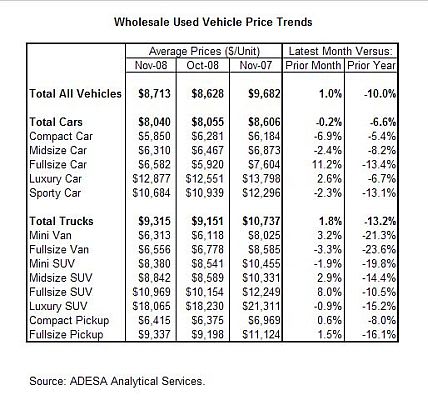
Used-vehicle prices have continued their year-over-year increases because of tight supply and solid demand, wrote ADESA's Tom Kontos in his February 2010 Kontos Kommentary column.
Only severe weather in late January and early February briefly interrupted this increase, Kontos wrote.
According to ADESA Analytical Services' monthly analysis of Wholesale Used Vehicle Prices by Vehicle Model Class, wholesale used-vehicle prices in February averaged $10,138 - a 3 percent increase from November and an 8.3 percent increase from prior year. This is the first time since July that average prices have topped $10,000.
Prices for all car and truck categories except full-size cars were up for the month, and all categories were up versus prior year. Full-size cars are a relatively small-volume segment at auction and small changes in factors such as seller type and vehicle condition month-to-month can have disproportional impacts on average prices. Demand for passenger vans for spring break may be driving higher prices for full-size vans, although weak comps last year are also behind the strong year-over-year price change for this segment.
By seller type, manufacturers registered a 0.5 percent month-over-month price decrease and a 14.8 percent year-over-year rise; fleet/lease consignors experienced a 5.6 percent sequential price decrease and a 13.2 percent annual increase. Dealers saw a 3 percent average price increase versus January and a 14.2 percent uptick versus February 2009.
ADESA Analytical Services estimates that auction industry inventory levels stood at 33 days at month-end compared to 50 days last February - an indication of tight supply.
In addition, Kontos wrote that the impact of Toyota's recall crisis on its wholesale vehicle values at auctions is inconclusive. He said analysts of the used-vehicle market will have difficulty isolating the impact a single factor, such as a vehicle recall, on wholesale vehicle values.
More Small Fleet


Developing Budget-Friendly Driver Safety Programs
From driver training and safety meetings to one-on-one coaching and incentive programs, several small fleets share how they have developed a safety culture with their drivers using low- to no-cost resources.
Read More →
Boosting Last-Mile Fleet Uptime, Safety, and Value with AI Vehicle Inspections
AI-powered inspections are transforming last-mile fleets by replacing manual checks with highly accurate automated scans that detect defects in seconds. By giving fleet operations visibility into the daily condition of their vehicles, you can identify trends over the vehicle’s lifecycle that enable improved procurement decisions, route management, driver training and accountability.
Read More →
Five Ways Seat Belts Help Prevent Injuries
There are five ways seat belts protect occupants from injuries, according to the Tennessee Department of Safety and Homeland Security.
Read More →
It’s here: The 2026 Fleet Technology Trends Report
What does AI mean for fleets? Get the answer — and learn other top tech trends.
Read More →
Small Fleets, Big Impact: How Independent Drivers Power Wreaths Across America
Check out how small fleets and independent drivers power Wreaths Across America each December and why their impact matters more than ever.
Read More →
VMS Survey Finds 65% of Small Fleet Managers Run Operations Alone
A new VMS survey shows small fleet managers are stretched thin, with most handling operations solo and eager to adopt digital tools for relief.
Read More →
Tips for Driving Safely on Halloween Night
This video features a reminder from the Connecticut Department of Transportation (DOT) and the Connecticut Police Chiefs Association, urging drivers to prioritize safety this Halloween.
Read More →
AI, Access, and Uptime: VMS’s Next Chapter with David Prusinski
VMS’s new Co-CEO, David Prusinski, shares how an AI-first approach will give small fleets and repair shops the tools to compete like big players.
Read More →
Fleet Managers Share Winter Prep Tips: It's Never Too Early!
Three fleets share best practices to prep vehicles for winter and prevent downtime when the cold sets in.
Read More →