




5 U.S. Cities Rank Among World’s Most Traffic-Congested Areas
For the sixth consecutive year, Los Angeles topped the list of the world’s most gridlocked cities, with drivers spending 102 hours in congestion in 2017 during peak time periods, according to the annual INRIX Global Traffic Scorecard.
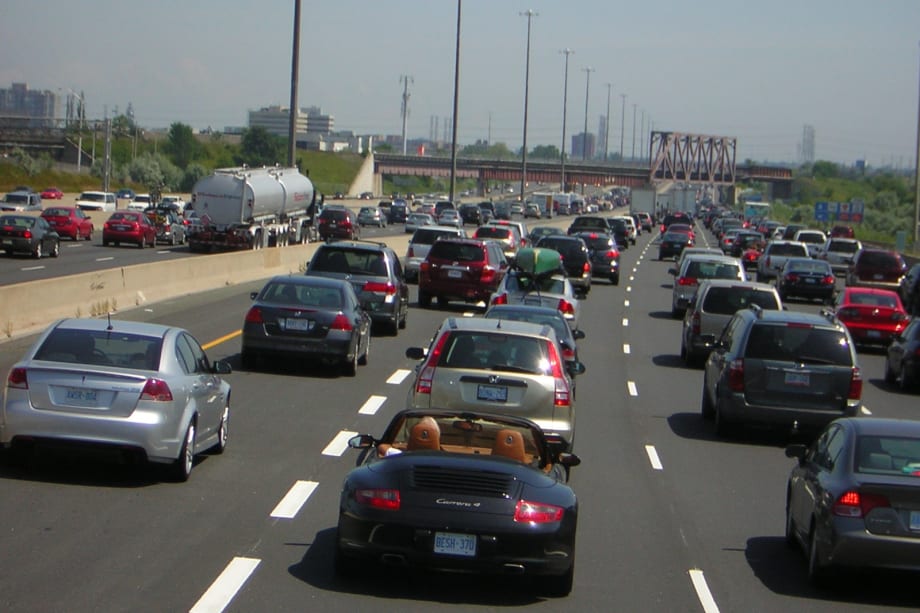
Photo via Haljackey/Wikimedia.
Photo via Haljackey/Wikimedia.
For the sixth consecutive year, Los Angeles topped the list of the world’s most gridlocked cities, with drivers spending 102 hours in congestion in 2017 during peak time periods, according to the annual INRIX Global Traffic Scorecard.
The U.S. accounted for five of the Top 10 cities worldwide with the worst traffic congestion. In addition to Los Angeles, New York City tied with Moscow for second place with 91 hours in congestion, San Francisco (79 hours) ranked fifth, Atlanta (70 hours) ranked eighth, and Miami (64 hours) ranked tenth.
INRIX analyzed 1,360 cities across 38 countries. Based on the findings, the U.S. ranked as the most congested developed country in the world, with drivers spending an average of 41 hours a year in traffic during peak hours. The report concludes that congestion costs drivers nearly $305 billion in 2017, an average of $1,445 per driver.
While the economic impact is one issue, gridlock can also have a major impact on road safety. Experts have long known that frayed nerves from sitting in hours of congestion can lead to aggressive behavior.
A study published in 2016 by the AAA Foundation for Traffic Safety found that 78% of U.S. drivers reported having engaged in at least one aggressive driving behavior during the past year. The most common behaviors included: Intentionally tailgating another vehicle (50.8%); yelling at another driver (46.6%); and honking the horn “to show annoyance or anger” (44.5%). The study suggests that underlying issues in the driving environment, such as congestion, can contribute to aggressive driving.
However, the new data from INRIX implies that traffic congestion across the country is unlikely to clear up anytime soon. Additional noteworthy facts from the report include:
New York’s Cross Bronx Expressway topped the list as the U.S.’s worst corridor for the third year in a row, with the average driver wasting 118 hours per year
Commuters within Boston and San Francisco had the highest U.S. congestion rates on arterial and city streets during the peak commute hours (23 percent)
The worst downtown slowdowns were in El Paso, Texas, where speeds dropped from 43 mph at free flow speeds to 5 mph when congested
New York businesses suffered the most from congestion with an average of 14 percent of travel time on weekdays in gridlock and where drivers wasted the most daytime hours stuck in traffic in the entire U.S.
Santa Cruz, Calif., had the worst overall daytime congestion on arterial and highways, with drivers spending 12 percent of their days sitting in traffic.
Read the full report here.
Originally posted on Automotive Fleet
More Small Fleet


Developing Budget-Friendly Driver Safety Programs
From driver training and safety meetings to one-on-one coaching and incentive programs, several small fleets share how they have developed a safety culture with their drivers using low- to no-cost resources.
Read More →
Boosting Last-Mile Fleet Uptime, Safety, and Value with AI Vehicle Inspections
AI-powered inspections are transforming last-mile fleets by replacing manual checks with highly accurate automated scans that detect defects in seconds. By giving fleet operations visibility into the daily condition of their vehicles, you can identify trends over the vehicle’s lifecycle that enable improved procurement decisions, route management, driver training and accountability.
Read More →
Five Ways Seat Belts Help Prevent Injuries
There are five ways seat belts protect occupants from injuries, according to the Tennessee Department of Safety and Homeland Security.
Read More →
It’s here: The 2026 Fleet Technology Trends Report
What does AI mean for fleets? Get the answer — and learn other top tech trends.
Read More →
Small Fleets, Big Impact: How Independent Drivers Power Wreaths Across America
Check out how small fleets and independent drivers power Wreaths Across America each December and why their impact matters more than ever.
Read More →
VMS Survey Finds 65% of Small Fleet Managers Run Operations Alone
A new VMS survey shows small fleet managers are stretched thin, with most handling operations solo and eager to adopt digital tools for relief.
Read More →
Tips for Driving Safely on Halloween Night
This video features a reminder from the Connecticut Department of Transportation (DOT) and the Connecticut Police Chiefs Association, urging drivers to prioritize safety this Halloween.
Read More →
AI, Access, and Uptime: VMS’s Next Chapter with David Prusinski
VMS’s new Co-CEO, David Prusinski, shares how an AI-first approach will give small fleets and repair shops the tools to compete like big players.
Read More →
Fleet Managers Share Winter Prep Tips: It's Never Too Early!
Three fleets share best practices to prep vehicles for winter and prevent downtime when the cold sets in.
Read More →