




2013 Mazda CX-5 to Feature Advanced Braking Support System & Newly Developed Bumpers
HIROSHIMA, JAPAN ― Mazda Motor Corp. said it has developed an advanced safety technology called Smart City Brake Support (SCBS), which helps a driver to avoid a frontal collision when driving at low speeds in the city or in slow traffic. The SCBS system will be available in Mazda's all-new crossover SUV, the Mazda CX-5, to be launched this spring.
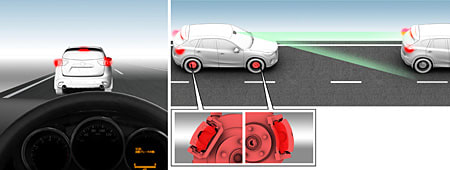
Mazda's Smart City Brake Support
HIROSHIMA, JAPAN ― Mazda Motor Corp. said it has developed an advanced safety technology called Smart City Brake Support (SCBS), which helps a driver to avoid a frontal collision when driving at low speeds in the city or in slow traffic. The SCBS system will be available in Mazda's all-new crossover SUV, the Mazda CX-5, to be launched this spring.
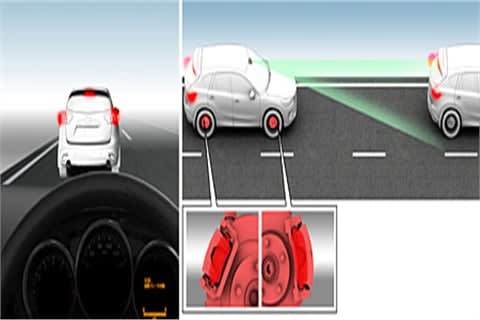
Mazda's Smart City Brake Support
The SCBS system uses a laser sensor to detect a vehicle or obstacle in front and automatically reduces the extent of the brake rotor travel to quicken braking operation. If the driver fails to perform any operation to avoid a collision, such as applying the brake, SCBC automatically activates the brakes and reduces the engine output at the same time.
In this way, SCBC helps to avoid collisions or mitigate the damage from rear-end collisions at low speeds, which are the most common accidents with other vehicles. The SCBS system also includes Acceleration Control for Automatic Transmission, which helps avoid unintentional acceleration that could be caused by depressing the accelerator instead of the brake pedal.
The Mazda CX-5 will also feature new advanced bumpers, as a result of Mazda's recent collaboration with Japan Polypropylene Corp. to develop resin material for lighter-weight vehicle parts. Mazda will use lighter-weight bumpers using this resin material in the Mazda CX-5 SUV as well as in other upcoming new models.
The resin, Mazda said, maintains the same rigidity found in parts made with heavier, more conventional materials. When the material is used for both front and rear bumpers, it contributes to weight reduction of approximately 20%.
In the bumper production process, the reduced thickness allows for a shorter cooling period for molding. In addition, by using computer-aided engineering (CAE) technology, the fluidity of the resin material has also been optimized, Mazda said. As a result, bumper-molding time, previously 60 seconds, has been halved to 30 seconds, leading to major reductions in the amount of energy consumed in the production process.
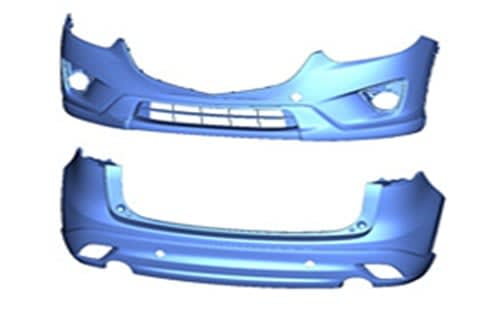
Mazda CX-5 bumpers
Mazda said the companies blended two components found in polypropylene and rubber -- the constituents of resin -- that have different properties. They succeeded in distributing them in a double-layer structure in line with the required function for the surface and the inside of the base bumper material. As a result, the surface has excellent paint film adhesion, and the inner section retains high rigidity and impact absorption, with reduced thickness.
Moving forward, Mazda said it remains committed to reducing vehicle weight and improving dynamic performance.
Originally posted on Automotive Fleet
More Small Fleet


Developing Budget-Friendly Driver Safety Programs
From driver training and safety meetings to one-on-one coaching and incentive programs, several small fleets share how they have developed a safety culture with their drivers using low- to no-cost resources.
Read More →
Boosting Last-Mile Fleet Uptime, Safety, and Value with AI Vehicle Inspections
AI-powered inspections are transforming last-mile fleets by replacing manual checks with highly accurate automated scans that detect defects in seconds. By giving fleet operations visibility into the daily condition of their vehicles, you can identify trends over the vehicle’s lifecycle that enable improved procurement decisions, route management, driver training and accountability.
Read More →
Five Ways Seat Belts Help Prevent Injuries
There are five ways seat belts protect occupants from injuries, according to the Tennessee Department of Safety and Homeland Security.
Read More →
It’s here: The 2026 Fleet Technology Trends Report
What does AI mean for fleets? Get the answer — and learn other top tech trends.
Read More →
Small Fleets, Big Impact: How Independent Drivers Power Wreaths Across America
Check out how small fleets and independent drivers power Wreaths Across America each December and why their impact matters more than ever.
Read More →
VMS Survey Finds 65% of Small Fleet Managers Run Operations Alone
A new VMS survey shows small fleet managers are stretched thin, with most handling operations solo and eager to adopt digital tools for relief.
Read More →
Tips for Driving Safely on Halloween Night
This video features a reminder from the Connecticut Department of Transportation (DOT) and the Connecticut Police Chiefs Association, urging drivers to prioritize safety this Halloween.
Read More →
AI, Access, and Uptime: VMS’s Next Chapter with David Prusinski
VMS’s new Co-CEO, David Prusinski, shares how an AI-first approach will give small fleets and repair shops the tools to compete like big players.
Read More →
Fleet Managers Share Winter Prep Tips: It's Never Too Early!
Three fleets share best practices to prep vehicles for winter and prevent downtime when the cold sets in.
Read More →